
Zora Mint Fund: Transformation Story from NFT Newbie to Social Media Maniac

Original Article Title: "Did the Base Team Personally Rug Pull? Uncovering the Zora Coin Offering Scam: From a $6 Billion Valuation to an On-Chain Casino"
Original Article Author: Lawrence, Mars Finance
Today we are going to discuss a piece of news that made the entire crypto community dance in excitement — the NFT platform Zora, which once claimed to "make internet creation free and valuable," has finally announced on Twitter that it is going to launch its coin!
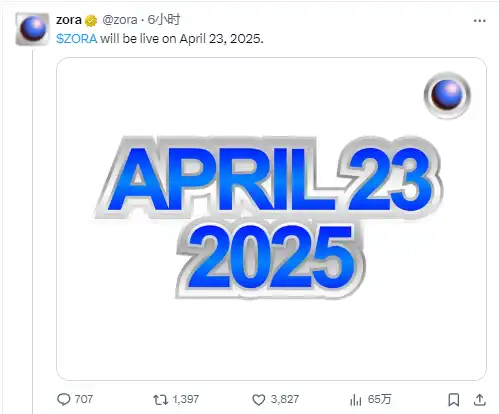
This move has truly made the rug pull victims both excited and weak-kneed. After all, anyone who has been in the crypto space knows that whenever a project announces a coin offering under the banner of "community co-building" and "ecosystem incentives," there is always a familiar scent of rug pull in the air.
But this story is much more stimulating than your average meme coin project. It not only involves a capital game played by the Coinbase core team but also stages an official participation in a "token werewolf" game. It has even led the entire industry to ponder:
When every tweet can turn into a coin-pumping battlefield, are we witnessing a blockchain renaissance or just observing the deafening noise of rug pull harvest?
1. The Origins of Zora: From NFT Freshness to the Metamorphosis of a Social Beast
To understand the coin offering scheme this time, we must first dig into Zora's backstory.
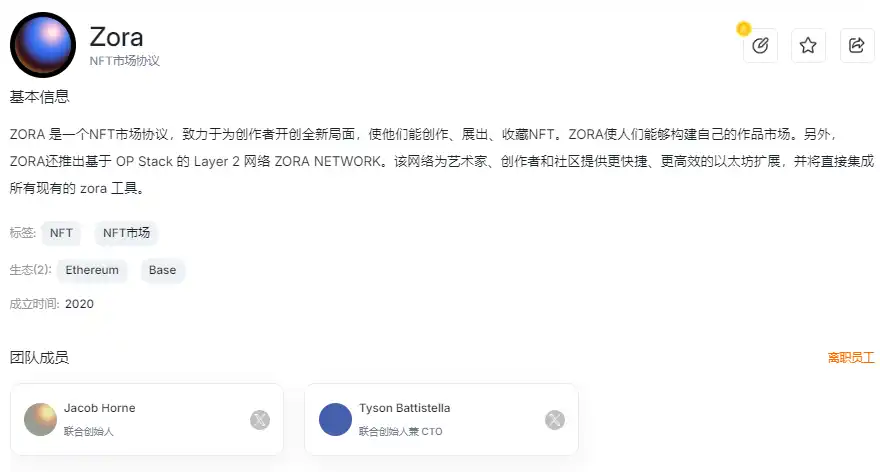
Let's rewind to 2021 when the hottest trend in the crypto world was not meme coins but NFTs. Two former Coinbase employees joined forces and created an NFT platform called Zora, with a resounding slogan: "We will make artists earn while standing!"
At the beginning, the story sounded all positive energy, right? In the early days, they indeed did some cool things: such as helping the digital fashion brand Saint Fame engage in DAO governance and conduct virtual fashion weeks; for example, issuing the TAPE token exchangeable for physical tapes for musicians, and even pulling off the "buy NFT, get a concert ticket" gimmick.
During that time, Zora was truly a utopia for Web3 art-loving youth — until they realized that they couldn't even recoup their server electricity costs by just selling digital artworks.
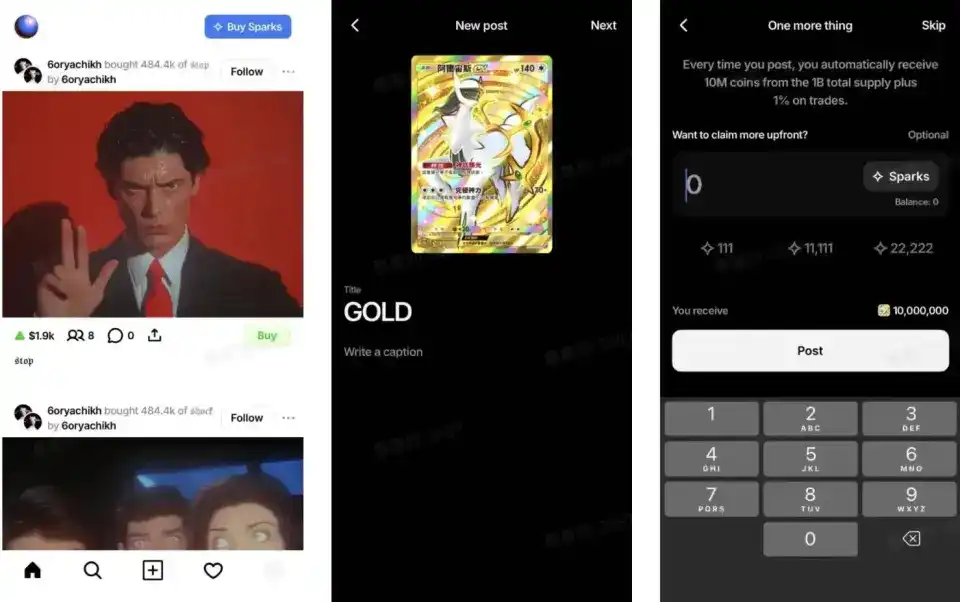
So, starting from 2023, Zora underwent a complete transformation. They first latched onto OP Stack's thigh and built their own Layer2 network, crashing the gas fees to the bone; then, the art style suddenly changed, transforming the product into an "on-chain version of Instagram" — here, every tweet you send can automatically generate an ERC-20 token, likes and comments can be mined, and even cursing can be monetized. This move was simply brilliant!
In the past, artists had to work hard to create art and music, but now, any random person can post a photo of their lunch, and the system will reward them with 10 million "Braised Beef Noodle Coin." Creators can also earn a 1% transaction fee from each transaction.
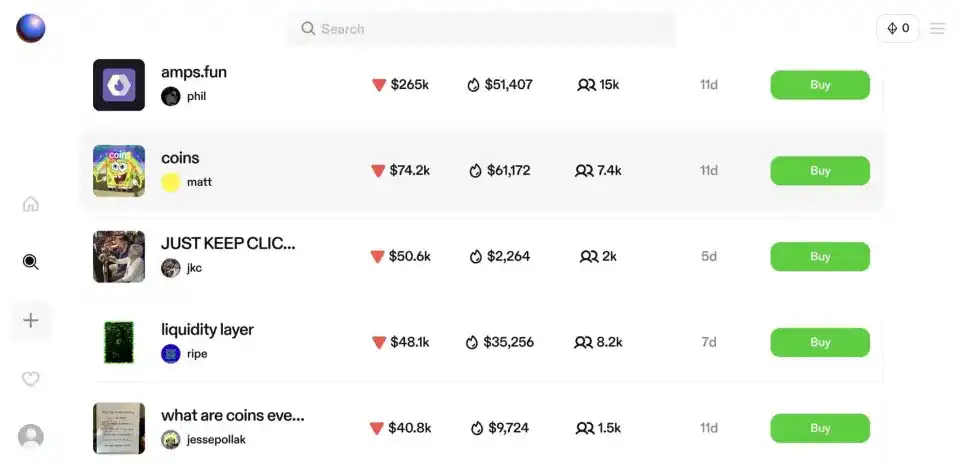
What's even more magical is that Zora has created a "Token Social" feature: the more tokens you hold, the brighter the gold border on your profile becomes, turning the act of coin speculation into a QQ-style showcase.
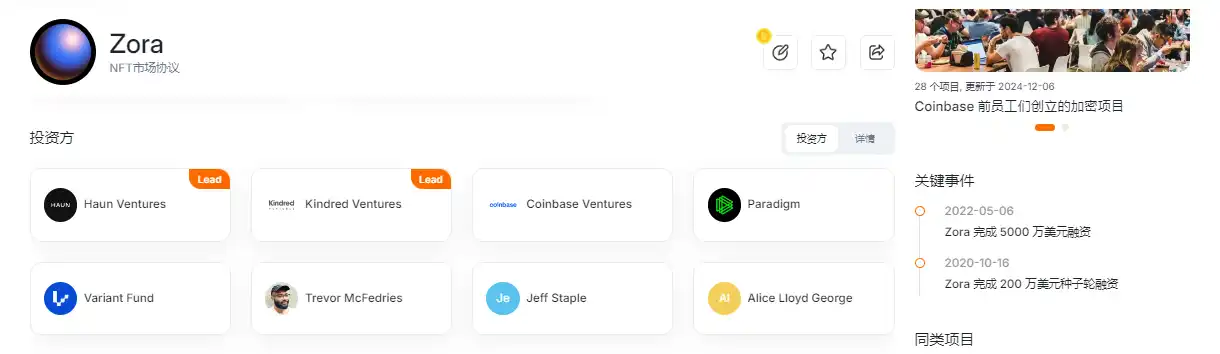
With this "tokenization of everything" combo, Zora managed to snatch a piece of the pie from OpenSea. By 2024, they had raised over $60 million, reaching a valuation of $600 million, with support from top-tier institutions like Coinbase Ventures and Paradigm.
But the discerning eye can see that when social platforms start teaching users how to speculate on coins, it won't be long before the scythe is unsheathed.
II. The Coin Distribution Show: A Top VC's "Scientific Pig-Rearing" Guide
Sure enough, on March 3rd this year, Zora announced the issuance of the ZORA coin on the Base chain, with a total supply of 10 billion coins. At first glance, the distribution plan seems "benevolent": 10% airdropped to users, 20% allocated to ecosystem incentives, and 5% for liquidity.
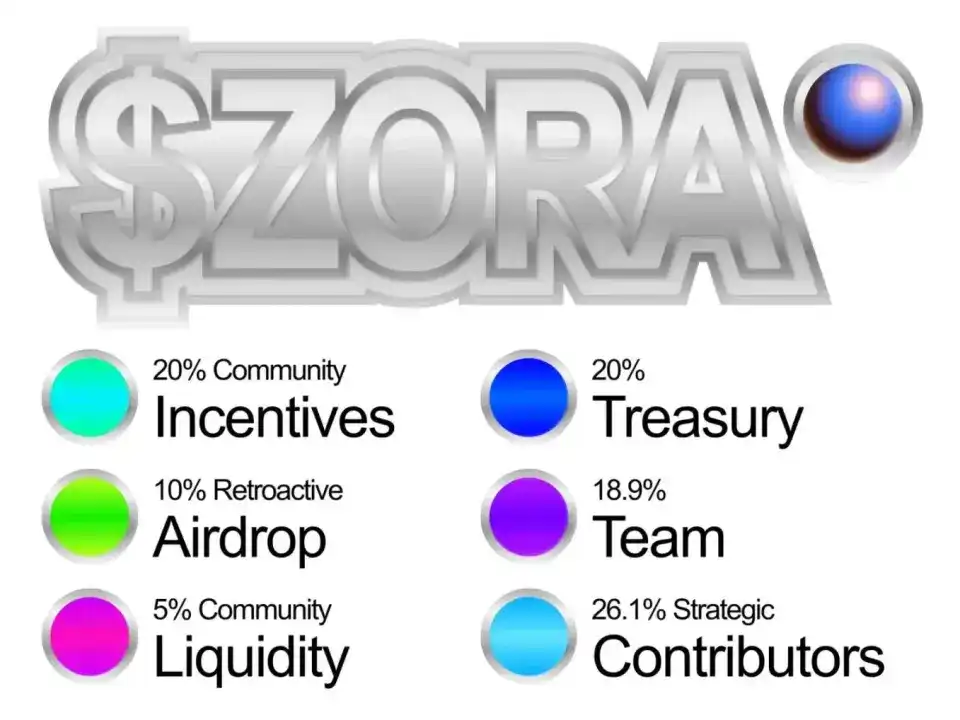
However, a closer look at the terms reveals a catch—65% of the tokens (company treasury + team + strategic contributors) will begin unlocking after a 6-month lockup period. In plain terms, this means, "Let the retail investors rush in first, and we, the major shareholders, will come to collect the net after half a year."
What's even more audacious is the official statement: "ZORA is not a governance token, purely a utility coin, and holders have no rights." This is akin to clearly stating, "What we're issuing is not a stock but a casino chip."
But does it end there? Zora also conducted two snapshots:
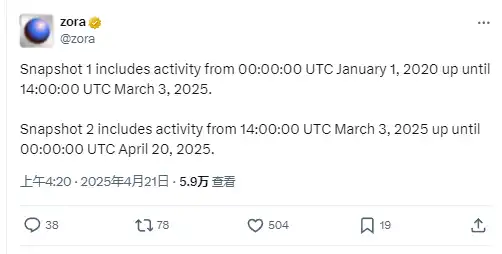
The first snapshot ended on March 3rd, rewarding old retail investors; the second snapshot ended on April 20th, attracting new retail investors. As a result, over the past two months, Zora's on-chain transaction volume has skyrocketed by 47%. Countless people have been aggressively posting on the platform to boost interaction, with some even using scripts to mass-produce junk content like "Good morning, Earth" or "Today's constipated."
What's most surreal is that some data scrapers have calculated: To secure 30% of the airdrop, one must interact at least 21 times. As a result, professional booster fleets have emerged on the platform to artificially inflate likes and comments, with prices ranging from 50U to 200U. Witnessing this operation made me exclaim in awe—so this is the essence of Web3's "community incentives": encouraging users to spend money on bots to artificially inflate their engagement metrics.
3. The "Divine Assist" of Base: The Official Personally Joins a Werewolf Game
Just as the degens were frenziedly going all in on Zora, another protagonist appeared: Jesse Pollak, the head of the Base protocol. Starting in February this year, this dude has been consistently dropping "Content Coins" on Zora. For example, turning meeting minutes into tokens, putting community announcements on-chain, and even tokenizing Vitalik's documentary trailer.
According to him, this is to drive the on-chain artistic renaissance of "content is token, token is content."
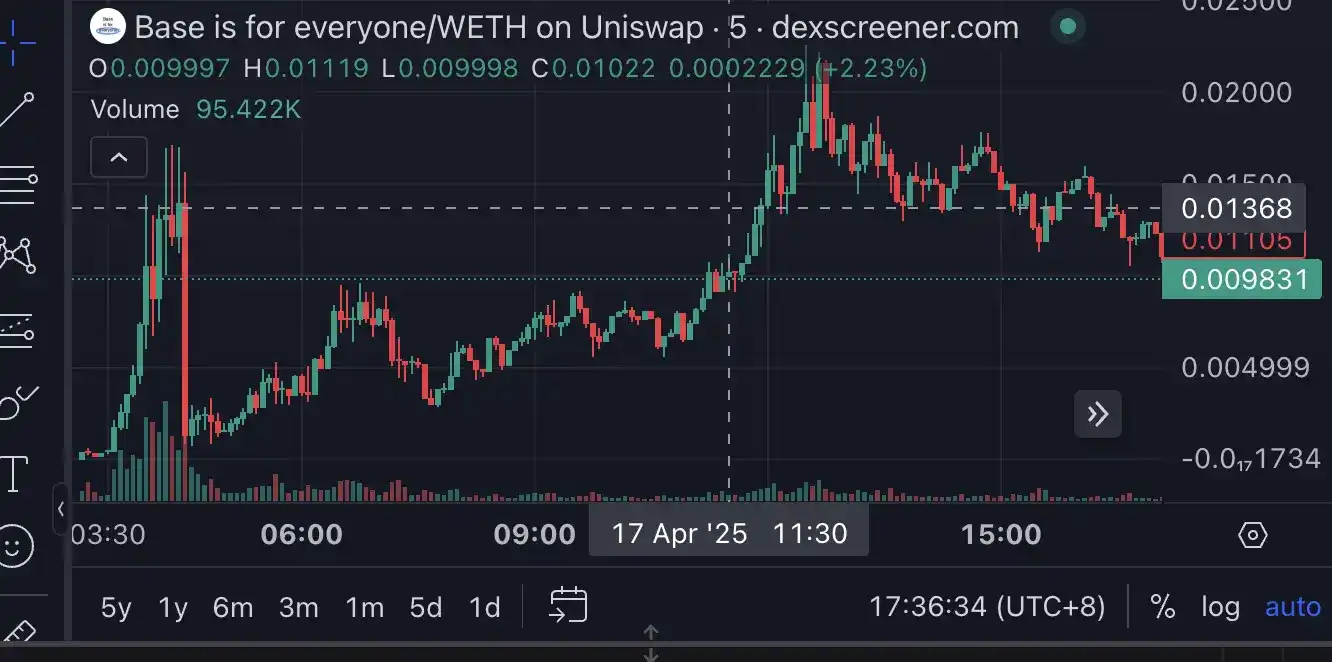
But the masses have sharp eyes—on April 17, the Base official account suddenly released the "Base is for everyone" token on Zora, skyrocketing to a market cap of $17 million in an instant, then crashing 90% within five minutes.
This plot is more thrilling than a rollercoaster:
· 3:12 Official account launches the token, KOLs collectively shill
· 4:30 Market cap goes through the roof
· 4:35 Whales dump, price ankles broken
· 5:00 Number of protest groups reaches 28
In the face of the degens' fury, the Base team responded calmly: "We didn't sell the token, this was just an art experiment~"
Even more audacious, Jesse Pollak doubled down: "When I release one token, they say I'm rug pulling; release ten tokens, they say I'm hyping; release a hundred tokens, then they'll understand this is the future of new media." In other words, "You hicks don't understand high-art, you deserve to be degens!"
But magically, this farce actually helped Zora gain massive attention. With the "Base is for everyone" token surging tenfold the next day, more degens cried and rushed into Zora, fearing missing out on the next "official meme coin." At this moment, the Zora team is probably laughing in their beds—this zero-cost marketing wave is more effective than buying CCTV ads.
4. Scythe or Paintbrush: What Pie is Zora Really Painting?
Seeing this, some viewers might ask: Is Zora really going all out just to rug pull? We have to be objective about this; this matter really isn't black and white.
From a product logic perspective, Zora is indeed driving innovation:
1. Breaking the Dimensional Barrier Between NFTs and Tokens: Using the ERC-20z standard to directly turn images and videos into tradable assets, solving the liquidity challenge of NFTs
2. Reframing the Creator Economy: Automatically minting coins for each piece of content, transforming likes and retweets into "productivity"
3. Social Financialization: Transforming the Weibo trending list into a price ranking list, unleashing humanity's innate gambling instinct
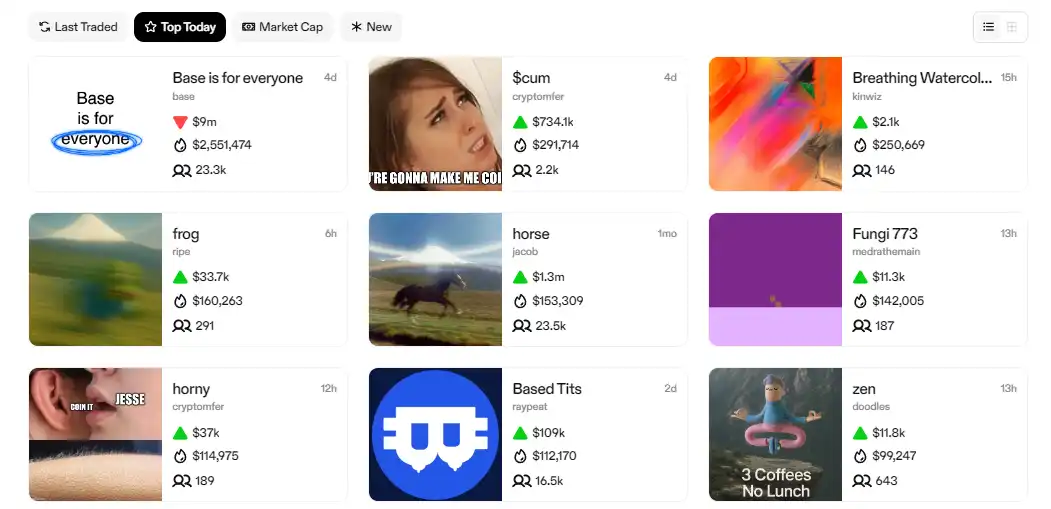
However, the issue is that when all content becomes speculative targets, the internet transforms into Las Vegas. Last August, blockchain sleuth ZachXBT turned his investigation report into a Zora token as a form of performance art, only to see the token being hyped to $14 million. ZachXBT was so frightened that he tweeted overnight, "I really didn't intend for people to speculate on it!"
This story tells us that in Zora's world, even anti-fraud propaganda can turn into a meme coin.
Even more frightening is the technological vulnerability: Due to Zora's automated liquidity pool deployment, any content token can be traded as soon as it goes live. This opens the door for sniper bots, which can detect new tokens in milliseconds, pump the price to attract FOMO buyers, and then dump the price to profit instantly.
In other words, issuing a token on Zora is equivalent to offering a feast to an army of bots.
Chapter Five: Aping Guide - How to Survive Three Episodes in the On-Chain Casino
Lastly, here are some advice for viewers eager to ape into the ZORA token:
1. Beware of the Unlocking Period Bomb: 65% of tokens unlock after six months, team selling may trigger a sell-off cascade
2. Be cautious of social media "water army": 90% of likes and comments on the platform are bot-driven
3. Stay away from "official meme coins": Of the 27 tokens issued by the Base team, 90% have gone to zero
4. When a project says "This is not a financial product," it is 100% a financial product
Ultimately, the token issuance spectacle of Zora is both a fireworks display of the on-chain renaissance and a mirror reflecting human greed.
When we find ourselves ecstatic or devastated by a tweet coin on Zora, perhaps we should remember that ancient truth: in a casino, the only sure winner, always, is the one selling the chips.
You may also like

SK Hynix Reportedly Plans U.S. ADR Listing as Early as August, With SEC Approval Possible in Late June
SK Hynix may pursue a U.S. ADR listing as early as August, with SEC approval reportedly possible in late June amid strong AI chip supply chain demand.

SpaceX vs Tesla vs xAI: Which Elon Musk Trade Has the Biggest Upside in 2026?

OpenAI Reveals It Has Confidentially Submitted an S-1 to the SEC, Keeping the Door Open for a Future IPO
On June 9, according to an OpenAI announcement, the company recently confidentially submitted a draft S-1 registration statement to the U.S. Securities and Exchange Commission (SEC), beginning the preliminary compliance process for a potential initial public offering. OpenAI said it chose to disclose this proactively because it expected the news might leak; however, the company has not yet set a specific listing timeline, and related arrangements may still take some time.

Latest research from 13 top universities including Cornell University: The current state, challenges, and misconceptions of the fusion of Crypto and AI
Deconstructing Anthropic: The Best AI Company, Possibly Also a Type of Organizational Invention
Apollo and Blackstone Reportedly Back $35 Billion Anthropic Chip Financing as Deal Details Remain Unclear
On June 9, according to currently available news alerts, Apollo and Blackstone Group participated in a $35 billion financing for an Anthropic “chip project.” Based on the original wording of the report, the funding has already been raised, but public information remains limited. The financing structure, use of proceeds, project entity, and whether Apollo and Blackstone participated through equity, debt, or project financing have not yet been disclosed.

Humanity Protocol Security Incident Escalates: More Than $31 Million Stolen From Related Addresses as Attacker Continues Selling H for ETH
On June 9, according to monitoring by Onchain Lens, more than $31 million has been stolen from addresses linked to Humanity Protocol, and the attack is still ongoing, with the hacker continuously swapping H tokens for ETH. Project founder Terence Kwok later confirmed the security incident on X, saying the issue involved a private key leak.

Bloomberg: As Bitcoin Weakens, Stablecoins and RWA Continue to Drive Expansion in Crypto Businesses
In June, Bloomberg reported that despite Bitcoin falling below $60,000 last week, wiping out about $235 billion in market value within seven days, and dropping close to 50% from last year’s peak, some core businesses in the crypto industry are still expanding, mainly in stablecoins, real-world asset tokenization (RWA), payments, and infrastructure. The report also noted that overall altcoin activity has contracted significantly: altcoin market capitalization has fallen from a peak of about $431 billion in November 2021 to around $170 billion, and among the tens of millions of tokens issued in recent years, fewer than 1,700 still maintain meaningful trading activity.

Galaxy Deep Research Report: How Hyperliquid's HIP-4 Upgrade Changes the Landscape of Prediction Markets?
Binance Research: RWA Market Expected to Expand Nearly 6x from Early 2025, with Public Equities and Onchain Payments Heating Up Together
In June, Binance Research said in its monthly market report that the real-world asset (RWA) market is expected to grow by about 589% from the beginning of 2025. Bond- and money market fund-related RWA expanded by about $6.5 billion, up 83% year over year, while publicly traded equity RWAs grew by about 422%. The report also noted that monthly crypto debit card transaction volume exceeded $747 million in May, up 48.6% year to date.

Japan to Assess a Framework for Yen Stablecoins and Crypto ETFs as Asia’s Compliant Payments Narrative Heats Up
Recently, according to the original report, Japan is considering the launch of yen stablecoins and cryptocurrency ETFs. Public information remains limited at this stage, and there is still no complete policy text, regulatory draft, or clear implementation timeline, so this is better characterized as a “policy discussion” rather than formal implementation. The original wording also noted that advancing stablecoin regulation in Asia is driving XRP usage and supporting growth in the XRPL ecosystem. However, based on currently available public information, there is not enough evidence to directly establish a clear causal relationship between this round of discussion in Japan and XRP or XRPL.

ZachXBT: Humanity private key leak and abnormal surge in H token should be viewed separately
On June 9, according to related disclosures, on-chain investigator ZachXBT posted an update on Humanity’s roughly $31 million security incident, saying that after further analyzing fund flows, he currently tends to believe the project team was not involved in an “inside job” or a self-staged attack. According to him, the official explanation about the private key leak was broadly accurate, but before the token unlock, the price of H had been artificially pushed higher, and the hacker later took advantage of that market environment; therefore, the private key leak and the earlier abnormal price pumping should be regarded as two separate and independent events. This reframing has shifted the market’s understanding of the nature of the incident. Earlier discussion around Humanity had focused on whether the team directly participated in the attack or used the security incident to cover up internal operations. ZachXBT’s latest remarks shift the focus from “whether it was self-theft” to “whether there were pre-unlock market structure issues.” He also questioned whether the team may have.

Morning Report | OpenAI has submitted an S-1 registration statement draft to the U.S. SEC; Morpho completes $175 million financing

Morning Report | BitMine increased its holdings by 126,971 ETH last week; trader Eugene announced his exit from the crypto market

Wang Chuan: How can one not feel anxious after the neighbor Old Wang made thirty times profit by investing in storage stocks? (Seven) - A quarter-century cycle
Cryptocurrency CEXs are flocking to sell US stocks, and traditional brokerages are facing an "uninvited guest."
$75 billion in foreign capital has fled, and South Korean retail investors have absorbed it all using leverage

Japan’s Three Megabanks Plan Joint Stablecoin Issuance in Fiscal 2026
MUFG, SMBC, and Mizuho reportedly plan to jointly issue fiat-pegged stablecoins in fiscal 2026, signaling Japan’s growing push into bank-led digital payment infrastructure.
SK Hynix Reportedly Plans U.S. ADR Listing as Early as August, With SEC Approval Possible in Late June
SK Hynix may pursue a U.S. ADR listing as early as August, with SEC approval reportedly possible in late June amid strong AI chip supply chain demand.
SpaceX vs Tesla vs xAI: Which Elon Musk Trade Has the Biggest Upside in 2026?
OpenAI Reveals It Has Confidentially Submitted an S-1 to the SEC, Keeping the Door Open for a Future IPO
On June 9, according to an OpenAI announcement, the company recently confidentially submitted a draft S-1 registration statement to the U.S. Securities and Exchange Commission (SEC), beginning the preliminary compliance process for a potential initial public offering. OpenAI said it chose to disclose this proactively because it expected the news might leak; however, the company has not yet set a specific listing timeline, and related arrangements may still take some time.
Latest research from 13 top universities including Cornell University: The current state, challenges, and misconceptions of the fusion of Crypto and AI
Deconstructing Anthropic: The Best AI Company, Possibly Also a Type of Organizational Invention
Apollo and Blackstone Reportedly Back $35 Billion Anthropic Chip Financing as Deal Details Remain Unclear
On June 9, according to currently available news alerts, Apollo and Blackstone Group participated in a $35 billion financing for an Anthropic “chip project.” Based on the original wording of the report, the funding has already been raised, but public information remains limited. The financing structure, use of proceeds, project entity, and whether Apollo and Blackstone participated through equity, debt, or project financing have not yet been disclosed.


