
Why Did BlackRock Go All In on Tokenization and Declare It Democratization?

Original Article Title: "Why is BlackRock Fully Laid Out and Claims That Tokenization is Democratization?"
Original Article Author: Yekai (WeChat/Twitter: YekaiMeta)
We may not have realized it yet, but the way we invest is about to become outdated. Why? Because the high barriers to entry in the traditional financial market are limiting our investment potential. However, BlackRock is leading a financial revolution, and at the core of this revolution is asset tokenization.
Do you feel that assets are difficult to move freely, investment channels are limited, and you are restricted by the high barriers and opaque nature of the traditional financial system? BlackRock's focus on asset tokenization can help you solve these problems by providing unprecedented investment freedom through technological innovation.
Why is BlackRock Betting on Asset Tokenization?
1. BlackRock's Asset Tokenization Strategy
BlackRock has fully laid out its presence in the asset tokenization field not just because of the trend, but also due to its clear strategic vision. CEO Larry Fink has publicly and strongly supported tokenization, emphasizing that Tokenization will fundamentally change the infrastructure of the financial world. As part of its strategic deployment, BlackRock is actively investing in leading blockchain infrastructure companies like Coinbase to strengthen its foundation in the digital asset space.
In terms of financial products, BlackRock has already launched a Bitcoin spot ETF and is actively advancing the Currency Market Fund Tokenization (BUIDL) project. In addition, they have actively explored the field of US stock tokenization and plan to launch the proprietary stablecoin USDB to further solidify their leading position in the digital finance field. BlackRock always emphasizes the comprehensive integration of cryptocurrency into the traditional financial management system, with a clear vision aimed at achieving full asset tokenization in issuance, trading, and management.
BlackRock's asset tokenization strategy embodies three core features:
1. Infrastructure Reconstruction: BlackRock has invested in blockchain infrastructure and collaborated with Coinbase to launch institutional-grade crypto asset custody services, seamlessly connecting traditional asset management with real-time on-chain asset management.
2. Global Compliance Layout: BlackRock has obtained cryptocurrency licenses in regions like Europe and partnered with sovereign wealth funds in the Middle East to build a private investment platform, establishing a global compliance network to ensure the legality and global circulation of asset tokenization.
3. Scenario-based Innovative Products: By tokenizing traditional high-threshold private assets (such as government bonds, funds, infrastructure, etc.) and breaking them down into more easily tradable digital tokens, BlackRock reaches the large retail and pension account markets, achieving true investment democratization.
2. Larry Fink's 2025 Annual Letter to Investors
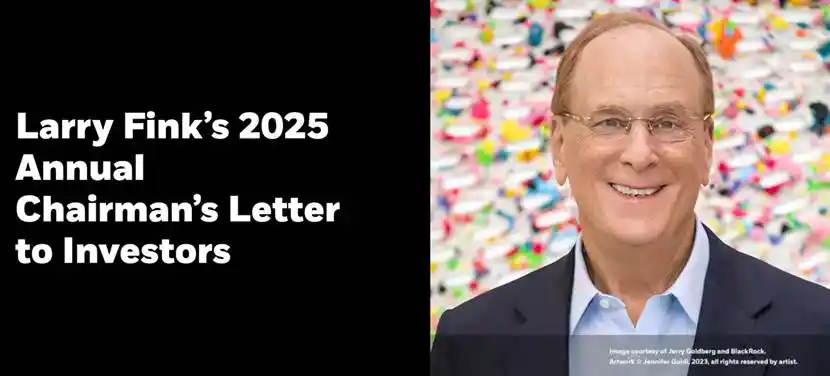
BlackRock CEO Larry Fink has made it clear that asset tokenization is the most disruptive financial innovation since the birth of ETFs. Larry stated, "Tokenization is democratization." He emphasized that tokenization can achieve real-time on-chain settlement of stocks, bonds, and real estate, completely solving the issue of capital lockup caused by slow traditional financial settlements, allowing capital to flow seamlessly 24/7.
More importantly, Larry pointed out that asset tokenization can build a more inclusive financial ecosystem, allowing retail investors to participate in high-value investment areas that were previously only available to institutions with low barriers to entry. At the same time, smart contract technology will improve governance transparency. Larry called for the global establishment of an efficient digital identity system to unlock trillions of dollars in potential markets.
Furthermore, from the rest of the contents of this letter, it is not difficult to see that BlackRock's understanding and strategic intent regarding Tokenization is very clear—it is all about tokenization and asset reallocation.
3. Strategic Transition from Institutional Hegemony to Retail Democratization
As a giant in asset management with over $10 trillion in assets under management, BlackRock has long dominated the institutional market. However, it now hopes to achieve a strategic transformation through tokenization technology to become a leader in the global retail market. Starting from a Bitcoin spot ETF worth tens of billions of dollars, to the tokenization of a currency market fund worth over $10 billion—BUIDL, and also integrating with multiple DeFi platforms, while actively promoting the tokenization of U.S. stocks, and planning the issuance of the BlackRock stablecoin USDB based on trillions in asset management products pledged. All of this represents a clear roadmap and firm strategic objectives.
Through asset tokenization, BlackRock can democratize institutional market assets, allowing retail investors to directly participate in markets that were previously monopolized by institutions. The statement "Tokenization is democratization" is fundamentally an important strategy for BlackRock to attract retail investors. Additionally, through the launch of a digital identity system and the stablecoin USDB, BlackRock further demonstrates its ambition to fundamentally change the global investment landscape.
4. The Revolution of RWA and AI
The core technological innovation of Real World Asset Tokenization (RWA) is different from the revolutionary Web3.0 in that it enables traditional financial markets and assets to advance without disregarding everything, creating a Web2.5 state that perfectly meets and drives the establishment of new production relations:
1. Reconstruction of Production Relations: The essence of RWA is the digital asset redistribution of production relations, further achieving the full automation of real-world asset issuance, pricing, and trading through AI technology. For example, by forming a distributed underlying asset pool through DePIN and AI technology, smart contracts generate real-time risk ratings, replacing traditional manual due diligence and greatly improving efficiency.
2. Decentralized Infrastructure: The Depin network connects global green energy and computing power, as well as AI Agents for all people, devices, and physical assets, with processing capabilities far exceeding traditional SWIFT systems, enabling instant settlement of high-frequency trades.
3. Closed-loop Liquidity Ecosystem: Through AI agents, the full-process integration of asset tokenization is achieved, allowing quick switches between decentralized exchanges (DEX) and centralized exchanges (CEX) to achieve 24/7 asset liquidity and direct reach to retail users.
Representing innovative traditional financial institutions like BlackRock, in the RWA power game, is akin to an awakening noble family aiming to absorb RWA technology into its ecosystem. Future competition will revolve around digital identity standards, asset tokenization standards, and on-chain data sovereignty.
RWA: The Inevitable Trend of the Next-Generation Digital Financial Market System
BlackRock represents the rule-maker in asset tokenization, dedicated to consolidating the existing financial order through technological upgrades. However, there are also numerous underlying technology innovators attempting to completely reconstruct the financial infrastructure through disruptive technological innovations. In the RWA power game, there will be established powerhouses changing their stance, along with grassroots rebels; intertwining forces that propel RWA's upward spiral growth.
In the future, the development of asset tokenization will present a dual-track competition pattern: a "traditional financial institution-led compliant ecosystem" and "technology innovation companies controlling the underlying infrastructure." This technology and capital-driven financial revolution will determine the power structure of the global financial market over the next decade.
Conclusion: The democratization/inclusion of investments is right before us. Are you ready? BlackRock's asset tokenization strategy is opening the door to global investment opportunities for you. Don't miss out on this wave of investment revolution. Take action to make your investments more free and more promising!
#ARAW Always RWA Always Win!
In 2025, the RWA market will quickly carve out its place in the fast-growing space. WeChat cannot answer questions one by one. If you are interested in learning about RWA and are looking to launch an RWA project, you are welcome to join the group by scanning the QR code or adding WeChat YekaiMeta to apply to join the RWA course discussion group.
This article is contributed content and does not represent the views of BlockBeats.
You may also like

Mastercard Launches Agent Pay for AI, Plans to Record AI Agent Payment Authorizations on Polygon
Mastercard launched Agent Pay for AI, a new payment protocol designed to help AI agents make small payments such as pay-per-use access to data and APIs. The system plans to record human-granted AI agent permissions on Polygon, focusing on verifiable authorization, identity, and payment controls.

Curve Deploys Llamalend v2 on Optimism With 250,000 OP Incentives
Curve launched Llamalend v2 on Optimism with 250,000 OP incentives from the Optimism Foundation. The upgrade expands Llamalend beyond its earlier crvUSD-focused model, adding broader collateral support, LlamaRisk market reviews, and the ability to use Curve LP tokens as collateral.

Raydium Old Liquidity Pool Reportedly Exploited, With $1.34 Million Moved to Ethereum and Tornado Cash
An old Raydium liquidity pool was reportedly exploited for around $1.34 million in USDC, RAY, and wSOL, with the stolen funds bridged to Ethereum and deposited into Tornado Cash. The incident highlights the tail risks of legacy DeFi pools, old contracts, and cross-chain fund laundering paths.

Kalshi Executive Challenges “SBF Backed AI Unicorns” Narrative, Says Leopold Aschenbrenner Was Key Figure
Kalshi executive John Wang questioned the “SBF backed AI unicorns” narrative, saying Leopold Aschenbrenner was the key figure behind major AI investment decisions.

Pantera Capital Partner: How Tokenization is Restructuring the Private Equity and Early Investment Ecosystem?

New York Proposes Stricter Stablecoin Issuer Rules Aligned With Federal GENIUS Act
NYDFS proposed stricter stablecoin issuer rules aligned with the GENIUS Act, covering reserves, custody, redemption timelines, audits, and capital buffers.
Every exchange is a "Universal Exchange."

The counterattack of traditional finance: Alliance chains are quietly reviving

CryptoQuant Says Bitcoin Profitable Supply Is Near 45% Pressure Zone as On-Chain Data Points to Market Repricing
CryptoQuant said Bitcoin’s profitable supply is nearing the 45% pressure zone, signaling rising market stress, unrealized losses, and a possible on-chain repricing phase.

Bitcoin Falls Below 200-Week Moving Average as On-Chain Data Shows Over Half of Supply in Loss
Bitcoin dropped below its 200-week moving average as on-chain data showed over 50% of circulating supply is now in loss, signaling rising market stress.

CFTC Reportedly Plans New Prediction Market Rules Focused on Manipulation Risk and Public Interest Review
The CFTC is reportedly preparing new prediction market rules focused on manipulation risk, public interest review, and retail trader protections.

Meet the new WEEX trial fund—your gateway to greater profits

WEEX Labs Lands at Dutch Blockchain Week: A Disruptive Crypto × AI Conversation Sets Sail in Amsterdam
SK Hynix Reportedly Plans U.S. ADR Listing as Early as August, With SEC Approval Possible in Late June
SK Hynix may pursue a U.S. ADR listing as early as August, with SEC approval reportedly possible in late June amid strong AI chip supply chain demand.

SpaceX vs Tesla vs xAI: Which Elon Musk Trade Has the Biggest Upside in 2026?
OpenAI Reveals It Has Confidentially Submitted an S-1 to the SEC, Keeping the Door Open for a Future IPO
On June 9, according to an OpenAI announcement, the company recently confidentially submitted a draft S-1 registration statement to the U.S. Securities and Exchange Commission (SEC), beginning the preliminary compliance process for a potential initial public offering. OpenAI said it chose to disclose this proactively because it expected the news might leak; however, the company has not yet set a specific listing timeline, and related arrangements may still take some time.
Latest research from 13 top universities including Cornell University: The current state, challenges, and misconceptions of the fusion of Crypto and AI
Deconstructing Anthropic: The Best AI Company, Possibly Also a Type of Organizational Invention
Mastercard Launches Agent Pay for AI, Plans to Record AI Agent Payment Authorizations on Polygon
Mastercard launched Agent Pay for AI, a new payment protocol designed to help AI agents make small payments such as pay-per-use access to data and APIs. The system plans to record human-granted AI agent permissions on Polygon, focusing on verifiable authorization, identity, and payment controls.
Curve Deploys Llamalend v2 on Optimism With 250,000 OP Incentives
Curve launched Llamalend v2 on Optimism with 250,000 OP incentives from the Optimism Foundation. The upgrade expands Llamalend beyond its earlier crvUSD-focused model, adding broader collateral support, LlamaRisk market reviews, and the ability to use Curve LP tokens as collateral.
Raydium Old Liquidity Pool Reportedly Exploited, With $1.34 Million Moved to Ethereum and Tornado Cash
An old Raydium liquidity pool was reportedly exploited for around $1.34 million in USDC, RAY, and wSOL, with the stolen funds bridged to Ethereum and deposited into Tornado Cash. The incident highlights the tail risks of legacy DeFi pools, old contracts, and cross-chain fund laundering paths.
Kalshi Executive Challenges “SBF Backed AI Unicorns” Narrative, Says Leopold Aschenbrenner Was Key Figure
Kalshi executive John Wang questioned the “SBF backed AI unicorns” narrative, saying Leopold Aschenbrenner was the key figure behind major AI investment decisions.
Pantera Capital Partner: How Tokenization is Restructuring the Private Equity and Early Investment Ecosystem?
New York Proposes Stricter Stablecoin Issuer Rules Aligned With Federal GENIUS Act
NYDFS proposed stricter stablecoin issuer rules aligned with the GENIUS Act, covering reserves, custody, redemption timelines, audits, and capital buffers.


