
Trump's First Hundred Days Banquet: SEC 'Pardons All,' Cryptocurrency Market Cap Shrinks by $800 Billion


Original Title: Crypto experts score Trump's first 100 days: 「More symbolic than substantial」
Original Source: DL News
Original Translation: Bitpush News
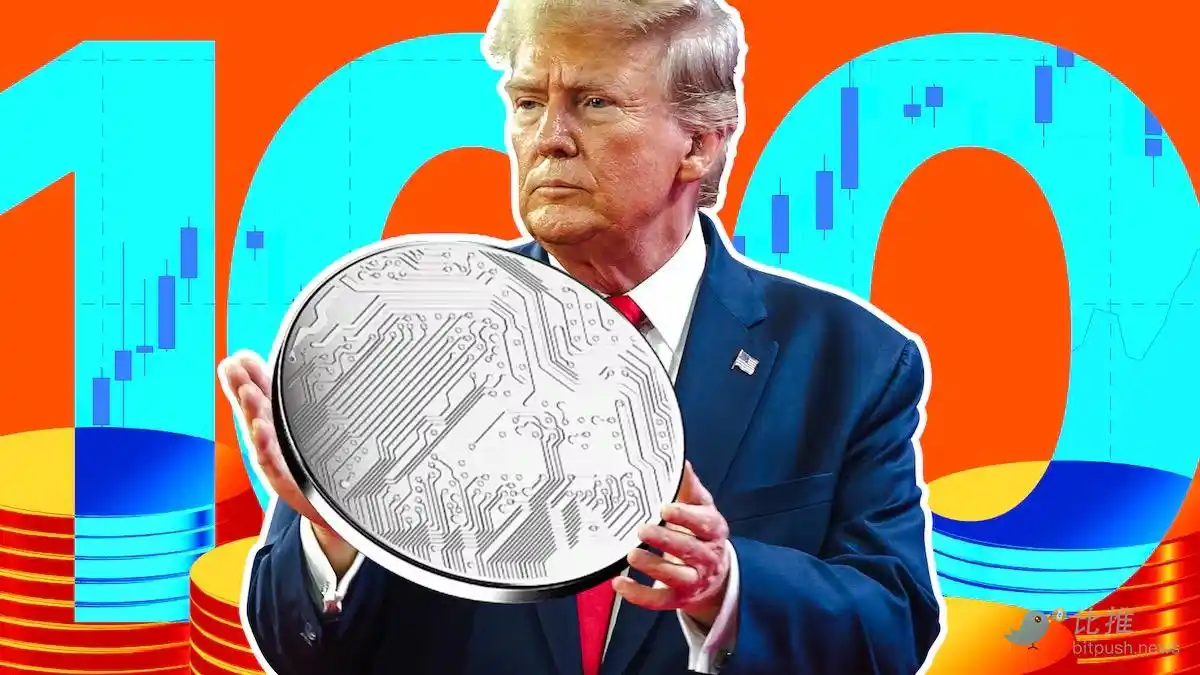
Since taking office as U.S. President, it has been a period of turmoil for various industries under Trump. As he marks the first 100 days of his second term in office, supporters of digital assets are also examining what Trump's governance means for the industry.
Mateusz Kara, CEO of the cryptocurrency company Ari10, told DL News, "The question is, 'Have we overestimated what Trump can do?'"
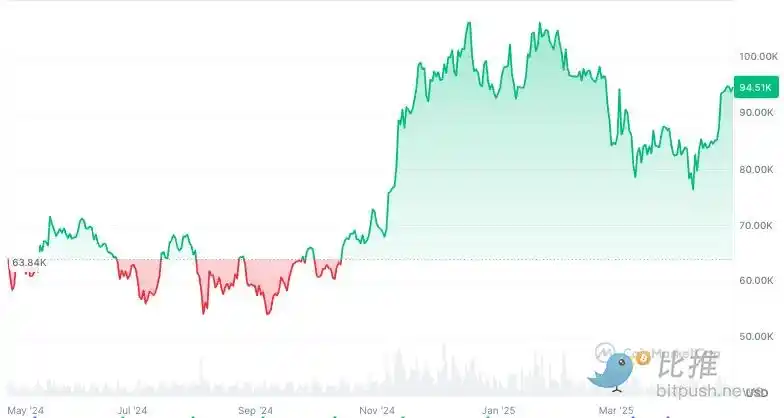
In last year's U.S. election, the cryptocurrency industry supported Trump, hoping that he would end the Biden administration's crackdown on cryptocurrency, implement rules favorable to the industry, and kickstart a bull market. While some rules have been relaxed, the White House's trade war has caused the global cryptocurrency market capitalization to shrink by nearly 21% since its peak in December last year, approximately $800 billion.
Bitcoin has fallen by over 10% since Trump's inauguration on January 20, compared to the day before the inauguration. On that day, the price of Bitcoin hit a historical high of $109,225. Dow Jones market data shows that earlier this month, impacted by tariff concerns, Bitcoin, along with other risk assets, took a hit, dropping below $74,500 on April 7, and rebounding to around $94,500 at the time of writing.
So, what promises has Trump fulfilled so far, and where is the industry headed?
The "Cryptocurrency War" of the Biden Era
Former U.S. President Joe Biden had harshly criticized cryptocurrency, advocating for strict regulation of the industry and supporting the cryptocurrency crackdown launched by then-Securities and Exchange Commission (SEC) Chairman Gary Gensler.
During his campaign, Trump promised to end Biden's "cryptocurrency war." After taking office, Trump replaced Gensler with a pro-cryptocurrency new chairman, Paul Atkins, who pledged to bring clarity to cryptocurrency regulation. This year, the SEC dropped lawsuits against cryptocurrency companies such as Coinbase, Ripple, and Kraken.
Trump also appointed industry supporters, such as financial tycoon Howard Lutnick, who supports Tether, as Secretary of Commerce, and David Sacks as the cryptocurrency czar. In his first 100 days in office, Trump issued a series of comprehensive orders, banning the creation of a digital dollar, protecting self-custody, establishing a regulatory cryptocurrency advisory group, and creating a strategic Bitcoin reserve.
He also pardoned Silk Road's founder Ross Ulbricht and hosted the first White House cryptocurrency summit. This year, federal regulators have rolled back multiple cryptocurrency guidance policies from the Biden era, paving the way for financial institutions to enter the cryptocurrency services.
Symbolism>Substantive Benefit?
In short, Trump seems to have delivered on most of his cryptocurrency promises. So why are some market observers dissatisfied?
Jonathan Dixon, a senior executive at regulatory technology company eflow Global, told DL News: "So far, many campaign promises seem more symbolic than substantive."
"The Bitcoin reserve is essentially a rebranding—it is assets long held by the government and not a sign of active market participation." Dixon stated that while Trump's actions mark a "rhetorical shift from the previous administration," "mere rhetoric does not translate into regulatory certainty."
The Trump administration has not yet pushed through new laws, but some legislation is making its way through Capitol Hill. South Carolina Republican Senator Tim Scott stated in early April, "We are making progress."
Eric Rose, Executive Head of Digital Assets at StoneX Digital, pointed out: "These are all very bullish factors for the sector, but they take time to prove... Just because banks are allowed into the digital asset field doesn't mean they can enter tomorrow, right? They need time to formulate strategies, decide where they want to go, how to implement that strategy, and hire the people for it."
Eric Rose told Market Watch that this may take up to two years of preparation time.
Trade War
Ari10 CEO Mateusz Kara stated, "The market may be disappointed with Trump's administration because we haven't seen an uptrend in data. This is the result of delayed interest rate cuts and the chaos Trump has brought to the market." Trump has so far failed to deliver on his interest rate cut promise, with the Fed's rate cut seen as a catalyst for risk assets like cryptocurrency and stocks.
This is why one of the reasons Bitcoin surged when the central bank cut interest rates in September and November. The issue is that the Federal Reserve operates independently of the White House, and Federal Reserve Chairman Jerome Powell was unwilling to cut rates, particularly after Trump imposed full tariffs on nearly 100 countries (including an island nation where most residents are "penguins"), making the financial future of the United States even more uncertain.
After Trump stopped these tariffs, the overall cryptocurrency market experienced a slight recovery, but any hostile actions could offset this impact. Anthony Young, Chief Business Officer of cryptocurrency risk management company CoinCover, said, "The U.S. government's trade wars will inevitably impact the cryptocurrency industry, and the focus is on whether cryptocurrency can continue to act as a hedge against global market behavior."
Some believe that Trump's trade war could benefit cryptocurrency. Papuna Lezhava, CEO and Co-Founder of fintech startup Keepz and former IMF advisor, stated, "Trump's foreign trade policy could actually make cryptocurrency more attractive to those who wish to avoid the traditional financial system or government-controlled currencies."
You may also like

Morning Report | OpenAI has submitted an S-1 registration statement draft to the U.S. SEC; Morpho completes $175 million financing

Galaxy Deep Research Report: How Hyperliquid's HIP-4 Upgrade Changes the Landscape of Prediction Markets?

Latest research from 13 top universities including Cornell University: The current state, challenges, and misconceptions of the fusion of Crypto and AI

Deconstructing Anthropic: The Best AI Company, Possibly Also a Type of Organizational Invention

Every exchange is a "Universal Exchange."

The counterattack of traditional finance: Alliance chains are quietly reviving
Pantera Capital Partner: How Tokenization is Restructuring the Private Equity and Early Investment Ecosystem?

Mastercard Launches Agent Pay for AI, Plans to Record AI Agent Payment Authorizations on Polygon
Mastercard launched Agent Pay for AI, a new payment protocol designed to help AI agents make small payments such as pay-per-use access to data and APIs. The system plans to record human-granted AI agent permissions on Polygon, focusing on verifiable authorization, identity, and payment controls.

Curve Deploys Llamalend v2 on Optimism With 250,000 OP Incentives
Curve launched Llamalend v2 on Optimism with 250,000 OP incentives from the Optimism Foundation. The upgrade expands Llamalend beyond its earlier crvUSD-focused model, adding broader collateral support, LlamaRisk market reviews, and the ability to use Curve LP tokens as collateral.

Raydium Old Liquidity Pool Reportedly Exploited, With $1.34 Million Moved to Ethereum and Tornado Cash
An old Raydium liquidity pool was reportedly exploited for around $1.34 million in USDC, RAY, and wSOL, with the stolen funds bridged to Ethereum and deposited into Tornado Cash. The incident highlights the tail risks of legacy DeFi pools, old contracts, and cross-chain fund laundering paths.
Kalshi Executive Challenges “SBF Backed AI Unicorns” Narrative, Says Leopold Aschenbrenner Was Key Figure
Kalshi executive John Wang questioned the “SBF backed AI unicorns” narrative, saying Leopold Aschenbrenner was the key figure behind major AI investment decisions.

New York Proposes Stricter Stablecoin Issuer Rules Aligned With Federal GENIUS Act
NYDFS proposed stricter stablecoin issuer rules aligned with the GENIUS Act, covering reserves, custody, redemption timelines, audits, and capital buffers.

CryptoQuant Says Bitcoin Profitable Supply Is Near 45% Pressure Zone as On-Chain Data Points to Market Repricing
CryptoQuant said Bitcoin’s profitable supply is nearing the 45% pressure zone, signaling rising market stress, unrealized losses, and a possible on-chain repricing phase.

Bitcoin Falls Below 200-Week Moving Average as On-Chain Data Shows Over Half of Supply in Loss
Bitcoin dropped below its 200-week moving average as on-chain data showed over 50% of circulating supply is now in loss, signaling rising market stress.

CFTC Reportedly Plans New Prediction Market Rules Focused on Manipulation Risk and Public Interest Review
The CFTC is reportedly preparing new prediction market rules focused on manipulation risk, public interest review, and retail trader protections.

Meet the new WEEX trial fund—your gateway to greater profits

WEEX Labs Lands at Dutch Blockchain Week: A Disruptive Crypto × AI Conversation Sets Sail in Amsterdam
SK Hynix Reportedly Plans U.S. ADR Listing as Early as August, With SEC Approval Possible in Late June
SK Hynix may pursue a U.S. ADR listing as early as August, with SEC approval reportedly possible in late June amid strong AI chip supply chain demand.
Morning Report | OpenAI has submitted an S-1 registration statement draft to the U.S. SEC; Morpho completes $175 million financing
Galaxy Deep Research Report: How Hyperliquid's HIP-4 Upgrade Changes the Landscape of Prediction Markets?
Latest research from 13 top universities including Cornell University: The current state, challenges, and misconceptions of the fusion of Crypto and AI
Deconstructing Anthropic: The Best AI Company, Possibly Also a Type of Organizational Invention
Every exchange is a "Universal Exchange."
The counterattack of traditional finance: Alliance chains are quietly reviving


