
The $PROMPT Airdrop was front-run by MEV for 120 ETH, and the community has raised questions about the developer "using AI to write the contract."


The AI Agent platform Wayfinder, under the Parallel umbrella, was thrust into the spotlight today, along with the previously hot Kaito and the TokenTable token distribution platform under CZ's "patronage," all caught in the whirlwind. What exactly happened during this period?
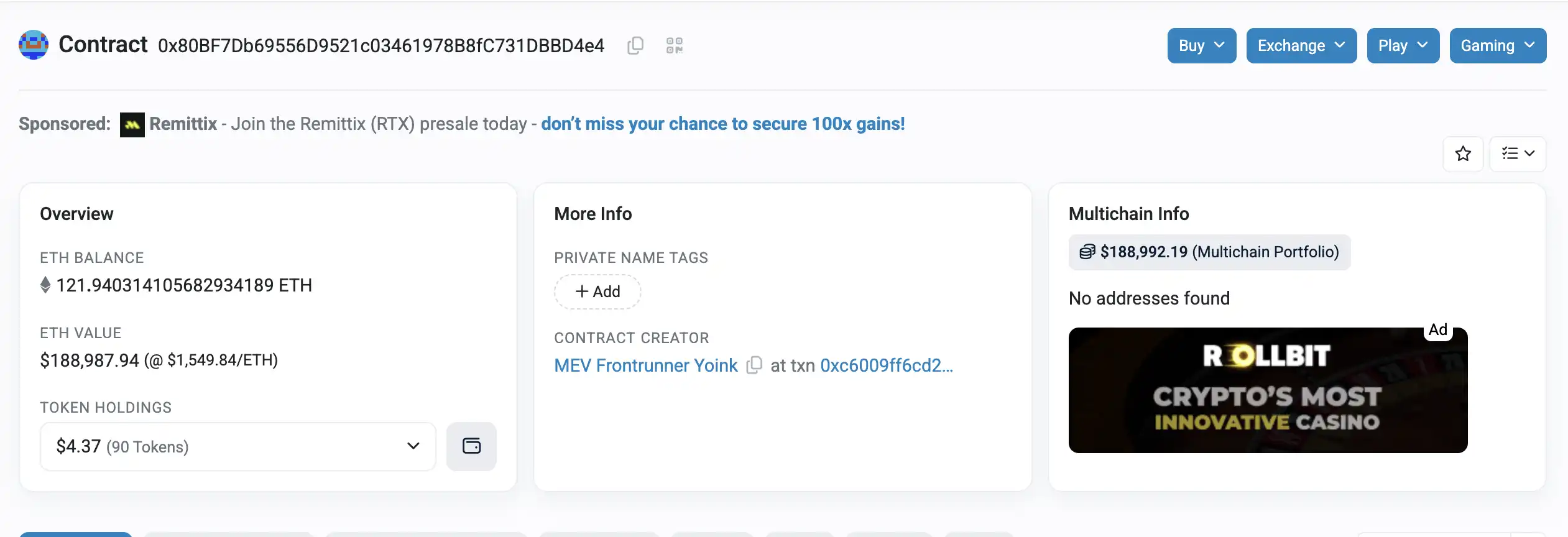
Today is the day Wayfinder started airdropping the $PROMPT token. Following the launch, it has successfully been listed on OKX and CoinBase, and has launched perpetual contracts on Binance. However, the process of claiming the airdropped tokens was not smooth. Many users reported that after interacting, the page showed they had received the tokens, but they themselves did not actually receive the airdrop. At the same time, some individuals reportedly "snatched" over 120 ETH (around $189,000) through this airdrop. What exactly happened in this scenario?
Parallel, backed by Solana Venture, Base, Amber Group, and others, is a gaming company that raised $85 million in funding. It has developed the AI-driven survival simulation game Colony. The protagonist of this article, Wayfinder, is meant to connect the AI game Colony with blockchain and various use cases outside of gaming.
This TGE consisted of three parts conducted together: Caching rewards (staking $PRIME), APP usage rewards, and KAITO rewards. However, issues arose during the KAITO airdrop claiming process.
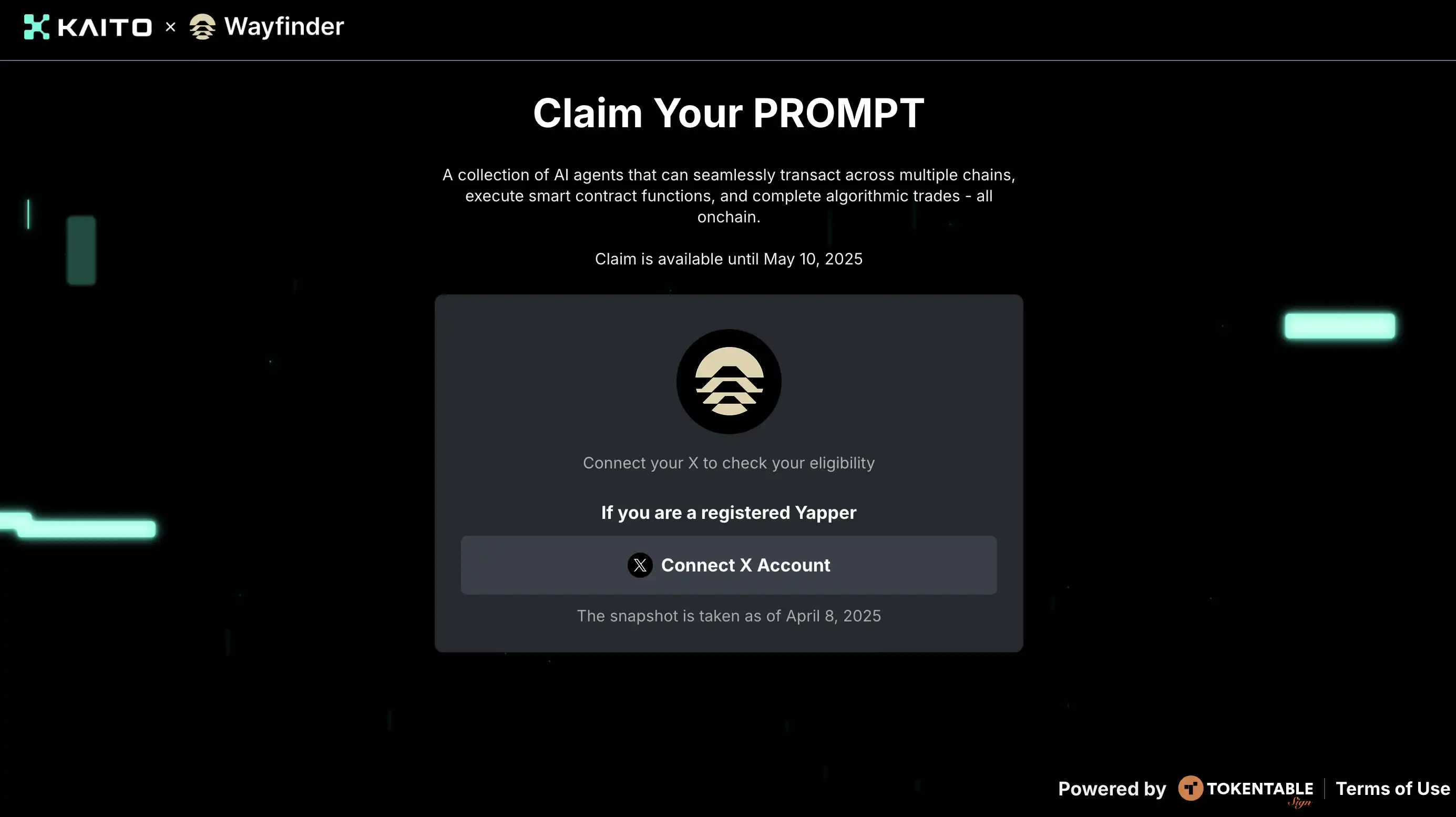
KAITO and WayFinder's Airdrop Got "Yoinked"
Root Cause of the Event
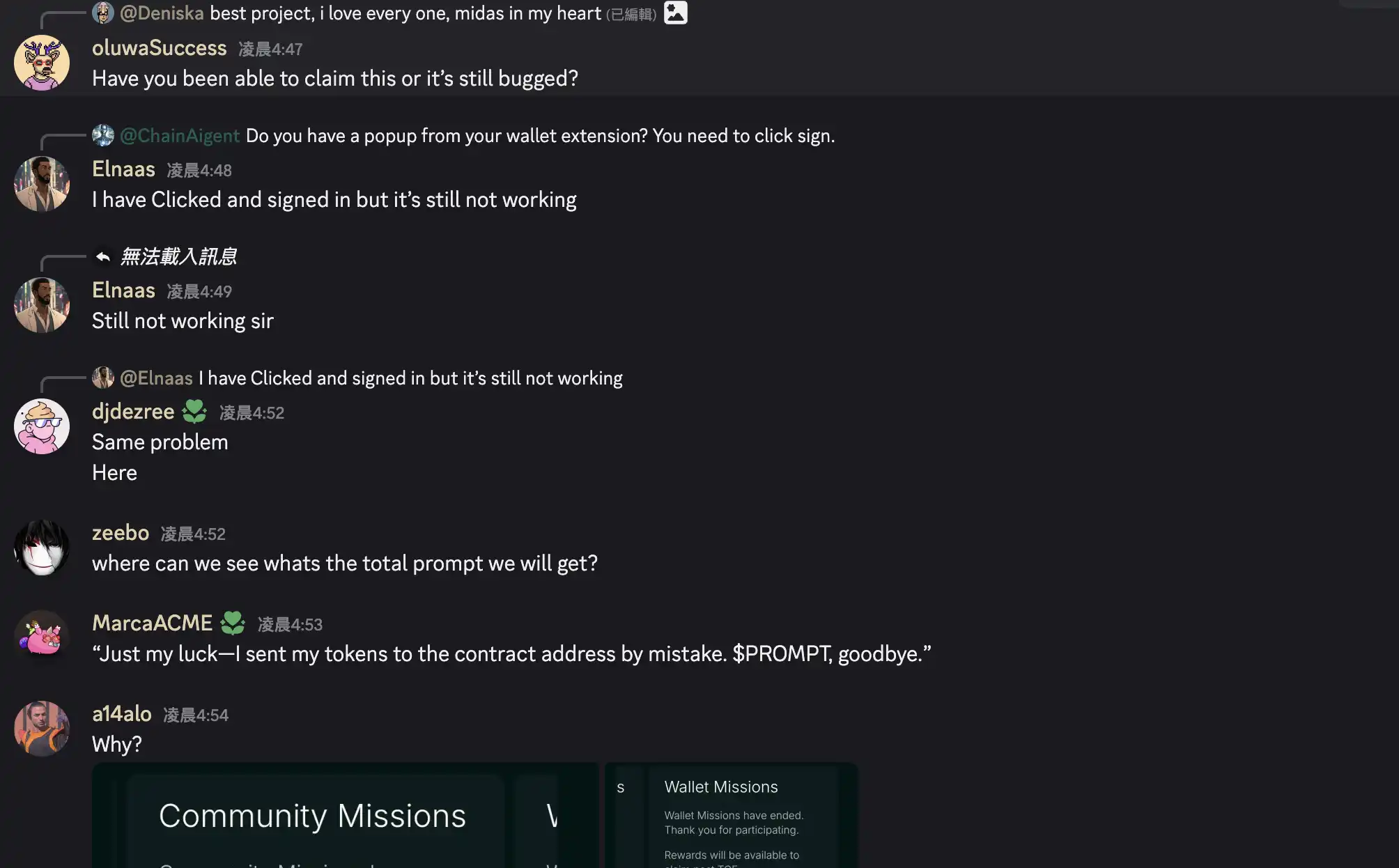
The KAITO and Wayfinder airdrop event was planned to distribute 5 million tokens to Yappers, with those Yap scores exceeding 90 receiving 4 million tokens and those with scores above 0 but below 90 receiving 1 million tokens. As the event kicked off, Yappers began claiming their tokens. However, problems quickly emerged. Many users in the Discord channel reported that they had interacted but did not receive the tokens, with the system showing their tokens had already been claimed.
Just as confusion reigned, developer Ultra reached out to AIWayfinder on social platform X, indicating that an MEV frontrunner was stealing the $PROMPT being exchanged on the KAITO event page and converting it to ETH. Ultra self-deprecatingly mentioned that they quickly noticed this because they had also been "Yoinked."
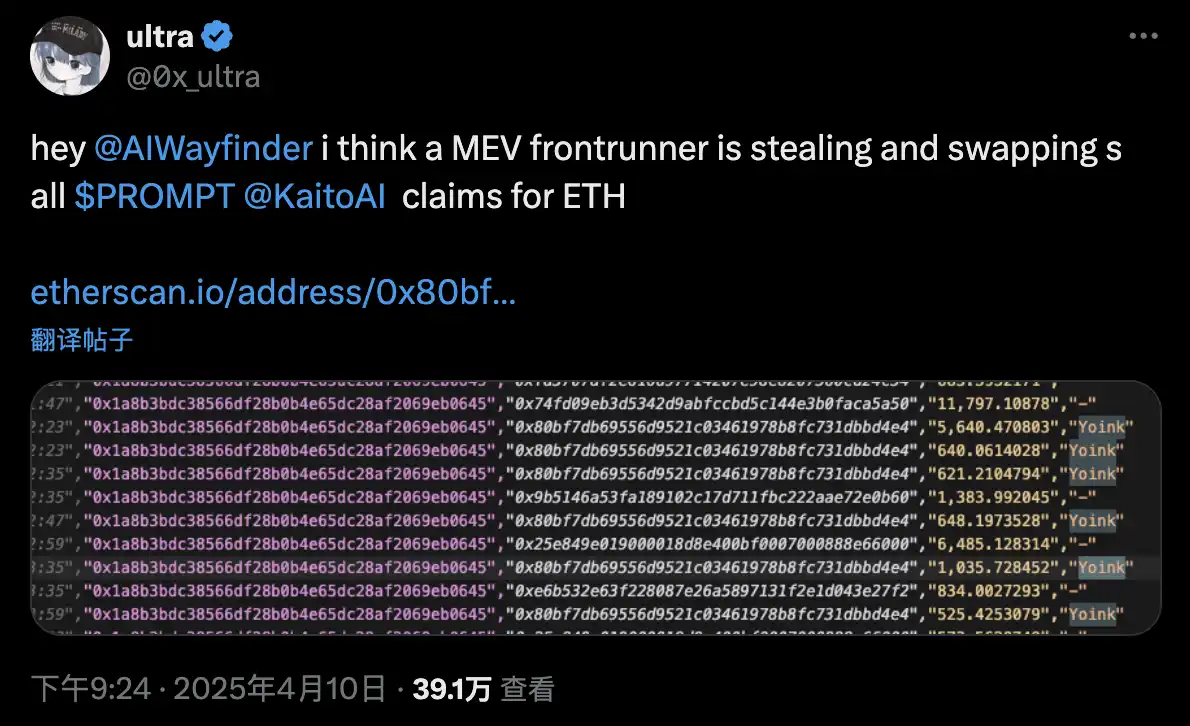
Yoink is a slang term meaning "to quickly snatch" or "to steal," which emerged during DeFi Summer and has been widely used. An MEV Frontrunner Yoink typically refers to a specific MEV bot or strategy that specializes in "snatching" other users' transaction opportunities through frontrunning.
Now EtherScan-authenticated MEV Frontrunner Yoink address has linked to a social media account X with the handle yoink6980. Previously, yoink6980 had disclosed as the actual attacker who informed the community about a vulnerability in the ERC-2771 protocol, saved community funds, such as in December 2022 when they rescued funds from DFX Finance and returned them to users.
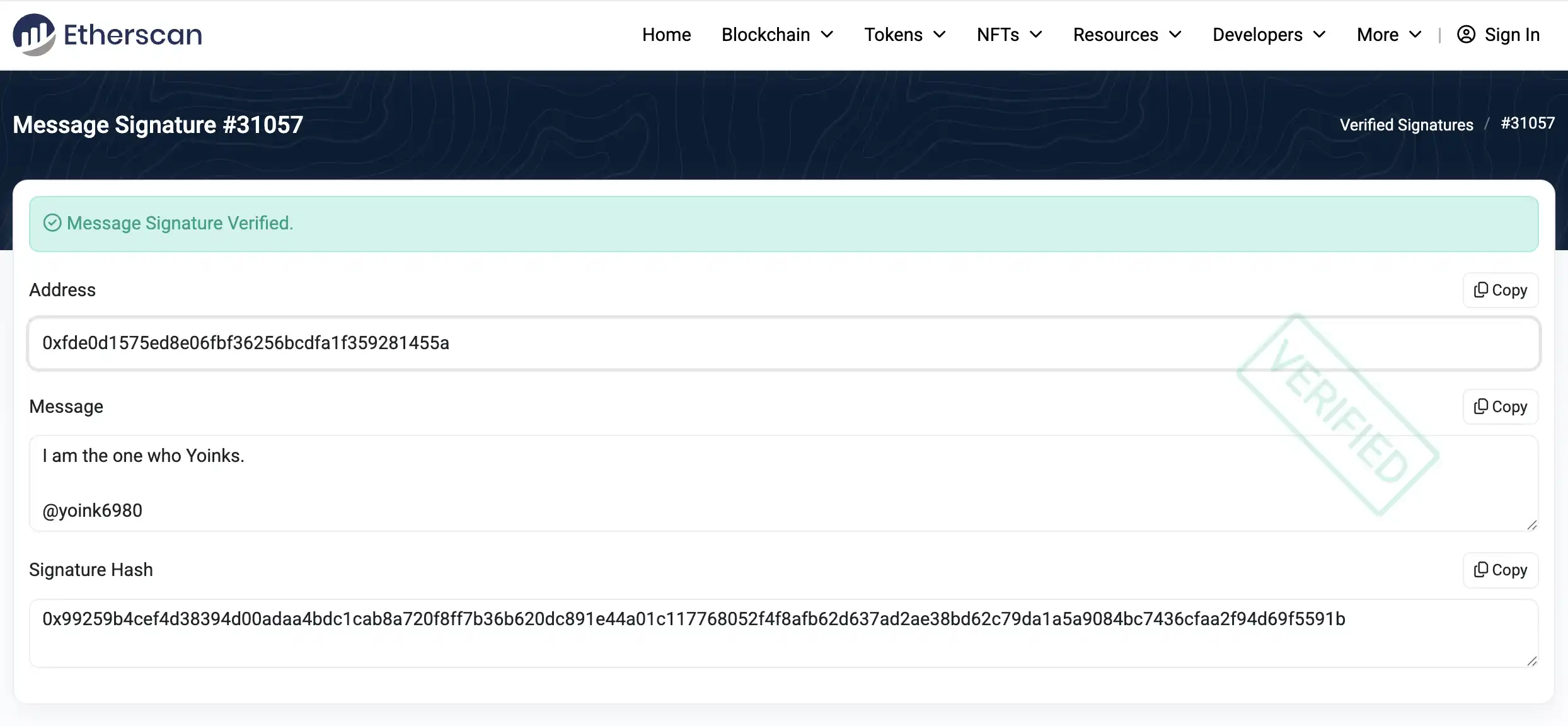
The individual who lost 120 ETH in this recent theft fell victim to an MEV frontrunning attack using the "Yoink" method. However, in this case, the purpose seemed to be not to protect users but genuinely to loot.
Developer Ultra "0x_ultra" recounted, "What happened today was that Kaito Yappers' AI Wayfinder claimed contract was misconfigured, with the airdrop recipient not pre-configured in the Merkle proof, allowing MEV Yoink to spot an opportunity in the mempool and act swiftly, exploiting this vulnerability to frontrun any slow token claims."
Whose fault is this, ultimately?
Since then, "I get yoinked" and "Bro was lucky not to get yoinked" have become the most shared terms on social media by users who either missed out on or received the airdrop during the WayFinder and KAITO event.
Team member Kalos made an announcement stating that "the token claim issue with Kaito is not on our side, but we are working with them to resolve it," and specifically mentioned that "the contract was not created by Wayfinder." Within the community, there is growing FUD regarding this issue, with questions arising about whether the claiming contract was either unaudited or simply written by AI.
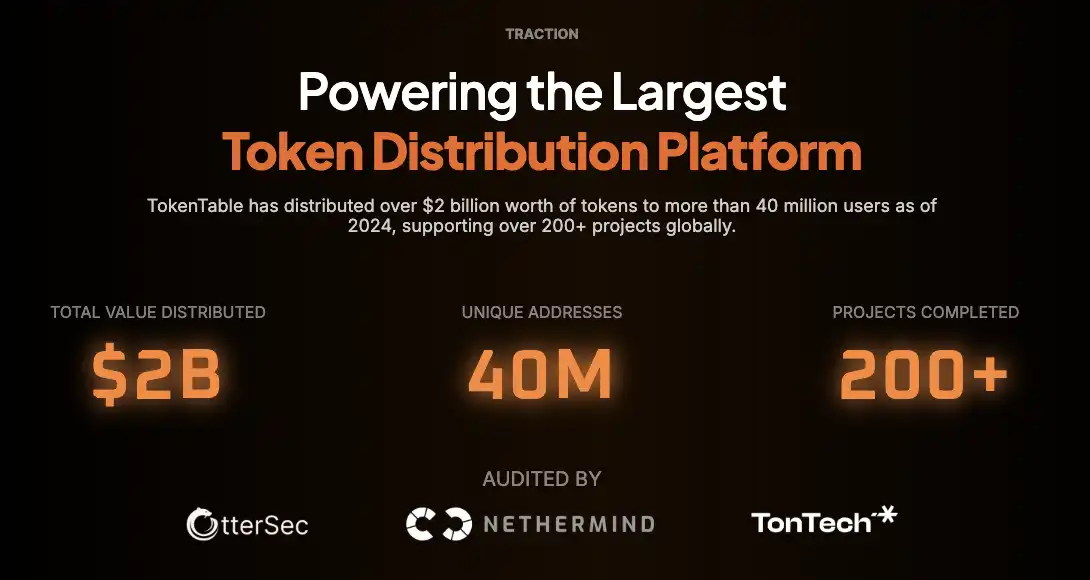
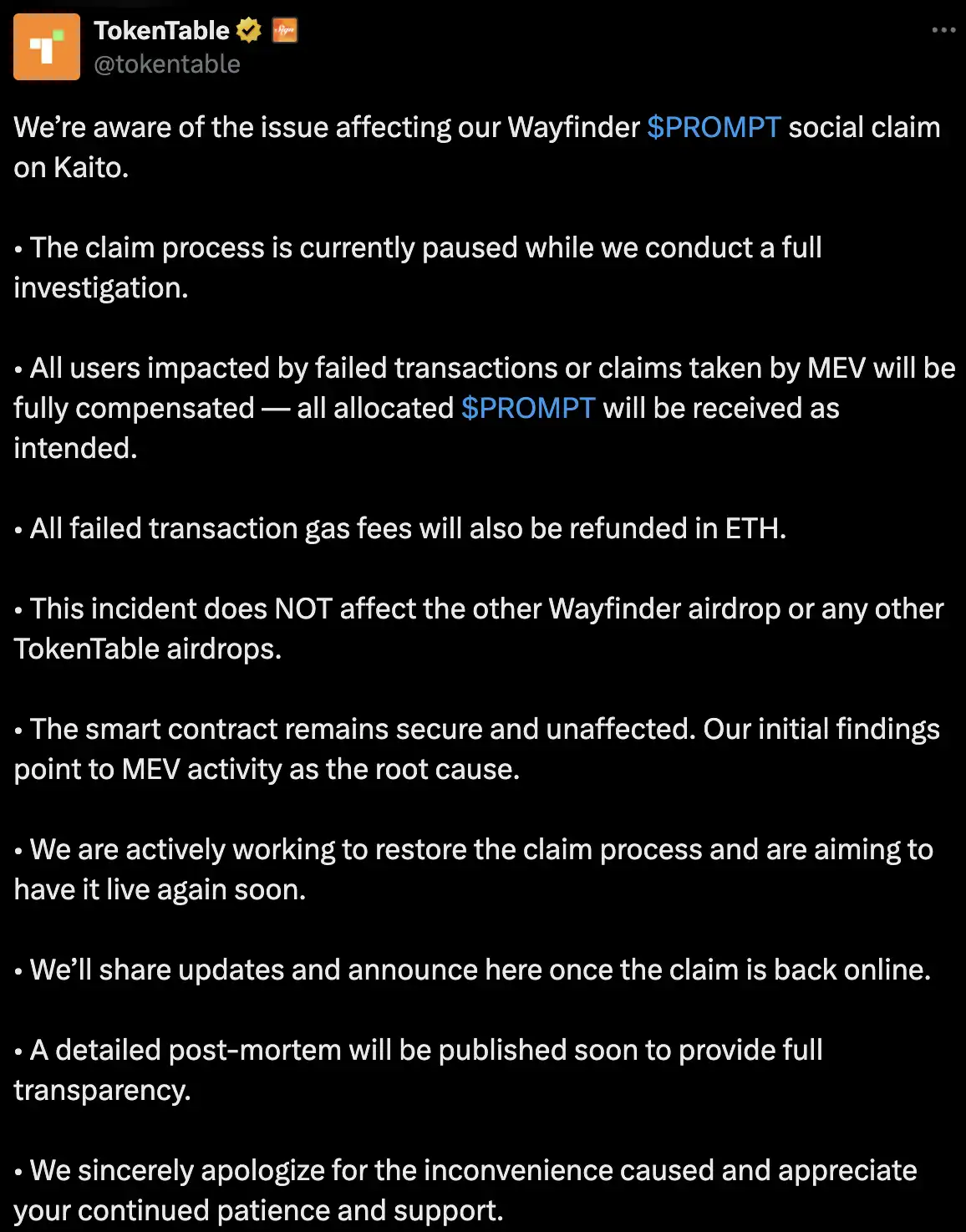
The technical support platform TokenTable responsible for the KAITO airdrop quickly responded, stating that this event will not affect other Wayfinder airdrops or any other TokenTable airdrops. They will compensate for all users who did not receive tokens in this airdrop due to MEV impacts, including refunding all failed transaction fees in ETH. They mentioned that the smart contract is fine and that MEV is the fundamental issue. From the official website, we can see that TokenTable's contract was audited by companies such as tteSec, Nethermind, and TonTech.
The founder of g8keep, PopPunk, commented on this event on social media platform X by saying, "I warned you all a long time ago!" In fact, as early as the day before the airdrop, he posted on X mocking some of the issues in Wayfinder's claiming contract, believing that storing each individual claim in an on-chain mapping rather than using a Merkle root approach was very poor.
Wayfinder team member Kalos had responded to this tweet, saying, "The smart contract was audited by Quantstamp and other companies, and it has done multiple Merkle roots. It may have saved us some gas, but mapping is better for users." PopPunk expressed his lack of understanding as to why mapping would be better for users unless they interact directly with the contract to claim the airdrop, rather than through the website.
While this event may not be due to Wayfinder's responsibility for the "Caching" claim contract issue, some community members pointed out that the Merkle root contract may indeed reduce Yoink risk. For example, requiring users to submit a unique Proof "binding address" or limiting the single claim window can increase the difficulty of bot-replicated transactions. Off-chain Proof distribution can be combined with private transaction pools like Flashbots to hide mempool visibility and reduce monitoring opportunities.
Based on the existing clues, TokenTable may have taken on greater responsibility in this event, but we do not yet know specifically which party's mistake it belongs to, as we are awaiting further investigation reports. Nevertheless, it is fortunate that TokenTable is willing to take responsibility for this, and users will not incur any losses.
One Wave After Another, Stakeholders' Complaint
$PRIME Three-Year Stakers Suffer Heavy Losses
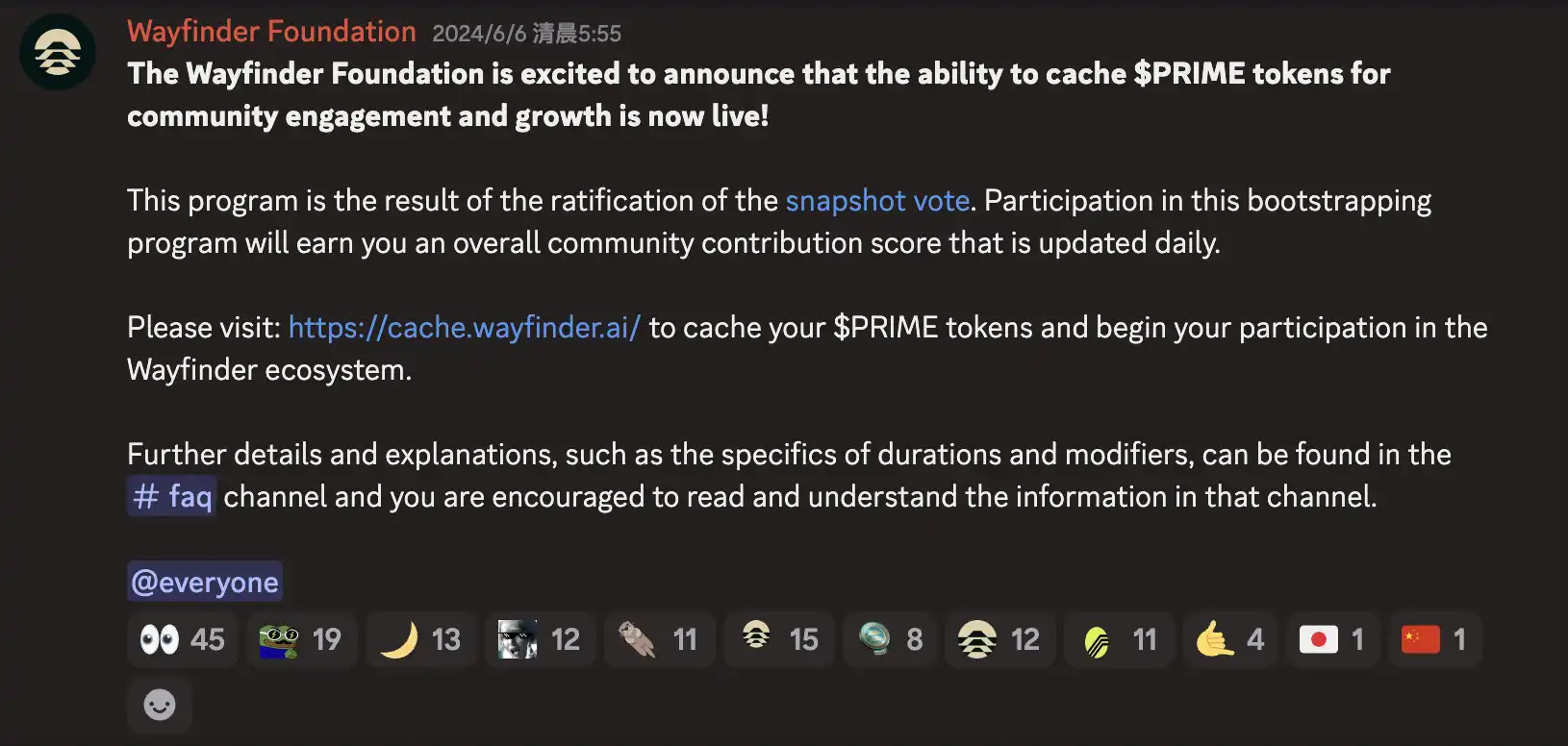
In June 2024, Wayfinder announced an event where staking $PRIME would give participants the opportunity to join the Wayfinder "Future Airdrop," with greater rewards based on the length of their staking period.
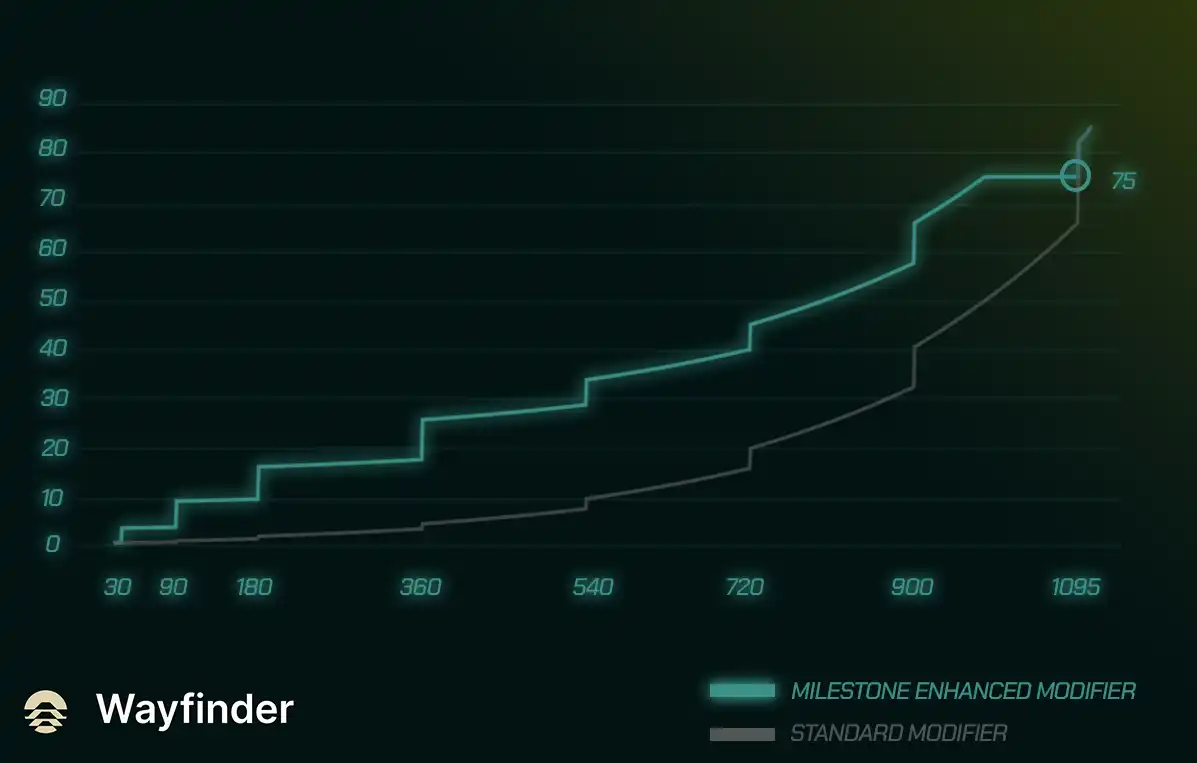
The resolution of Kaito's and WayFinder's airdrop distribution has just been reached. On the other hand, those who initially staked $PRIME to become Cache users are now expressing their dissatisfaction. Community member Lsi-luna, who participated in the event, raised a poignant question on Discord, "Despite receiving a portion of this airdrop, considering the sharp decline in $PRIME's price, I only received 2% of what I put in."
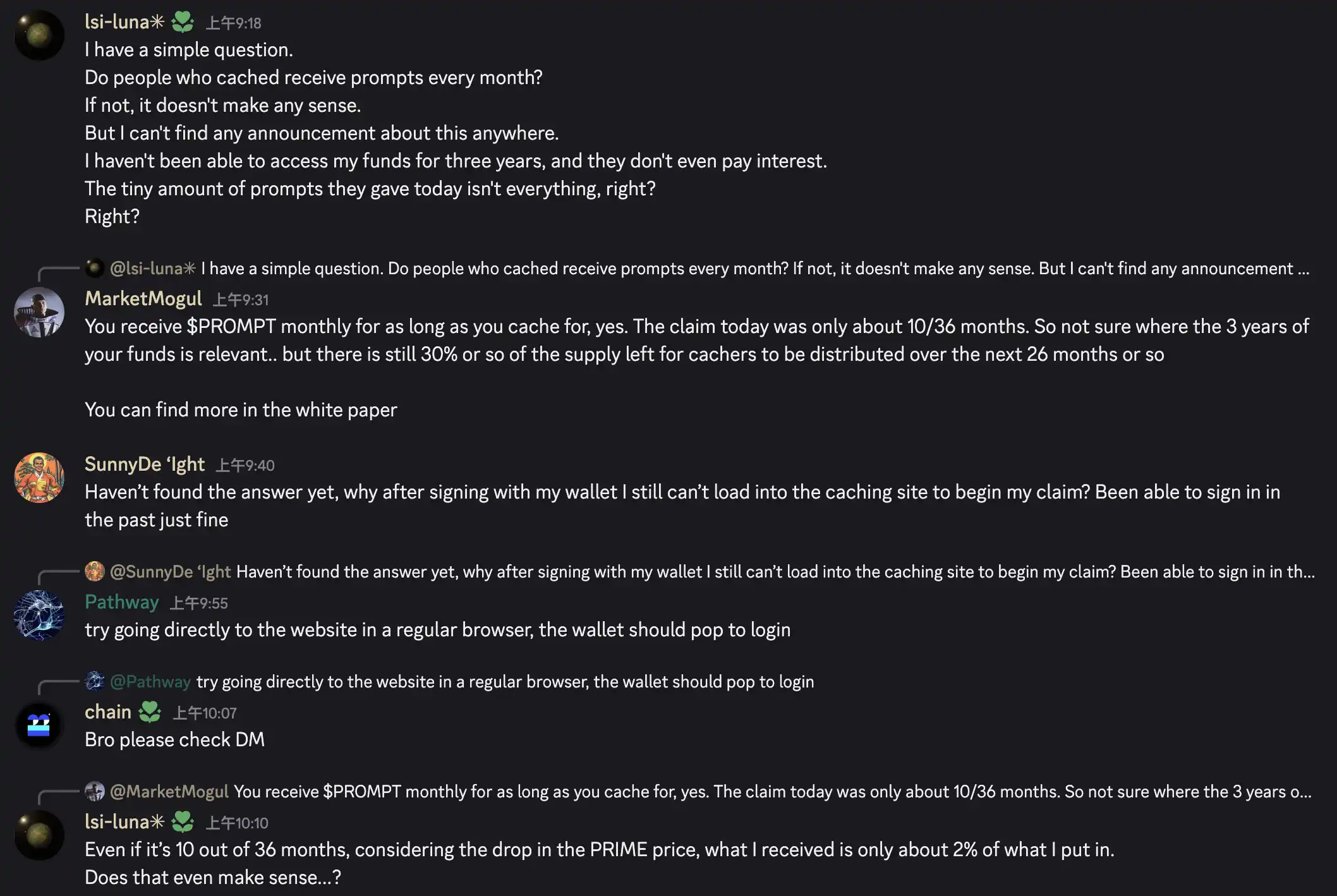
In times of allocation imbalance, do we still need to engage with the community?
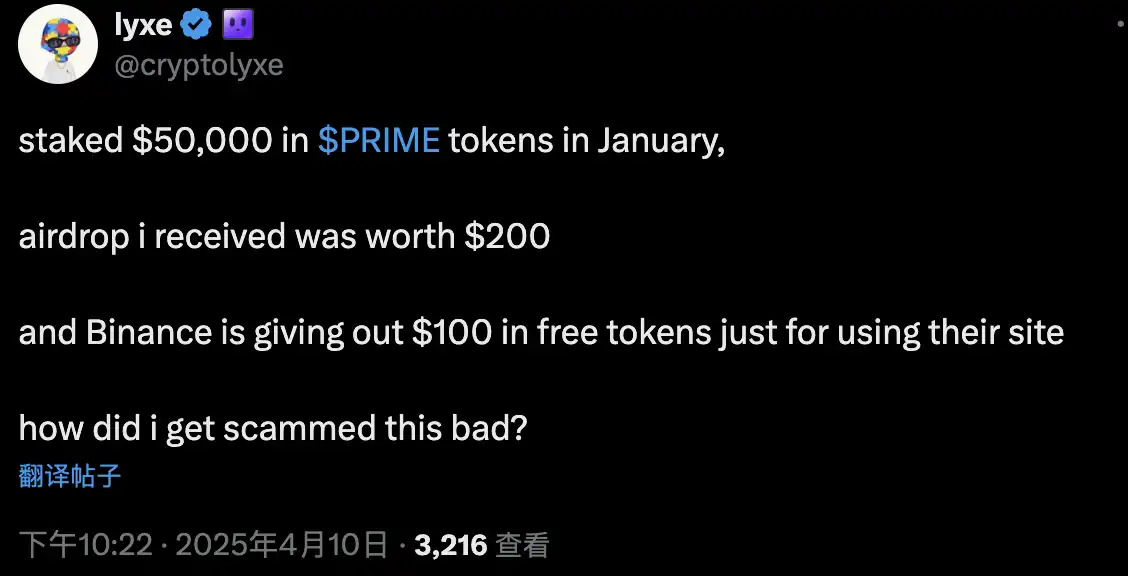
In fact, this situation has occurred countless times in many blockchain projects. What truly disheartens the community is the journey from staking $50,000 worth of $PRIME in January to now only being able to receive $200, especially when a single website activity on Binance could yield $100 for free. The disregard for contributors and the generosity towards non-contributors have left them deeply resentful.
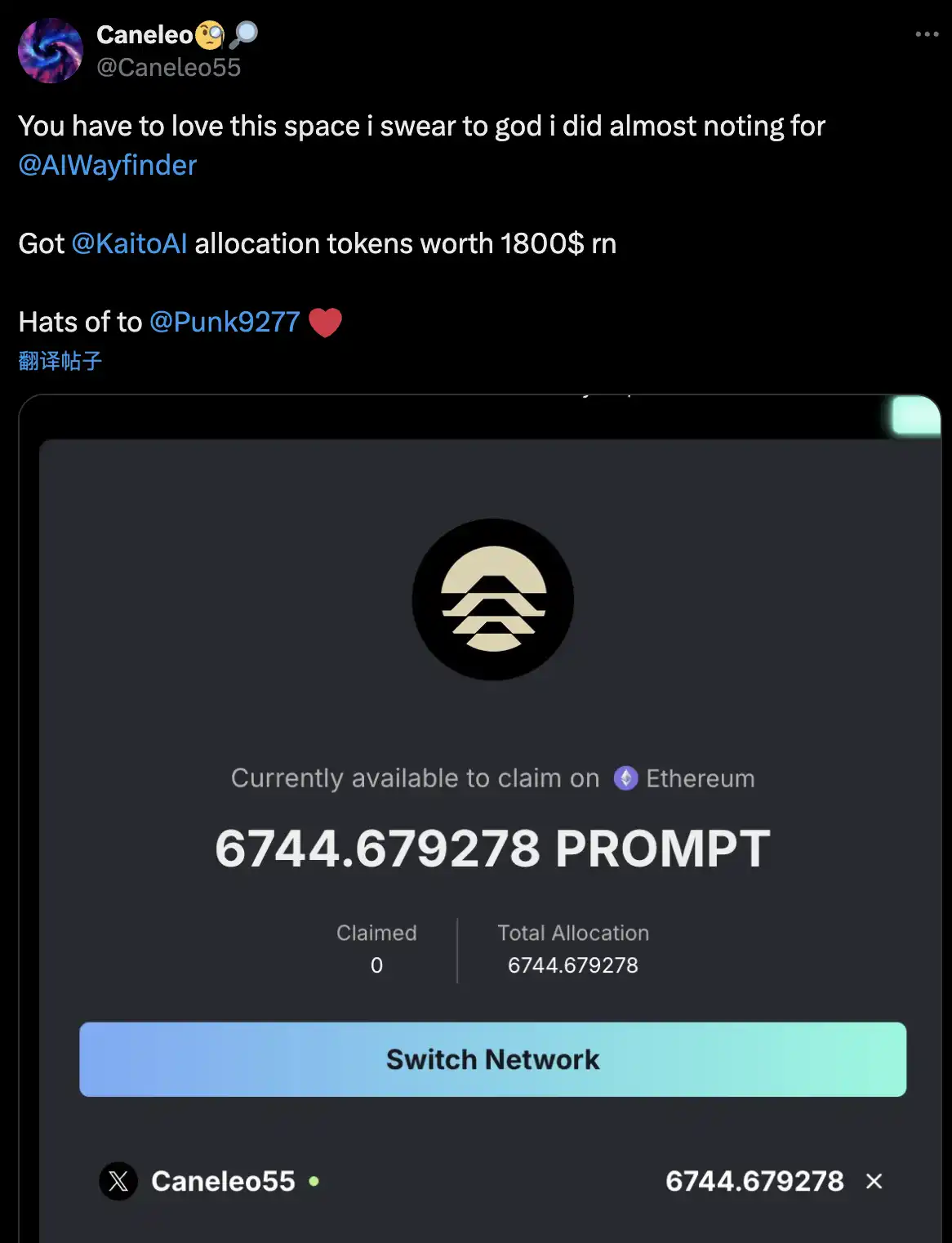
Furthermore, the rewards given by Kaito's event were much greater. Several emerging Yappers reaped significant rewards in this airdrop, ranging from thousands to nearly tens of thousands of dollars, even though they barely paid attention to the project. Team member Kalos made a statement, mentioning that Cachers could collectively receive 400 million $PROMPT tokens, while the total social tasks, including those from Kaito's plan, amount to 20 million $PROMPT. Cachers now receive only 28% of all rewards, but this fails to mend the community's heart.
Even many recipients of the airdrop could not stand aside and voiced their concerns. Simon, the founder of Moonrock Capital, mentioned in a post that he received nearly $10,000 worth of $PROMPT from Kaito and AIWayfinder's airdrop page, expressing confusion as to why AIWayfinder rewarded him, even though he hardly ever mentioned the project.
Unable to contain his thoughts on this phenomenon, he expressed his confusion, "I don't need to make any contribution, yet I can easily claim tokens, sell them, and extract the intermediate value. Meanwhile, those who bear 100% of the costs receive no reward. As I mentioned before and will say again now, airdrops are obsolete and meaningless."
Kaito founder Yu Hu gently reminded Simon in the comments that Simon had written a post about AIWayfinder last month. Simon replied, "Thank you for sharing; I even forgot about it myself. I thought it was necessary to continually discuss Wayfinder and share mindshare for them."
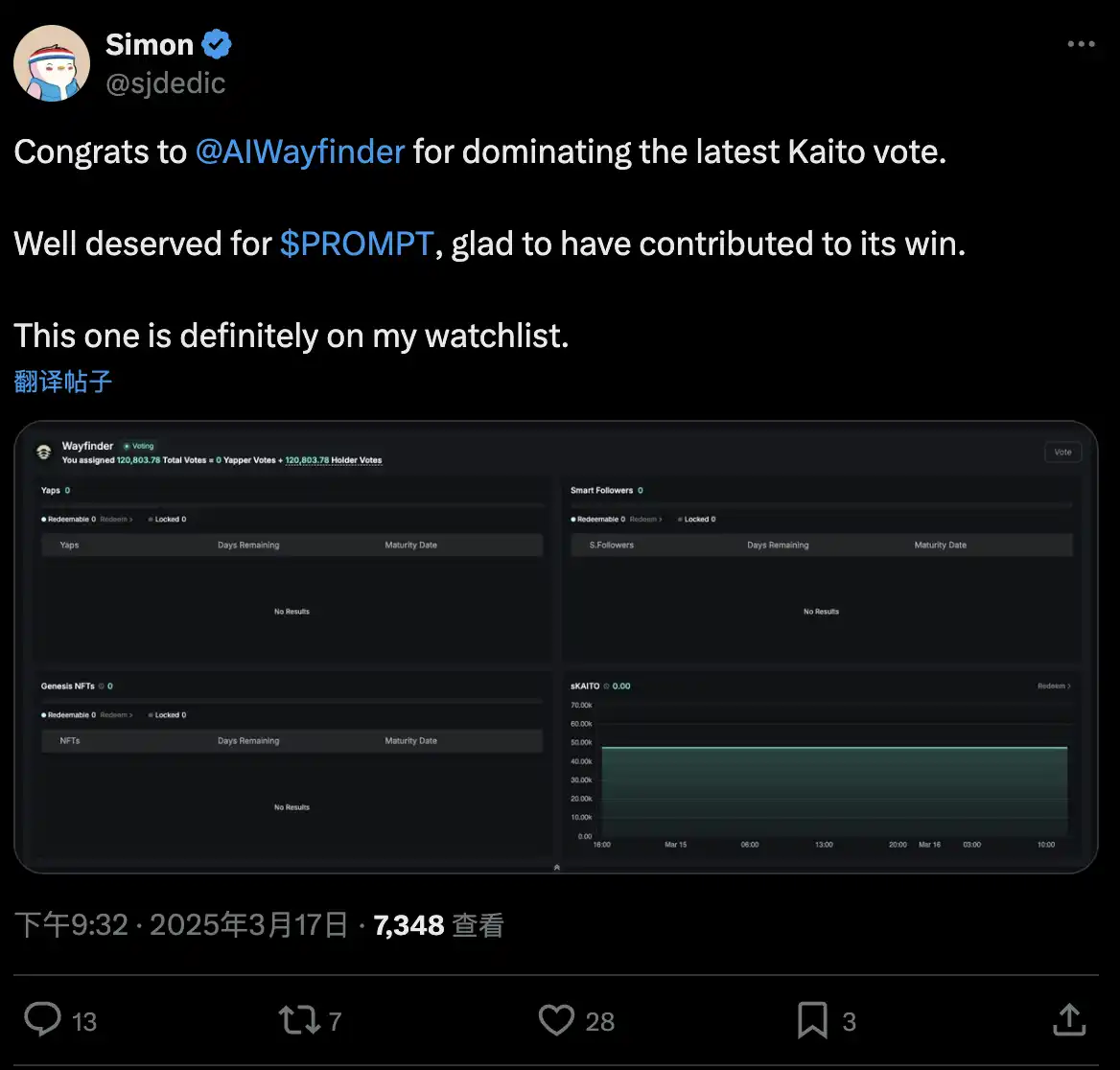
Those who staked their tokens accepted the risk of a token price drop and incurred the time cost of waiting for a year. Meanwhile, the "influential" individual posted a tweet a month ago with 28 likes. The former received rewards of less than 1/10 of the latter's. This may be why the community is angry.
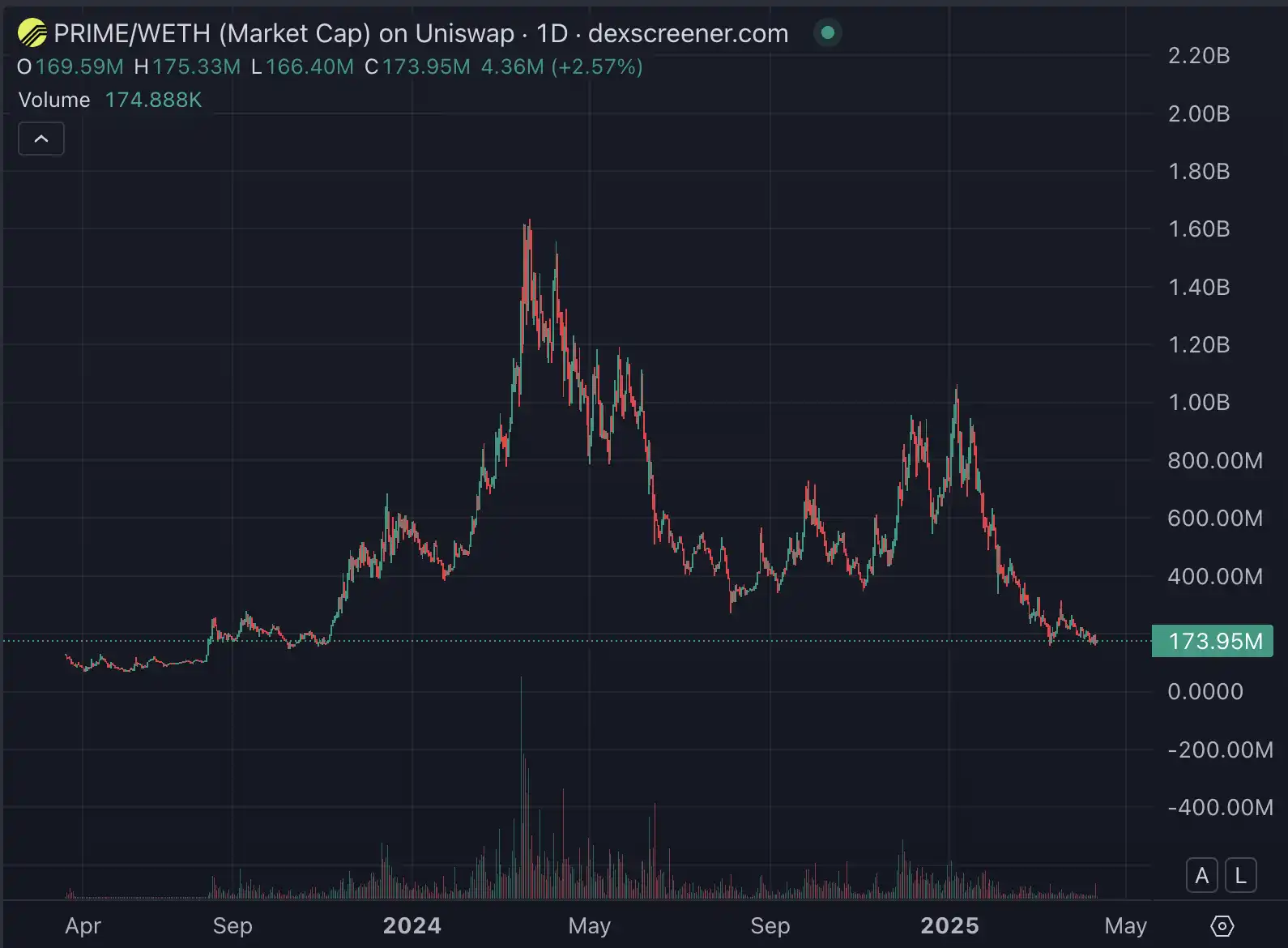
PRIME has plummeted nearly 90% from its all-time high market cap and 75% since the events in June began
Creating a successful product in crypto is extremely challenging. Once tokens are involved, the even more challenging task is how to distribute the interests of all parties fairly. Whether airdrops are dead or not remains unknown, but it is a consensus in crypto that most projects will struggle to move forward when they lose support from the community. In the current landscape where fast-moving meme culture prevails in the industry, every practitioner must face the questions of how to retain project teams that want to make a real impact and how to protect community members who still "believe."
You may also like

Morning Report | BitMine increased its holdings by 126,971 ETH last week; trader Eugene announced his exit from the crypto market

Wang Chuan: How can one not feel anxious after the neighbor Old Wang made thirty times profit by investing in storage stocks? (Seven) - A quarter-century cycle

Cryptocurrency CEXs are flocking to sell US stocks, and traditional brokerages are facing an "uninvited guest."

$75 billion in foreign capital has fled, and South Korean retail investors have absorbed it all using leverage

Japan’s Three Megabanks Plan Joint Stablecoin Issuance in Fiscal 2026
MUFG, SMBC, and Mizuho reportedly plan to jointly issue fiat-pegged stablecoins in fiscal 2026, signaling Japan’s growing push into bank-led digital payment infrastructure.

Humanity Discloses H Token Dual-Chain Attack Details, With Losses on Ethereum and BSC Exceeding $36 Million
Humanity said the H token attack across Ethereum and BSC caused more than $36 million in losses after leaked ProxyAdmin keys enabled malicious contract upgrades and token minting.
White House Discusses CLARITY Act With Law Enforcement Ahead of Senate Vote
The White House discussed the CLARITY Act with law enforcement ahead of a Senate vote, focusing on illicit finance risks and developer protections.

Bitcoin Trading Guide 2026: Strategies for Experienced Traders

What Is XAUT and PAXG? Why Tokenized Gold Is Booming in 2026

Will the SpaceX IPO Hurt Bitcoin? Here's What Traders Are Watching

Foreign selling in the South Korean stock market accelerates, with cumulative net sales reportedly reaching $75 billion this year
On June 9, The Kobeissi Letter, citing Goldman Sachs data, reported that global investors are selling South Korean stocks at an unusually rapid pace. In the latest trading session, foreign investors sold about $801 million worth of Kospi constituent stocks again; total foreign outflows last week reached about $10 billion, and the market has been in net foreign selling on nearly every trading day over the past month. According to the data cited in the report, foreign investors have sold about $75 billion worth of South Korean stocks so far this year. Meanwhile, South Korean retail and institutional investors together recorded roughly $69 billion in net buying over the same period, suggesting that the market’s main buying support has come from domestic capital rather than returning overseas funds. The information currently disclosed still mainly comes from The Kobeissi Letter’s retelling and Goldman Sachs data summaries, while public details on the statistical period and the specific definition of “selling” remain relatively limited.

Fortune Warns of Strategy’s Financing Structure Risks as Bitcoin Premium Narrows
Fortune warned that Strategy’s Bitcoin treasury model faces growing financing risks as MSTR’s net asset premium narrows and preferred stock dividend pressure increases.

Ferrari Challenge Le Mans: Carl Moon to Dominate in WEEX Livery

Sahara AI Responds to SAHARA’s Sharp Drop: No Contract or Product Security Issues Found, Internal Investigation Underway
Sahara AI responded to SAHARA’s 60% price drop, saying no token contract or product security issues have been found and an internal investigation is underway.

WEEX Deposit/Withdrawal Dynamic Island: Your Asset Status, Always in Sight
Scaling Crypto Derivatives: The Digital Asset Infrastructure Behind High-Volume Trading
In the fast-moving digital asset ecosystem, derivatives platforms face an extreme architectural test. High-leverage futures markets demand more than just standard security—they require absolute operational precision, zero-latency matching engines, and ironclad structural scalability, all while navigating intense market volatility.
As global platforms scale to meet these demands, the industry is shifting away from rigid, monolithic setups toward a more agile, "decoupled" infrastructure philosophy.
The Blueprint for High-Volume Copy TradingFor elite global exchanges like WEEX (founded in 2018), this architectural choice becomes critical when scaling high-volume retail features like social copy trading. When thousands of users automatically mirror the real-time strategies of elite traders simultaneously, it triggers sudden, monumental spikes in concurrent transactional volume.
To prevent execution latency or settlement bottlenecks during these peak volatility events, a platform's primary engine must remain entirely dedicated to risk management, copy-trade synchronization, and order matching.
The Architectural Rule: New-generation platforms must separate front-end user execution engines from heavy backend infrastructural overhead to eliminate operational friction.
By separating these layers, platforms can maintain complete sovereignty over their trading environments and user experiences while strategically aligning with institutional-grade infrastructure ecosystems. This strategic framework allows modern exchanges to leverage advanced Digital Asset Custody infrastructure such as Cobo’s behind the scenes, ensuring that backend wallet management scales elastically alongside trading spikes.
Capitalizing on Market Momentum and 400× LeverageIn a derivatives arena where platforms offer up to 400× leverage on perpetual contracts, capital efficiency and market agility are core business metrics. To capture market momentum, an exchange needs the ability to rapidly expand its asset offerings, supporting everything from legacy crypto assets to sudden, trending altcoins across a massive library of trading pairs.
Adopting a flexible, scalable Wallet-as-a-Service (WaaS) solution such as Cobo’s could completely rewrite the development timeline for high-growth exchanges. Instead of spending months of engineering capital building out custom backend wallet architectures for every new blockchain network, platforms can deploy localized infrastructure in days.
This agility allows platforms to instantly scale their listings to over a thousand trading pairs without compromising security or delaying time-to-market. It mirrors the exact operational advantages seen during high-velocity market events, similar to how advanced wallet infrastructure empowers platforms during sudden asset surges; allowing exchanges to pass that speed and liquidity directly to their global user base.
A Mature Foundation for GrowthThe synergy between trusted infrastructure ecosystems and global trading platforms represents the natural evolution of a maturing crypto market. As WEEX continues to scale its global spot and derivatives offerings for over 6 million users, adopting robust backend paradigms proves that platforms no longer have to compromise between cutting-edge trading velocity and uncompromised structural security.

Get Paid to Onboard? Try WEEX’s New Homepage with Rewards for Registration, Deposit & Trade
WEEX Custom Layout: Build Your Perfect Trading Workspace in Seconds
Morning Report | BitMine increased its holdings by 126,971 ETH last week; trader Eugene announced his exit from the crypto market
Wang Chuan: How can one not feel anxious after the neighbor Old Wang made thirty times profit by investing in storage stocks? (Seven) - A quarter-century cycle
Cryptocurrency CEXs are flocking to sell US stocks, and traditional brokerages are facing an "uninvited guest."
$75 billion in foreign capital has fled, and South Korean retail investors have absorbed it all using leverage
Japan’s Three Megabanks Plan Joint Stablecoin Issuance in Fiscal 2026
MUFG, SMBC, and Mizuho reportedly plan to jointly issue fiat-pegged stablecoins in fiscal 2026, signaling Japan’s growing push into bank-led digital payment infrastructure.
Humanity Discloses H Token Dual-Chain Attack Details, With Losses on Ethereum and BSC Exceeding $36 Million
Humanity said the H token attack across Ethereum and BSC caused more than $36 million in losses after leaked ProxyAdmin keys enabled malicious contract upgrades and token minting.


