
Tariff Reprieve Unleashes SOL On-Chain 'Emotion Rush' Space, FART and VINE Surge Over 40% Intraday




根据 BlockBeats 和 GMGN 数据,截至 4 月 10 日,Solana 生态内的部分 meme 币迎来了难得的反弹行情。VINE、FARTCOIN、POPCAT 和 GHIBLI 等 meme 突然「活」了过来,在过去 24 小时内涨幅显著,其中 Fartcoin 的 perps 交易量几乎超过了 CEX 上的所有其他主要 meme 币。
就在昨天华尔街刚开盘没多久,特朗普突然高呼一句:「现在是买入的好时机!」还没等市场反应过来,他立马反手操作,宣布暂停大部分国家的关税 90 天,虽然中国这边的关税被提到了 125%,但整体来看,市场情绪被他这波「又疯又准」的发言给带起来了。
在这一贸易政策缓和的短暂窗口期,Sol 链上的 meme 币成了最先躁动的板块,这波涨的,不只是价格,还有社区的情绪。Solana 生态最近在搞什么?看看社区的声音里,是不是真的有人在 All in 这波「情绪复苏」。
关税缓一口气,Sol 上的 meme 就开始领跑
中美关税暂缓的消息缓解市场紧张情绪,也为这轮反弹提供了外部推力。
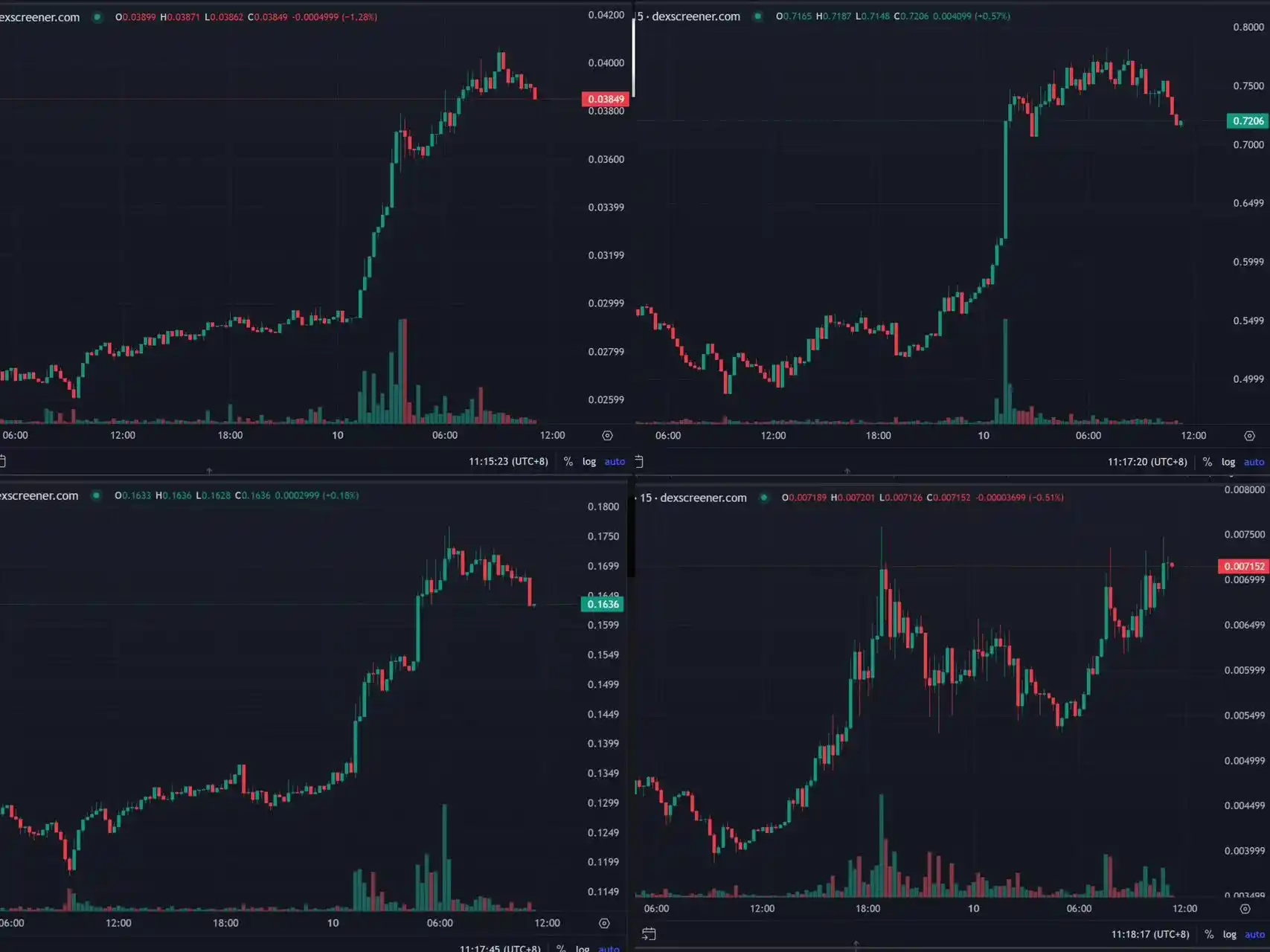
VINE 24 小时暴涨 44.6%,市值近 4000 万美元,FARTCOIN 涨幅 44.3%,市值达 7.44 亿美元,Popcat 从 0.1199 涨至 0.1636,涨幅 36.4%,吉卜力 IP 叙事的 GHIBLI 从 0.03999 攀升至 0.07152,涨幅 78.8%。
这几只 meme 币几乎在昨晚至今早同一时段集体拉升,短时间内交易活跃。但在高强度上涨后,普遍出现回调,反映出当前资金以情绪和投机为主,波动性极高。
相关阅读:部分 Solana 生态 meme 币反弹,VINE 24 小时涨幅达 44.6%
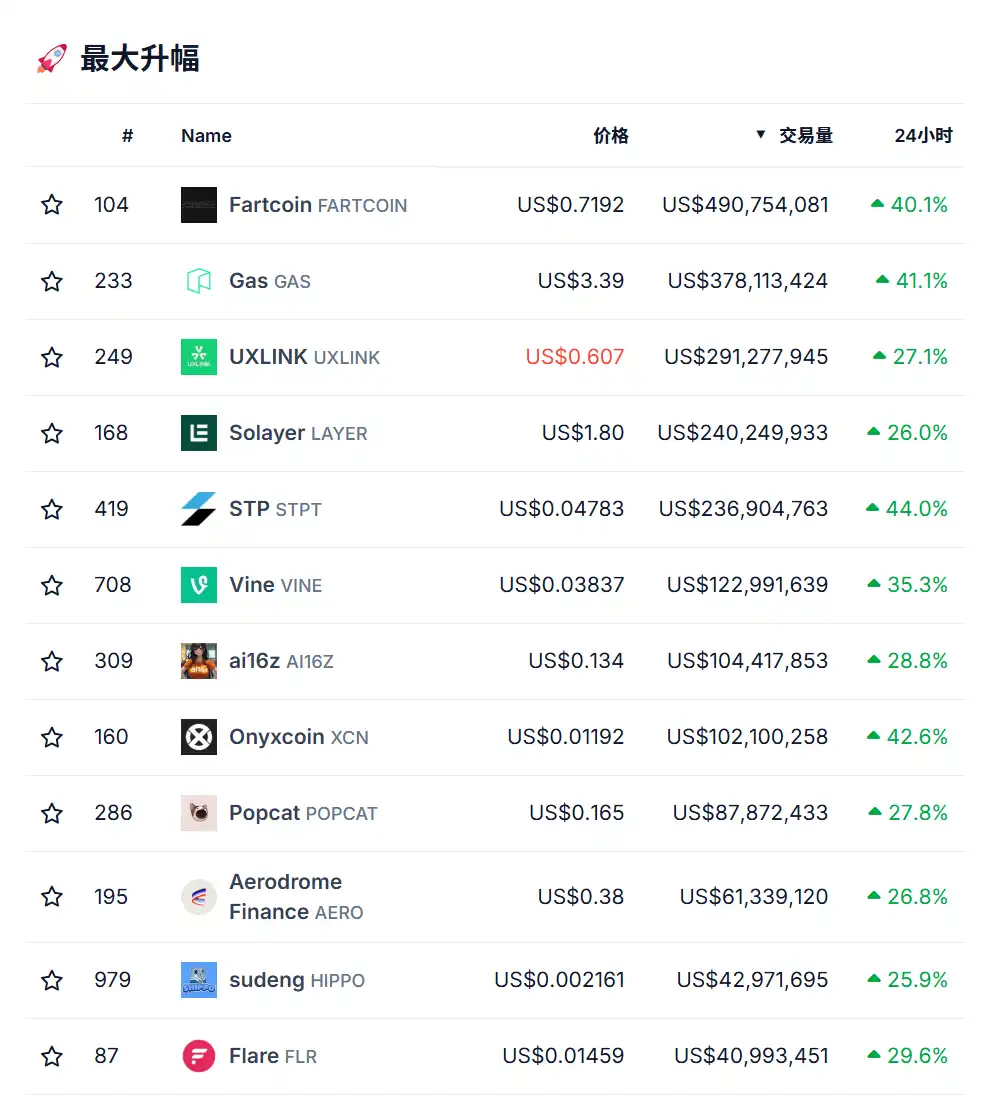
Solana 生态内的 Top Gainers 榜单显示链上生态普遍展现出回暖迹象,STP 和 Onyxcoin 以 44.0% 和 42.6% 的 24 小时涨幅领跑,Gas 和 UXLINK 分别涨 41.1% 和 27.1%。此外,Solayer、ai16z、Aerodrome Finance、sudeng 和 Flare 等代币涨幅在 25.9%-28.8% 之间。整体来看,Solana 链上的市场正在重新活跃起来。
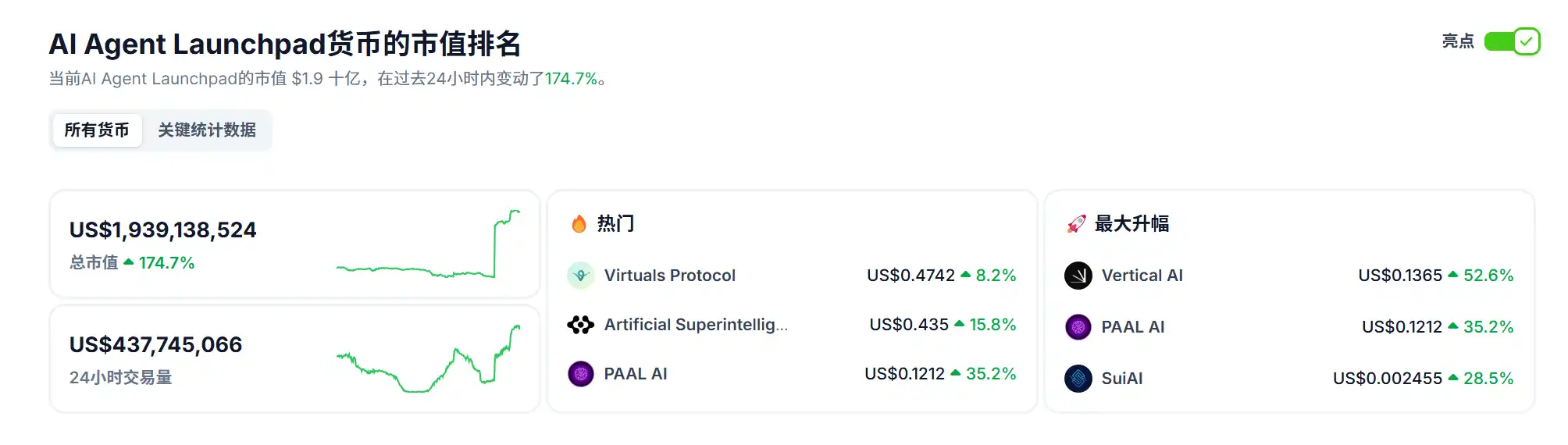
根据 CoinGecko 数据,Solana 生态内部分 meme 币与 AI 相关代币均展现出强劲涨幅,AI Agent Launchpad 图表显示 AI 相关代币的强势,AI Agent Launchpad 24 小时暴涨 174.7%,PAAL AI 涨 35.2%,整体来看,资金在 AI 板块也不甘示弱。
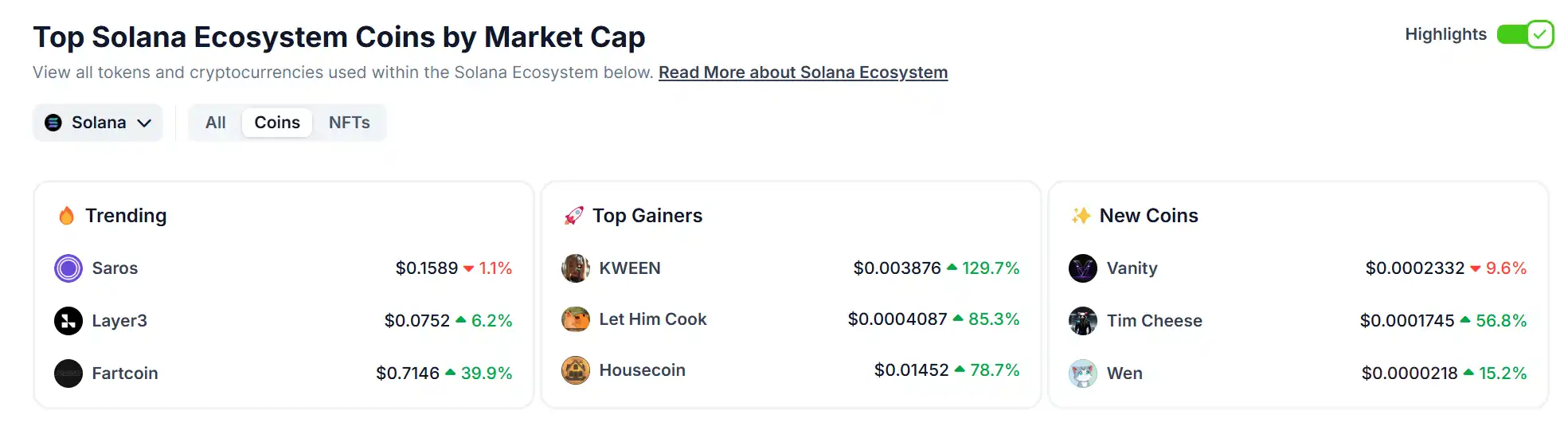
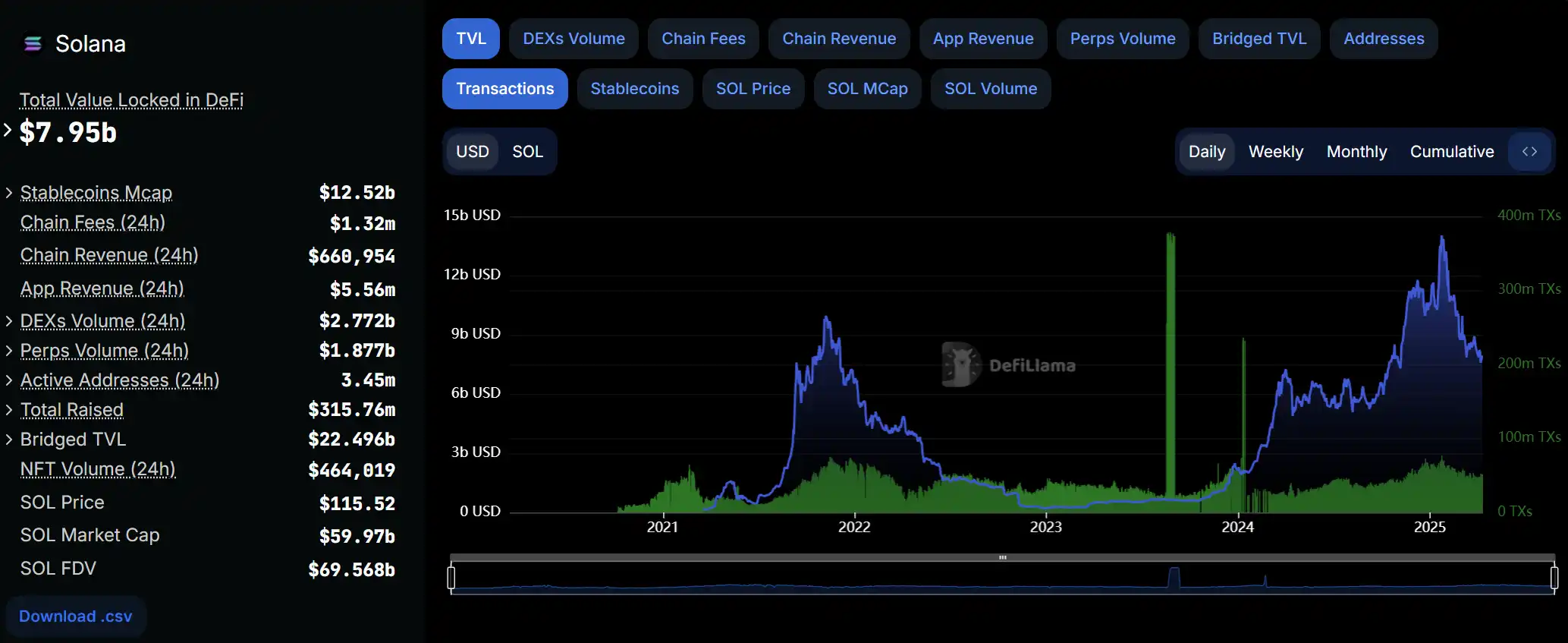
根据 DefiLlama 数据显示,Solana 链上过去 48 小时交易笔数上涨 15.2%,日均交易量升至约 3000 万笔,活跃地址达 345 万个,链上费用与收入也同步增长。DeFi TVL 升至 79.5 亿美元,稳定币市值达 12.52 亿美元,显示资金回流迹象。
乐观与审慎并存
SOL 当前市值为 69.56 亿美元,虽然未突破 2023 年高点,但当前数据已显示出积极信号。
许多人持乐观态度,认为这一政策窗口期可能刺激资金流入加密市场。一名推特用户表示:「125% 关税缓了 90 天,等于给了市场喘息空间,FARTCOIN 和 VINE 这波涨势才刚开始。」部分人甚至将 meme 币的上涨视为避险情绪的体现。
然而,也有声音提醒谨慎,90 天只是短期缓和,关税落地后若主流币承压,meme 币也难独善其身。」部分投资者建议抓住短期机会获利了结,以应对未来不确定性。
Arthur 在播客中提到,以太坊目前乏人问津,反而可能正是入场的最佳时机,他认为$ETH 的风险/回报比当前最具吸引力。相比之下,$SOL 虽因 meme 币浪潮而火热上涨,但这种情绪驱动的大规模行情,很难持续复制。
但按照目前的情况来看,Base 链上的 meme 币涨势明显跟不上节奏,Fartcoin 交易量冲上榜首后,有 Solana 社区喊话:别等 ETH 动了,那时候你连最后一口 Fart 都吃不到。」
而这波 meme 币的短线爆发,正好踩在了关税暂停的节奏点上,90 天的缓冲期让市场风险偏好迅速回升,Solana 链上的情绪币因此搭上顺风车。不过 Solana 也不是没隐忧,高峰期的网络拥堵问题仍在,生态想走得更远,终究还是要靠基本面来撑起长期价值。
90 天的关税缓和期为全球市场提供了喘息空间,这一波涨势能否延续至 90 天之后,仍取决于贸易政策走向和链上生态的巩固。对于投资者而言,在政策缓和与 meme 回暖的当下,理性判断与风险管理尤为关键。
You may also like

Japan’s Three Megabanks Plan Joint Stablecoin Issuance in Fiscal 2026
MUFG, SMBC, and Mizuho reportedly plan to jointly issue fiat-pegged stablecoins in fiscal 2026, signaling Japan’s growing push into bank-led digital payment infrastructure.

Humanity Discloses H Token Dual-Chain Attack Details, With Losses on Ethereum and BSC Exceeding $36 Million
Humanity said the H token attack across Ethereum and BSC caused more than $36 million in losses after leaked ProxyAdmin keys enabled malicious contract upgrades and token minting.

White House Discusses CLARITY Act With Law Enforcement Ahead of Senate Vote
The White House discussed the CLARITY Act with law enforcement ahead of a Senate vote, focusing on illicit finance risks and developer protections.

$75 billion in foreign capital has fled, and South Korean retail investors have absorbed it all using leverage

Bitcoin Trading Guide 2026: Strategies for Experienced Traders

What Is XAUT and PAXG? Why Tokenized Gold Is Booming in 2026

Cryptocurrency CEXs are flocking to sell US stocks, and traditional brokerages are facing an "uninvited guest."

Will the SpaceX IPO Hurt Bitcoin? Here's What Traders Are Watching
Foreign selling in the South Korean stock market accelerates, with cumulative net sales reportedly reaching $75 billion this year
On June 9, The Kobeissi Letter, citing Goldman Sachs data, reported that global investors are selling South Korean stocks at an unusually rapid pace. In the latest trading session, foreign investors sold about $801 million worth of Kospi constituent stocks again; total foreign outflows last week reached about $10 billion, and the market has been in net foreign selling on nearly every trading day over the past month. According to the data cited in the report, foreign investors have sold about $75 billion worth of South Korean stocks so far this year. Meanwhile, South Korean retail and institutional investors together recorded roughly $69 billion in net buying over the same period, suggesting that the market’s main buying support has come from domestic capital rather than returning overseas funds. The information currently disclosed still mainly comes from The Kobeissi Letter’s retelling and Goldman Sachs data summaries, while public details on the statistical period and the specific definition of “selling” remain relatively limited.

Fortune Warns of Strategy’s Financing Structure Risks as Bitcoin Premium Narrows
Fortune warned that Strategy’s Bitcoin treasury model faces growing financing risks as MSTR’s net asset premium narrows and preferred stock dividend pressure increases.

Ferrari Challenge Le Mans: Carl Moon to Dominate in WEEX Livery

Sahara AI Responds to SAHARA’s Sharp Drop: No Contract or Product Security Issues Found, Internal Investigation Underway
Sahara AI responded to SAHARA’s 60% price drop, saying no token contract or product security issues have been found and an internal investigation is underway.

WEEX Deposit/Withdrawal Dynamic Island: Your Asset Status, Always in Sight
Scaling Crypto Derivatives: The Digital Asset Infrastructure Behind High-Volume Trading
In the fast-moving digital asset ecosystem, derivatives platforms face an extreme architectural test. High-leverage futures markets demand more than just standard security—they require absolute operational precision, zero-latency matching engines, and ironclad structural scalability, all while navigating intense market volatility.
As global platforms scale to meet these demands, the industry is shifting away from rigid, monolithic setups toward a more agile, "decoupled" infrastructure philosophy.
The Blueprint for High-Volume Copy TradingFor elite global exchanges like WEEX (founded in 2018), this architectural choice becomes critical when scaling high-volume retail features like social copy trading. When thousands of users automatically mirror the real-time strategies of elite traders simultaneously, it triggers sudden, monumental spikes in concurrent transactional volume.
To prevent execution latency or settlement bottlenecks during these peak volatility events, a platform's primary engine must remain entirely dedicated to risk management, copy-trade synchronization, and order matching.
The Architectural Rule: New-generation platforms must separate front-end user execution engines from heavy backend infrastructural overhead to eliminate operational friction.
By separating these layers, platforms can maintain complete sovereignty over their trading environments and user experiences while strategically aligning with institutional-grade infrastructure ecosystems. This strategic framework allows modern exchanges to leverage advanced Digital Asset Custody infrastructure such as Cobo’s behind the scenes, ensuring that backend wallet management scales elastically alongside trading spikes.
Capitalizing on Market Momentum and 400× LeverageIn a derivatives arena where platforms offer up to 400× leverage on perpetual contracts, capital efficiency and market agility are core business metrics. To capture market momentum, an exchange needs the ability to rapidly expand its asset offerings, supporting everything from legacy crypto assets to sudden, trending altcoins across a massive library of trading pairs.
Adopting a flexible, scalable Wallet-as-a-Service (WaaS) solution such as Cobo’s could completely rewrite the development timeline for high-growth exchanges. Instead of spending months of engineering capital building out custom backend wallet architectures for every new blockchain network, platforms can deploy localized infrastructure in days.
This agility allows platforms to instantly scale their listings to over a thousand trading pairs without compromising security or delaying time-to-market. It mirrors the exact operational advantages seen during high-velocity market events, similar to how advanced wallet infrastructure empowers platforms during sudden asset surges; allowing exchanges to pass that speed and liquidity directly to their global user base.
A Mature Foundation for GrowthThe synergy between trusted infrastructure ecosystems and global trading platforms represents the natural evolution of a maturing crypto market. As WEEX continues to scale its global spot and derivatives offerings for over 6 million users, adopting robust backend paradigms proves that platforms no longer have to compromise between cutting-edge trading velocity and uncompromised structural security.

Morning Report | BitMine increased its holdings by 126,971 ETH last week; trader Eugene announced his exit from the crypto market

Wang Chuan: How can one not feel anxious after the neighbor Old Wang made thirty times profit by investing in storage stocks? (Seven) - A quarter-century cycle

Get Paid to Onboard? Try WEEX’s New Homepage with Rewards for Registration, Deposit & Trade
WEEX Custom Layout: Build Your Perfect Trading Workspace in Seconds
Japan’s Three Megabanks Plan Joint Stablecoin Issuance in Fiscal 2026
MUFG, SMBC, and Mizuho reportedly plan to jointly issue fiat-pegged stablecoins in fiscal 2026, signaling Japan’s growing push into bank-led digital payment infrastructure.
Humanity Discloses H Token Dual-Chain Attack Details, With Losses on Ethereum and BSC Exceeding $36 Million
Humanity said the H token attack across Ethereum and BSC caused more than $36 million in losses after leaked ProxyAdmin keys enabled malicious contract upgrades and token minting.
White House Discusses CLARITY Act With Law Enforcement Ahead of Senate Vote
The White House discussed the CLARITY Act with law enforcement ahead of a Senate vote, focusing on illicit finance risks and developer protections.
$75 billion in foreign capital has fled, and South Korean retail investors have absorbed it all using leverage
Bitcoin Trading Guide 2026: Strategies for Experienced Traders
What Is XAUT and PAXG? Why Tokenized Gold Is Booming in 2026


