
RWA Evergreen Product Crisis: Why is the GLP Model Doomed to Collapse Under RWA Evergreen?



Original Article Title: The Genesis Story: How Crypto Found Me
Original Article Author: @hmalviya9
Original Article Translation: zhouzhou, BlockBeats
Editor's Note: Although the usage of RWA perpetual products (such as Ostium) has seen a surge, the GLP liquidity model is unsustainable due to high funding rates, a zero-sum game between traders and LPs, a lack of hedging mechanisms, which have limited platform expansion. In contrast, HyperLiquid, utilizing a more flexible HLP model, has shown superior performance. In the future, for Ostium to achieve long-term healthy development, it may need to transition to an order book model to reduce costs and enhance market efficiency.
Below is the original content (slightly reorganized for better readability):
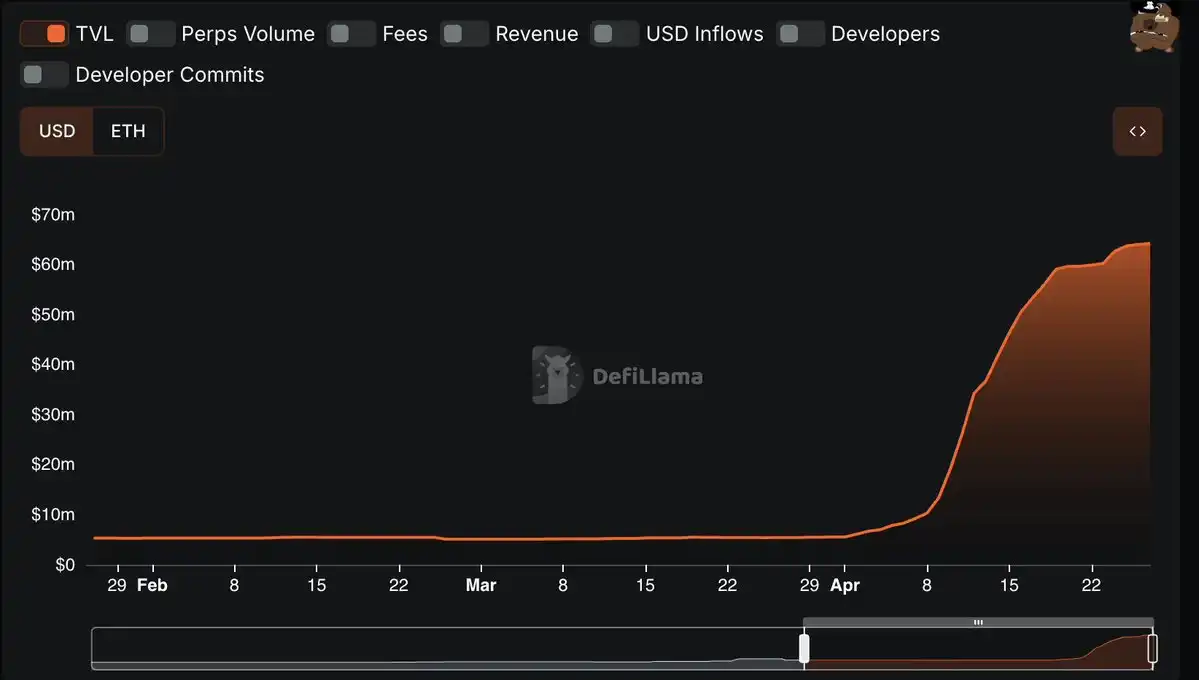
Over the past month, as the tariff crisis loomed, the currency market shook, and the stock market fluctuated like an electrocardiogram, the usage of RWA perpetual contracts has seen a remarkable growth. The total deposit volume of @OstiumLabs has skyrocketed from a stable level of less than 6 million USD to over 60 million USD in just one month. Trading volume has also seen a substantial increase. HyperLiquid has also launched a perpetual contract market for @Paxos' PAXG.
The demand to use crypto derivatives to long or short RWA has become very apparent. The question is, are the current solutions good enough? If not, how can they be improved?
Why Might These Solutions Not Be Good Enough?
In the introductory part, I mentioned two seemingly contradictory viewpoints: on one hand, traders are indeed using RWA products; on the other hand, I questioned whether the existing solutions are good enough.
Some may wonder, if users are choosing these platforms, doesn't it mean that the current RWA perpetual contracts are already good enough? But the reality is different. Let me explain through some data.
If we look at the funding rate on Ostium, we can see that the funding rate for the gold pair (XAU/USD) has reached as high as 30%, and it is still at 13% now.
In comparison, the funding rate for BTC on Bybit is approximately half of Ostium's, while the BTC funding rates on Binance and OKX are only about a quarter of Ostium's. Some may think this is because gold has performed better, but that is not necessarily the case.
Gold has risen by about 50% year to date, and Bitcoin has seen a similar increase.
Moreover, when we compare the crypto market with the traditional financial market (such as CME), the difference becomes even more apparent. If you are long on gold on CME and roll over your position, the annualized cost is about 6%, only half of Ostium's lowest funding rate, with a difference of 600 basis points.
Seeing such a significant spread, readers engaging in delta neutral trading may perceive a huge arbitrage opportunity: for example, shorting on Ostium, earning a 13% funding rate, while being long on CME, incurring a 6% annualized cost. But in reality, it is not the case.
Because Ostium employs a similar model to GLP (GMX's Liquidity Pool), currently, if you are short on Ostium, you actually have to pay a 13% funding rate.
This means that both delta neutral traders and market makers have no incentive to provide liquidity. This is not incidental but a fundamental issue in Ostium's design.
Unsustainability of the GLP Model
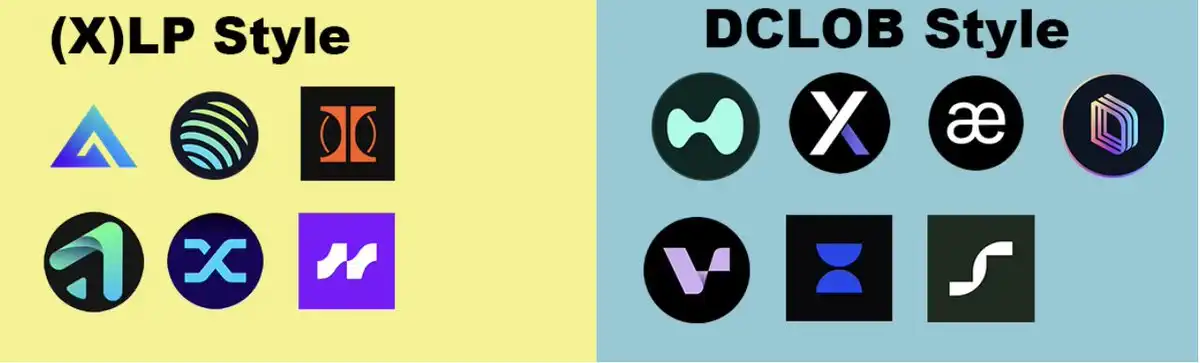
The GLP model used by Ostium and @GainsNetwork_io is, in essence, not scalable.
The GLP model fundamentally involves all traders gambling against the protocol's liquidity pool. Initially introduced by GMX, their pool is called GLP. In Ostium, it is called OLP; on Gains, it is various g(asset) treasuries.
It is crucial to note that the GLP/OLP model is very different from @HyperliquidX's HLP model. The pricing model of HLP is hidden and dynamically changing, while the pricing of GLP is fixed and static.
This means that although HyperLiquid also has base liquidity providers, the base LP is not the sole counterparty, and the funding rate mechanism can still incentivize the market towards greater efficiency. However, under Ostium's OLP model, traders must incur losses for OLP's liquidity providers to profit. It is a purely zero-sum game.
Moreover, unlike the HLP model, which can partially hedge exposure on-chain, there is no stabilization mechanism in the OLP model to hedge RWA's risk exposure.
While the OLP model helped Ostium quickly bootstrap liquidity in the early stages, it has now become a hindrance to their continued growth. Just like HyperLiquid eventually had to relax HLP's absolute counterparty control over user trades, Ostium also needs to loosen the OLP's grip on pricing dominance to achieve greater scalability.
A cautionary tale has already emerged: in terms of relative share in the gold market, Ostium's current gold market position is only $4 million, while HyperLiquid's newly launched PAXG market position has already reached $15 million (with lower funding rates and opening costs as well).
Furthermore, Ostium's current total locked value is $65 million, with $57 million, or 86% of funds, concentrated in the OLP. While HyperLiquid is also high, its proportion is around 60%, which is relatively healthier.
In summary, this model is not sustainable.
Future Possible Directions
While the above issues could become severe if left unchecked, theoretically, they can all be addressed by changing the model.
If Ostium were to transition to an order book model, it could reduce fees, funding rates would decrease due to improved market efficiency, and the platform could still generate profits by collecting trading fees.
The OLP can also continue to exist but should operate in a more dynamically flexible manner.
In my personal view, as someone who loves the RWA perpetual concept, this is the only sustainable long-term model for the RWA perpetual product, not only for Ostium but also for Gains and all related projects.
The GLP/"casino-style" model can only be used for the cold-start phase; long-term development is not realistic, as this has been validated multiple times.
You may also like

Morning Report | OpenAI has submitted an S-1 registration statement draft to the U.S. SEC; Morpho completes $175 million financing

Galaxy Deep Research Report: How Hyperliquid's HIP-4 Upgrade Changes the Landscape of Prediction Markets?

Latest research from 13 top universities including Cornell University: The current state, challenges, and misconceptions of the fusion of Crypto and AI

Deconstructing Anthropic: The Best AI Company, Possibly Also a Type of Organizational Invention

Every exchange is a "Universal Exchange."

The counterattack of traditional finance: Alliance chains are quietly reviving
Pantera Capital Partner: How Tokenization is Restructuring the Private Equity and Early Investment Ecosystem?

Mastercard Launches Agent Pay for AI, Plans to Record AI Agent Payment Authorizations on Polygon
Mastercard launched Agent Pay for AI, a new payment protocol designed to help AI agents make small payments such as pay-per-use access to data and APIs. The system plans to record human-granted AI agent permissions on Polygon, focusing on verifiable authorization, identity, and payment controls.

Curve Deploys Llamalend v2 on Optimism With 250,000 OP Incentives
Curve launched Llamalend v2 on Optimism with 250,000 OP incentives from the Optimism Foundation. The upgrade expands Llamalend beyond its earlier crvUSD-focused model, adding broader collateral support, LlamaRisk market reviews, and the ability to use Curve LP tokens as collateral.

Raydium Old Liquidity Pool Reportedly Exploited, With $1.34 Million Moved to Ethereum and Tornado Cash
An old Raydium liquidity pool was reportedly exploited for around $1.34 million in USDC, RAY, and wSOL, with the stolen funds bridged to Ethereum and deposited into Tornado Cash. The incident highlights the tail risks of legacy DeFi pools, old contracts, and cross-chain fund laundering paths.
Kalshi Executive Challenges “SBF Backed AI Unicorns” Narrative, Says Leopold Aschenbrenner Was Key Figure
Kalshi executive John Wang questioned the “SBF backed AI unicorns” narrative, saying Leopold Aschenbrenner was the key figure behind major AI investment decisions.

New York Proposes Stricter Stablecoin Issuer Rules Aligned With Federal GENIUS Act
NYDFS proposed stricter stablecoin issuer rules aligned with the GENIUS Act, covering reserves, custody, redemption timelines, audits, and capital buffers.

CryptoQuant Says Bitcoin Profitable Supply Is Near 45% Pressure Zone as On-Chain Data Points to Market Repricing
CryptoQuant said Bitcoin’s profitable supply is nearing the 45% pressure zone, signaling rising market stress, unrealized losses, and a possible on-chain repricing phase.

Bitcoin Falls Below 200-Week Moving Average as On-Chain Data Shows Over Half of Supply in Loss
Bitcoin dropped below its 200-week moving average as on-chain data showed over 50% of circulating supply is now in loss, signaling rising market stress.

CFTC Reportedly Plans New Prediction Market Rules Focused on Manipulation Risk and Public Interest Review
The CFTC is reportedly preparing new prediction market rules focused on manipulation risk, public interest review, and retail trader protections.

Meet the new WEEX trial fund—your gateway to greater profits

WEEX Labs Lands at Dutch Blockchain Week: A Disruptive Crypto × AI Conversation Sets Sail in Amsterdam
SK Hynix Reportedly Plans U.S. ADR Listing as Early as August, With SEC Approval Possible in Late June
SK Hynix may pursue a U.S. ADR listing as early as August, with SEC approval reportedly possible in late June amid strong AI chip supply chain demand.
Morning Report | OpenAI has submitted an S-1 registration statement draft to the U.S. SEC; Morpho completes $175 million financing
Galaxy Deep Research Report: How Hyperliquid's HIP-4 Upgrade Changes the Landscape of Prediction Markets?
Latest research from 13 top universities including Cornell University: The current state, challenges, and misconceptions of the fusion of Crypto and AI
Deconstructing Anthropic: The Best AI Company, Possibly Also a Type of Organizational Invention
Every exchange is a "Universal Exchange."
The counterattack of traditional finance: Alliance chains are quietly reviving


