
Interview with Cat CEO: I'm in Japan, Selling My House for Cryptocurrency


Original Article Title: "Exclusive Interview with Cat Boss: Selling Houses in Japan with Cryptocurrency"
Original Article Author: Mary Liu, BitpushNews
He was once a practitioner in traditional banking and wealth management offices,
and also a pioneer in turning digital currency into a tool for buying houses.
He has been actively sharing on Twitter for over 10 years,
and has also served a world's most mysterious group of on-chain clients.
You can buy a Japanese guesthouse from him using USDT, while also petting cats and discussing asset globalization.
"I bought a house for my cat!"
----------Here is a Glamorous Divider----------
This individual known as the "Cat Boss," who is active on Chinese Twitter with a cat head image, you may have heard of his name. He uses a cat head mask as his symbol, has a witty and sarcastic speaking style, claims "black humor is my profession," calls himself a "kelp-level financial practitioner," but his real identity is the CEO of the Japanese creative startup real estate company Keihanshin Jutaku Co., Ltd.
In this article, we will delve into the world of the Cat Boss, and together understand how this meticulous entrepreneur with a cat head mask, who curses Osaka residents but actually exchanges coins and houses for clients, managed to sell Japanese real estate to the crypto community.

The Native "Cat Boss" from the Lujiazui Financial District
As early as 2016, the Cat Boss began investing in Bitcoin.
His major was finance, following the "formal route" of completing both undergraduate and graduate studies, and he successively entered the banking, securities, and wealth management sectors, becoming well-versed in the traditional financial industry.
He told Bitpush, "In 2017, when the crypto market started to heat up, I wanted to make the leap, but no one paid attention to me."
He submitted resumes to mainstream exchanges such as Binance, ZB, and Gate, with a background from a French business school and a resume in traditional finance, but did not receive a single offer from the crypto industry.
Also in the same year, with a regulatory order to shut down all domestic exchanges, the crypto industry quickly cooled off, and he can be considered to have "missed out" on the first Crypto wave.
But this was just a small episode. During the same period, he had already begun building his personal IP.
The Cat Master is not a solo "entrepreneur," but one who has inherited the title. The first-generation Cat Master was a leadership figure who came from Noah Wealth and later, serendipitously passed on this account to him.
Today's Cat Master has a stable fan base on Twitter. His profile picture is a custom cat-head mask, originating from a Halloween party during his 2015 study abroad experience in France. It was truly adopted as a brand image in 2017 after he entered the banking system.
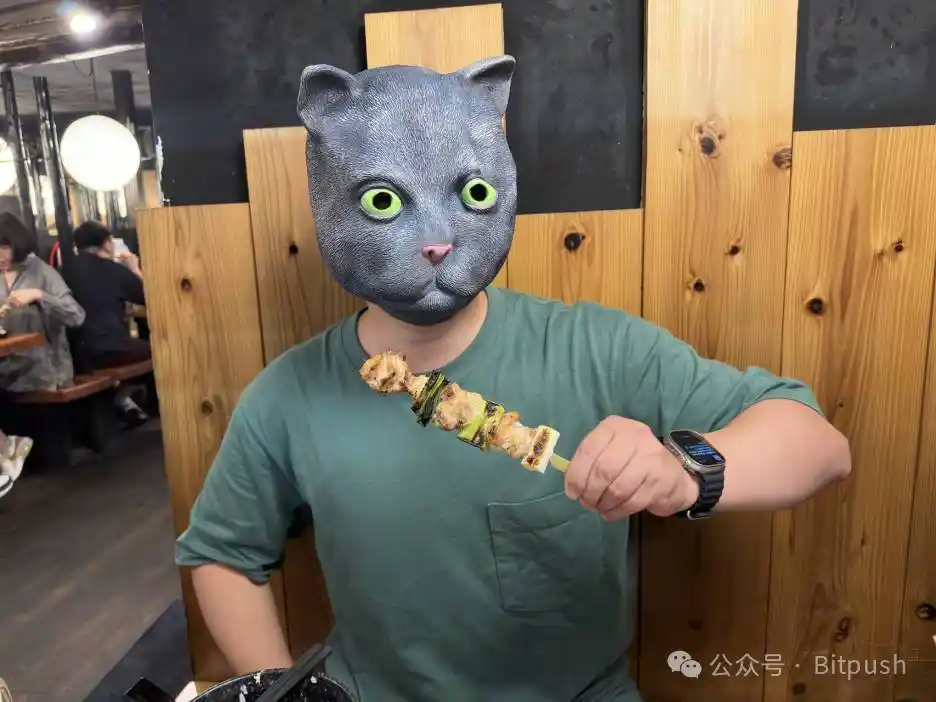
In 2018, through a serendipitous opportunity, he learned about the potential in Japanese real estate—back when the Japanese property market was not in the spotlight, but he "saw the direction."
On January 3, 2020, the Cat Master flew from Pudong Airport to Osaka to explore business opportunities. At that time, news was broadcasting a piece about Wuhan, which he initially thought was a joke, never imagining that he would not return home again. Covid sealed him in Japan, but it also opened another door.
Crypto + Real Estate: Forging a Pragmatic Path
In recent years, an interesting trend seems to have emerged: many individuals are not actually in "dire need," but are instead "polishing" their days through comprehensive considerations such as asset allocation, identity, and lifestyle optimization.
Some wish to send their children to study in Japan, so they buy a house first; others already live in Southeast Asia or the Middle East and find Japan's reasonable cost of living and high safety level appealing.
According to Tencent News, data shows that in 2022, the number of Chinese people buying houses in Japan increased by 50% compared to 2021. In just one month from October to November, there was a staggering 120% surge, with Chinese people accounting for 80% of foreign buyers in Tokyo.
Among them are also many people who have made money in the crypto circle and are eager to convert their assets into tangible physical assets. They do not understand the process of Japanese real estate nor can they find suitable intermediaries.
The Cat Master, who understands the language of the crypto circle, has a financial background, and is in Japan, seized this demand: Japanese real estate is relatively stable, offers considerable returns, and has a clear legal structure, making it an ideal landing place for crypto funds. Purchasing real estate with digital currency has since become a viable option.
This is precisely his expertise.
The Cat Master stated that he was not the first person to engage in this business, but he was the first to systematically formalize the process: "People were buying houses with cryptocurrency in 2018, but the very first Chinese guide was written by us."
His blog post "A Practical Guide to Cryptocurrency Trading in Japanese Real Estate" is almost textbook-level, covering exchange paths, payment methods, and potential pitfalls in a clear and concise manner.
He has also shared a real-life case:
"Back then, a Korean bought a house with UST, but when LUNA crashed, they defaulted on the entire deal."
Having witnessed the madness of the crypto world, he is especially cautious and only engages in one-on-one real estate transactions. In an industry where trust is extremely valuable, he has earned a good reputation through his solid delivery.
According to Cat-CEO, cryptocurrency trading in Japanese real estate has several significant advantages:
· Convenient Cross-Border Payments: Transactions are fast and simple without relying on traditional banks;
· Low Tax Sensitivity: Different countries have different views on Crypto Assets, providing more flexibility in some cases;
· Natural Market Match: Crypto investors are mostly the younger generation with unique preferences for asset allocation and lifestyle.
During the years when industry insiders were going crazy over the get-rich-quick myths of DeFi and NFTs, Cat-CEO quietly turned the "conversion of USDT into Tokyo real estate" into a successful business.
How to Attract Customers? A Person Who Has Been Consistently Tweeting for Over 10 Years Became His Best Advertisement
"90% of my clients come from Twitter." — Cat-CEO 2022
Early on, Cat-CEO also followed the "traditional routine" of marketing, such as writing on public accounts, sharing useful insights, praising Tokyo, discussing policies...
"But it was too generic; everyone was writing the same things."
It wasn't until one day when he took a picture of an ATM machine full of trash in Namba, Osaka, posted it on Twitter with the caption "This is Osaka," and it went viral.
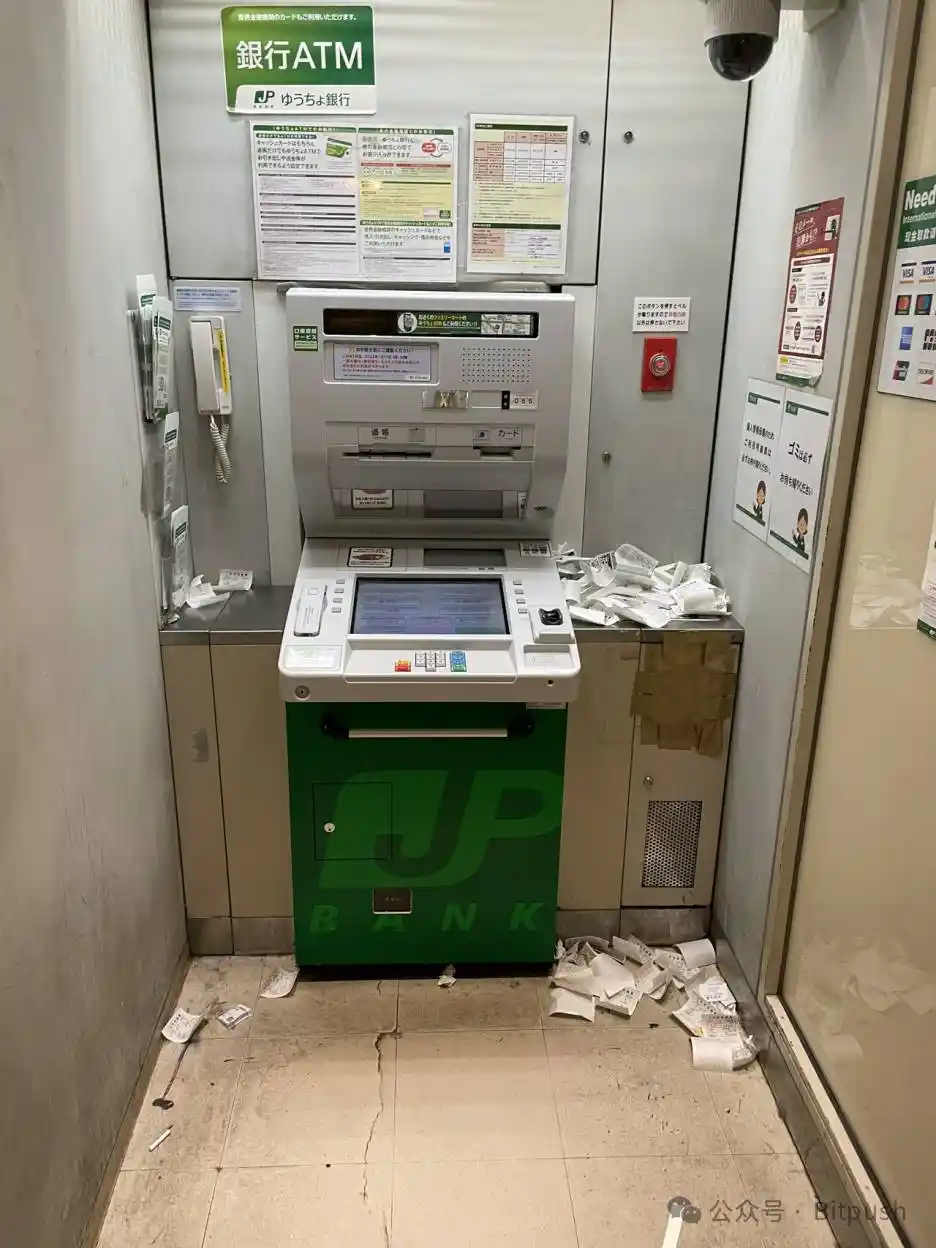
"I gained over 10,000 followers, and at that moment, I knew I had found the key to traffic."
This unintentional act made him realize that the market was not lacking in praise for Japan; instead, it lacked someone willing to speak about the "negatives" and the "realities." Since then, Cat-CEO has embraced the marketing strategy of being a "professional Osaka critic," making him one of the most unique real estate agents in the crypto world.
In this age of information overload, you can't talk about finance in the voice of an ordinary person, nor can you discuss Japanese real estate in the tone of a typical intermediary. In this era of severe homogenization, you either need to make it interesting or no one will remember you.
The slogans "I bought a house for my cat" and "So broke, only $320,000 mortgage left" come from his real life:
In 2018, Cat Master's total household assets once exceeded 30 million, but he carried a large amount of mortgage debt. To ease his parents' pressure, he took on 95% of the loan, and now there is only 320,000 left.
Cat Master also admits that the entrepreneurial path is not easy. The early fees were as high as 12%, and the settlement channels were almost monopolized by Koreans. In 2022, the LUNA incident broke out, causing a large number of customers' UST to go to zero, and the settlement channel was interrupted for half a year.
"The most challenging part is not the process; it's trust." Crypto people are naturally wary of intermediaries, and traditional Japanese landlords are also skeptical of cryptocurrency investors, with a large number of properties unable to match.
He and his team eventually built their own set of processes step by step. Not aiming to be the fastest but aiming to be the one that lasts the longest.
Cat Master's clients are almost all post-80s and post-90s cryptocurrency investors. Relatively young, financially strong, but unable to find real estate companies willing to take their orders because the average age of Japanese real estate practitioners is older and they are not familiar with cryptocurrency operations. Cat Master is one of the few who understands both coins and houses.
His company is also in contact with some local developers in Japan, hoping that more "cryptocurrency payment acceptable" properties will appear in the future.
Not Eager to Chase Trends, Just Hoping to Stay Grounded
Regarding the hot RWA (Real World Assets) track, Cat Master is very clear: "This industry is too early, like the fund industry 100 years ago. There is no underlying asset guarantee, no legal support, and most of it is still speculative."
He is not in a hurry to issue coins, not eager to "put real estate on the chain," just hoping to first smooth out the process of "coin in one hand, house in the other."
"The Japanese real estate industry still uses fax machines for procedures. Talking about smart contract automatic delivery? That is a very distant future."
But he still believes the direction is correct. Future real estate transactions will definitely become more platformized and digitized. Even if not on the blockchain, it will be driven forward by digital asset holders.
Cat Master's ultimate goal is to turn "buying a house in the crypto circle" into a standardized service. He is not eager to expand scale but prefers to serve customers one by one clearly, validate this model clearly, and then see if it can be replicated. "As for whether we can do RWAs in the future, it depends on the legislative situation of RWAs globally. We do not rule out small-scale testing, but the prospect of RWA through existing Japanese laws is still very distant."
Epilogue
This is not a story of getting rich quick, but a story of navigating a practical path between traditional and novel finance. The Whale used his market intuition and understanding of human nature to find a position—and then held onto it. As the tide recedes, perhaps it is these unglamorous "builders" who ultimately define the true value of the crypto economy.
You may also like

Cryptocurrency CEXs are flocking to sell US stocks, and traditional brokerages are facing an "uninvited guest."

Will the SpaceX IPO Hurt Bitcoin? Here's What Traders Are Watching
Foreign selling in the South Korean stock market accelerates, with cumulative net sales reportedly reaching $75 billion this year
On June 9, The Kobeissi Letter, citing Goldman Sachs data, reported that global investors are selling South Korean stocks at an unusually rapid pace. In the latest trading session, foreign investors sold about $801 million worth of Kospi constituent stocks again; total foreign outflows last week reached about $10 billion, and the market has been in net foreign selling on nearly every trading day over the past month. According to the data cited in the report, foreign investors have sold about $75 billion worth of South Korean stocks so far this year. Meanwhile, South Korean retail and institutional investors together recorded roughly $69 billion in net buying over the same period, suggesting that the market’s main buying support has come from domestic capital rather than returning overseas funds. The information currently disclosed still mainly comes from The Kobeissi Letter’s retelling and Goldman Sachs data summaries, while public details on the statistical period and the specific definition of “selling” remain relatively limited.

Fortune Warns of Strategy’s Financing Structure Risks as Bitcoin Premium Narrows
Fortune warned that Strategy’s Bitcoin treasury model faces growing financing risks as MSTR’s net asset premium narrows and preferred stock dividend pressure increases.

Ferrari Challenge Le Mans: Carl Moon to Dominate in WEEX Livery

Sahara AI Responds to SAHARA’s Sharp Drop: No Contract or Product Security Issues Found, Internal Investigation Underway
Sahara AI responded to SAHARA’s 60% price drop, saying no token contract or product security issues have been found and an internal investigation is underway.

WEEX Deposit/Withdrawal Dynamic Island: Your Asset Status, Always in Sight

Scaling Crypto Derivatives: The Digital Asset Infrastructure Behind High-Volume Trading
In the fast-moving digital asset ecosystem, derivatives platforms face an extreme architectural test. High-leverage futures markets demand more than just standard security—they require absolute operational precision, zero-latency matching engines, and ironclad structural scalability, all while navigating intense market volatility.
As global platforms scale to meet these demands, the industry is shifting away from rigid, monolithic setups toward a more agile, "decoupled" infrastructure philosophy.
The Blueprint for High-Volume Copy TradingFor elite global exchanges like WEEX (founded in 2018), this architectural choice becomes critical when scaling high-volume retail features like social copy trading. When thousands of users automatically mirror the real-time strategies of elite traders simultaneously, it triggers sudden, monumental spikes in concurrent transactional volume.
To prevent execution latency or settlement bottlenecks during these peak volatility events, a platform's primary engine must remain entirely dedicated to risk management, copy-trade synchronization, and order matching.
The Architectural Rule: New-generation platforms must separate front-end user execution engines from heavy backend infrastructural overhead to eliminate operational friction.
By separating these layers, platforms can maintain complete sovereignty over their trading environments and user experiences while strategically aligning with institutional-grade infrastructure ecosystems. This strategic framework allows modern exchanges to leverage advanced Digital Asset Custody infrastructure such as Cobo’s behind the scenes, ensuring that backend wallet management scales elastically alongside trading spikes.
Capitalizing on Market Momentum and 400× LeverageIn a derivatives arena where platforms offer up to 400× leverage on perpetual contracts, capital efficiency and market agility are core business metrics. To capture market momentum, an exchange needs the ability to rapidly expand its asset offerings, supporting everything from legacy crypto assets to sudden, trending altcoins across a massive library of trading pairs.
Adopting a flexible, scalable Wallet-as-a-Service (WaaS) solution such as Cobo’s could completely rewrite the development timeline for high-growth exchanges. Instead of spending months of engineering capital building out custom backend wallet architectures for every new blockchain network, platforms can deploy localized infrastructure in days.
This agility allows platforms to instantly scale their listings to over a thousand trading pairs without compromising security or delaying time-to-market. It mirrors the exact operational advantages seen during high-velocity market events, similar to how advanced wallet infrastructure empowers platforms during sudden asset surges; allowing exchanges to pass that speed and liquidity directly to their global user base.
A Mature Foundation for GrowthThe synergy between trusted infrastructure ecosystems and global trading platforms represents the natural evolution of a maturing crypto market. As WEEX continues to scale its global spot and derivatives offerings for over 6 million users, adopting robust backend paradigms proves that platforms no longer have to compromise between cutting-edge trading velocity and uncompromised structural security.

Morning Report | BitMine increased its holdings by 126,971 ETH last week; trader Eugene announced his exit from the crypto market

Wang Chuan: How can one not feel anxious after the neighbor Old Wang made thirty times profit by investing in storage stocks? (Seven) - A quarter-century cycle

Get Paid to Onboard? Try WEEX’s New Homepage with Rewards for Registration, Deposit & Trade

WEEX Custom Layout: Build Your Perfect Trading Workspace in Seconds

See “Buy Walls” & “Sell Walls” Instantly: WEEX Launches the Depth Chart for Smarter Trades

What Is Quick Trade on WEEX? 2 Ways WEEX Ends Chart-Panel Jumping
Morning News | Five major virtual asset platforms in South Korea have experienced 57 incidents of hacking and system failures in six years; Grayscale submits registration application for Canton ETF

Should we escape the peak? The principle of the tail-end market in the stock market

RootData: May 2026 Cryptocurrency Exchange Transparency Research Report

Founder of Baixing.com: My Experience with Claude Code in Fourteen Points
Cryptocurrency CEXs are flocking to sell US stocks, and traditional brokerages are facing an "uninvited guest."
Will the SpaceX IPO Hurt Bitcoin? Here's What Traders Are Watching
Foreign selling in the South Korean stock market accelerates, with cumulative net sales reportedly reaching $75 billion this year
On June 9, The Kobeissi Letter, citing Goldman Sachs data, reported that global investors are selling South Korean stocks at an unusually rapid pace. In the latest trading session, foreign investors sold about $801 million worth of Kospi constituent stocks again; total foreign outflows last week reached about $10 billion, and the market has been in net foreign selling on nearly every trading day over the past month. According to the data cited in the report, foreign investors have sold about $75 billion worth of South Korean stocks so far this year. Meanwhile, South Korean retail and institutional investors together recorded roughly $69 billion in net buying over the same period, suggesting that the market’s main buying support has come from domestic capital rather than returning overseas funds. The information currently disclosed still mainly comes from The Kobeissi Letter’s retelling and Goldman Sachs data summaries, while public details on the statistical period and the specific definition of “selling” remain relatively limited.
Fortune Warns of Strategy’s Financing Structure Risks as Bitcoin Premium Narrows
Fortune warned that Strategy’s Bitcoin treasury model faces growing financing risks as MSTR’s net asset premium narrows and preferred stock dividend pressure increases.
Ferrari Challenge Le Mans: Carl Moon to Dominate in WEEX Livery
Sahara AI Responds to SAHARA’s Sharp Drop: No Contract or Product Security Issues Found, Internal Investigation Underway
Sahara AI responded to SAHARA’s 60% price drop, saying no token contract or product security issues have been found and an internal investigation is underway.


