
History Doesn’t Repeat, But It Rhymes — Don’t Miss It This Time

Original Author: Long Ye;Just Blockchain News
Note: This article is the full version of https://x.com/Tony_lza/status/1914223870581915770. The core views were already posted on Twitter two days ago.
Let‘s start with the conclusion:
(1) Right now might be the best time this year to buy crypto.
(2) I stand by the view I shared in my December article during the last bull run: https://reurl.cc/QYEbnb
(3) Besides BTC, if I had to choose a token to put $500K into, I’d pick Hyperliquid; if it were $5M, I’d choose SOL.
Back to the rhythm: structural opportunities are re-emerging
Now could very well be one of the best entry points into crypto this year.
This isn’t a bullish claim made out of thin air. Whether from price structure, macro signals, on-chain data, or asset evolution, today’s market conditions look strikingly similar to the 「bottom consolidation」period during the spring of 2020 —when Bitcoin crashed to $3,800 in just days, only to stage one of the most breathtaking rebounds in crypto history.
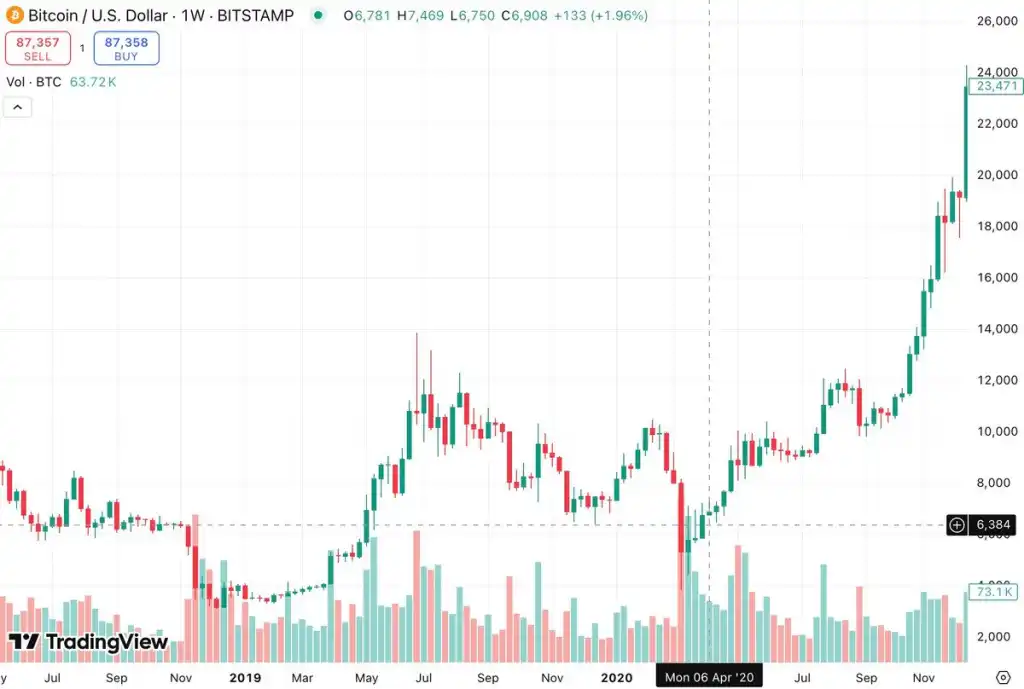
Today, the market seems to be replaying that script. Back then, after a panic sell-off, the Nasdaq entered a 3–4 week consolidation phase, while Bitcoin quickly formed a bottom in two weeks and surged strongly in the following months.
This time, a wave of short-term selling triggered by the 「tariff war + soaring U.S. bond yields」 in early April briefly sent BTC below 74,000, with SOL even dipping under $100—but both have since recovered rapidly.
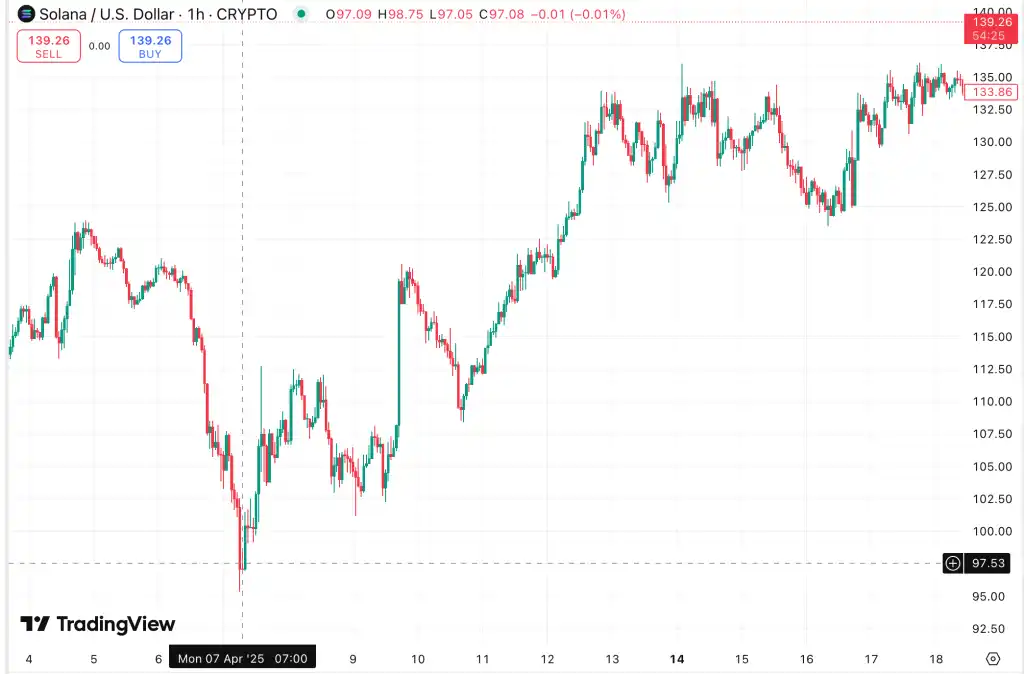
At this point, the bottom appears to be firmly in place. In contrast, U.S. equities, especially the Nasdaq, are still stuck in a prolonged consolidation phase.
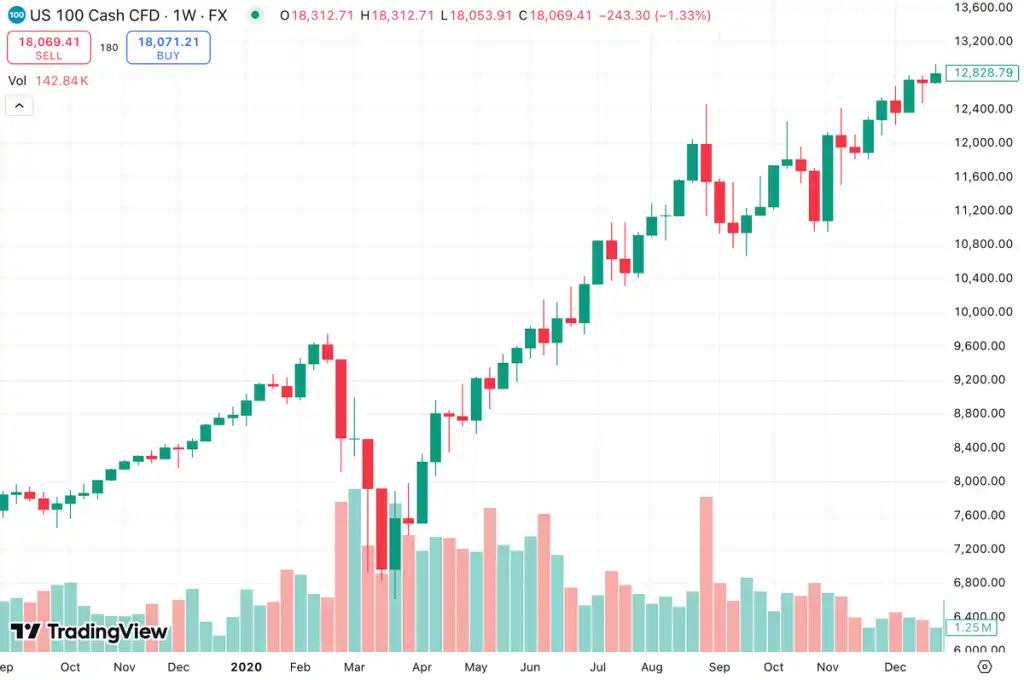
In other words: the emotional correction in crypto has played out faster and more decisively than in traditional markets, with clearer signals of stabilization.
This shift from weak to strong hands is a typical feature before a major rally. Back in 2020, Bitcoin rose over 300% in the six months following the March crash. If history rhymes, then this market adjustment could be a prime setup.
In both timing and structure, crypto is now leading.
Macro capital flow is pivoting: from skepticism to active embrace
Beyond the technical retracement, what’s more important is a shift in macro capital perspective.
A key trend not to ignore: traditional money is flowing into crypto at an unprecedented pace. The approval of U.S. spot Bitcoin ETFs has opened the door for institutional investors. Since the January approvals, these ETFs have seen over $12 billion in net inflows.
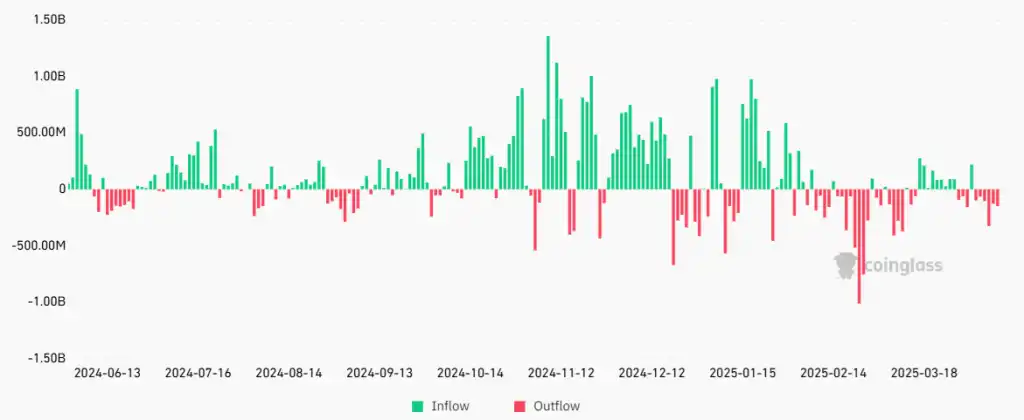
Total net inflows of spot Bitcoin ETFs (USD)
What’s even more notable is how crypto is shifting from a speculative asset to a practical tool. During recent visits to foreign trade companies in Shenzhen and Yiwu, I found that USDT is now widely used in cross-border settlement. As one electronics exporter said,「Using USDT is way faster than bank transfers, and the fees are a tenth of the cost.」
This trend is accelerating globally. In high-inflation countries like Argentina and Turkey, people use stablecoins to preserve value. In Southeast Asia, more SMEs are accepting crypto payments. Crypto is completing the transformation from「speculative assets」to「utility tools」, a process that will bring more lasting demand support.
Over the past month, I've had conversations with friends in export businesses. Most were previously skeptical or outright dismissive of crypto. But amid global supply chain restructuring, geopolitical tensions, and shrinking currency channels, they're asking questions that were once unimaginable:
Can we do light processing in a third country and settle exports to the U.S. in USDT to avoid sanctions?Physical goods are too uncertain—are there virtual goods we can sell, like NFTs?Our factory is shut down—how do we convert idle cash into crypto? More importantly, what coins should we trade with all this free time?
Crypto is no longer just an「investment option」—it's a resource outlet after「reality interruption」.
And USDT is increasingly ubiquitous: in some cross-border trade scenarios, it』s already the norm. As they put it, 「Not holding BTC is no longer realistic.」
The gold-BTC connection: a historic leading indicator
Here’s another rarely discussed but highly significant signal: gold has hit new all-time highs and is still climbing.
In early April, gold plunged 5% in just four days, breaking below $3,000 and sparking panic. But within a week, it rebounded to hit new highs, now soaring past $3,300 and entering a strong uptrend.
Historically, when gold breaks all-time highs, Bitcoin often follows within 100–150 days. This is no coincidence—it's a reflection of correlated flows and structural alignment. Gold and BTC both serve as hedges against fiat devaluation.
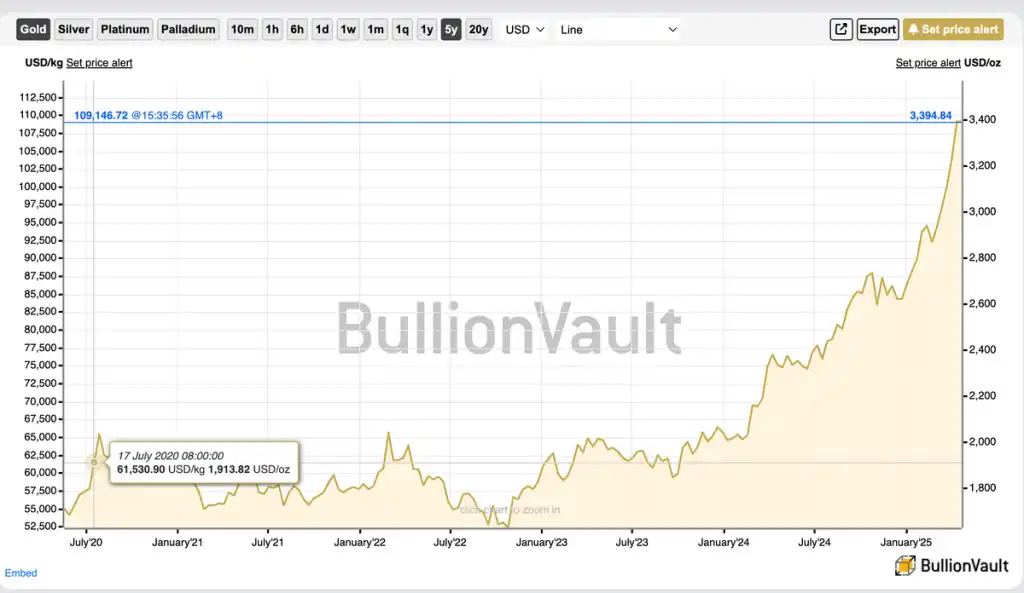
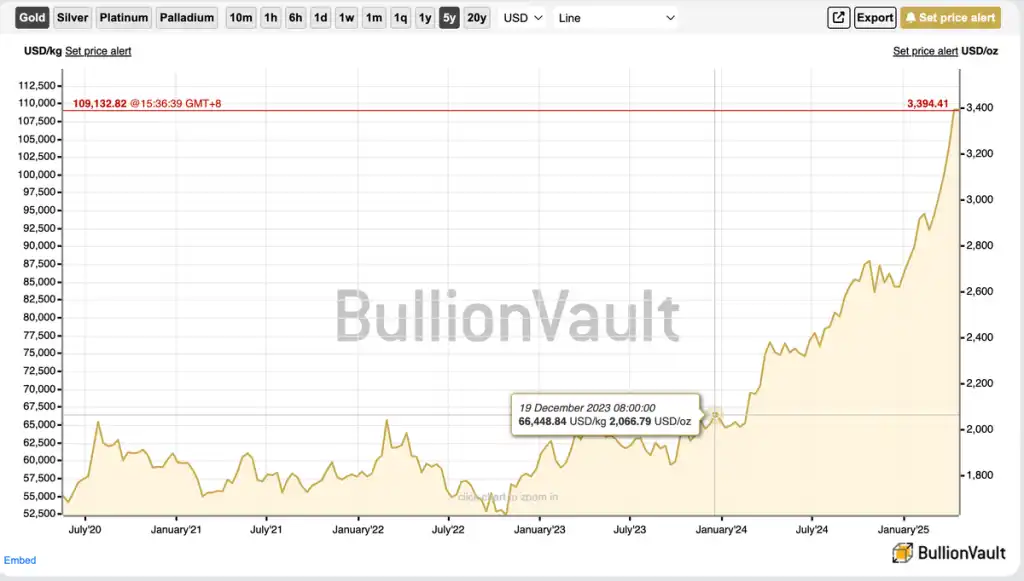
If this historical rhythm plays out again, BTC could break new highs by late Q2 or early Q3, with Q4 potentially marking a cycle top.
ETH, SOL, Hyperliquid: three structural narratives and value differentiation
Let's now address the key question: after BTC, what else should you hold?
I stick to my previous view:
If I were allocating $500K, I'd go with Hyperliquid.If it's a $5M+ allocation, I'd pick SOL.
These three assets represent entirely different narratives and user paths:
ETH: the infrastructure connecting on-chain finance and the real world
I'm clear on ETH's long-term value— RWA (Real World Assets) is its biggest future narrative, though the breakout likely won't happen this year.
As the second largest crypto asset by market value, it is now clearer to me that Ethereum will be the infrastructure that combines reality and crypto, and will be the destination for institutional funds (not web3 institutions, but real world funds with utility needs).
The core lies in RWA, whose foundation is integrating with DeFi to systematically bring offline trade, credit, and finance on-chain.
Although the implementation of RWA is still relatively fragmented and the infrastructure and regulatory framework are still under construction, the trend is already very clear. Giants like BlackRock, Citi, and Blackstone are already using Ethereum for bond tokenization and cross-border settlement.
In the future, bonds, stocks, gold, even carbon credits could flow through ETH. And the data backs it up: over 80% of leading projects in both DeFi and RWA are built on Ethereum.
For DeFi alone, TVL consistently hovers around $100 billion —a testament to massive baseline demand.
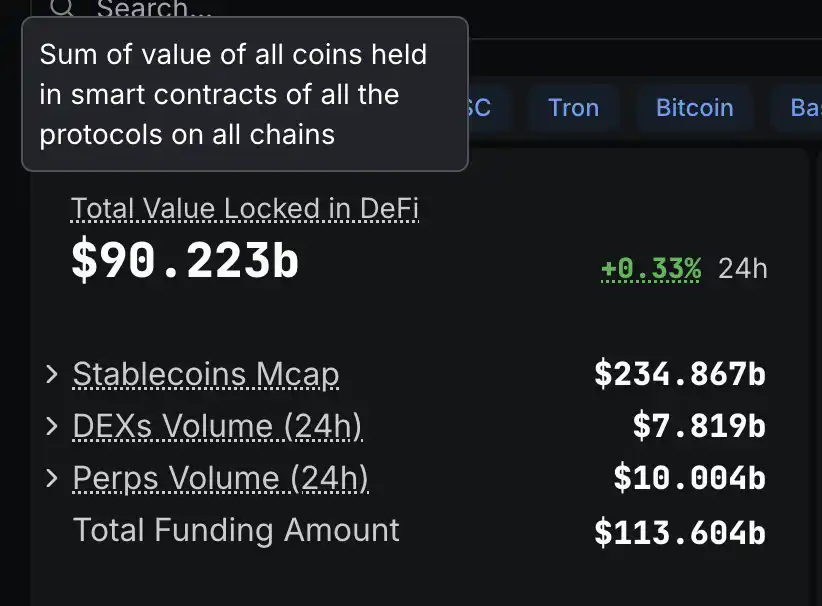
Therefore, in my opinion, Ethereum's role is being upgraded from a「smart contract platform」to an「operating system for real finance.」It is like the「oil」of the digital age—it not only supports the continued operation of the entire on-chain economy, but may also become the underlying infrastructure of the future global financial system.
SOL: On-chain activity and retail investor narratives in miniature
Solana may not be the most technically advanced L1, but it is by far the most active in liquidity. From memecoins to GambleFi to ops-led ecosystems, SOL has become the hotbed of retail speculation. And active retail investors mean continuous liquidity.
If you believe in a return of retail fervor this year, SOL is among the highest-beta assets to hold.
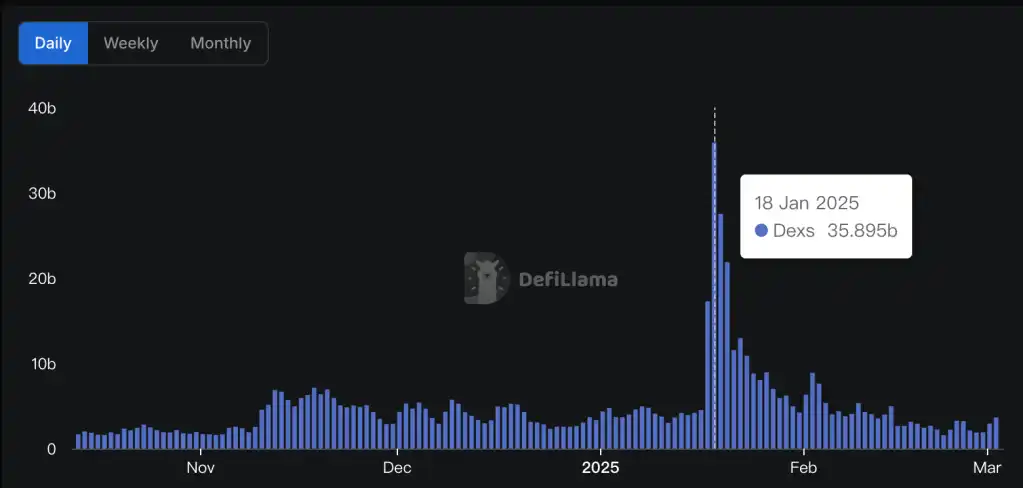
During peak memecoin season, daily DEX volumes on Solana surged into the tens of billions.
In the future, the classification of crypto will also change, and there may be only three types of coins: Bitcoin, mainstream coins, and MEME coins. MEME coins will not think of replacing BTC or gold, but it is a consensus and culture; it will not only be accepted by the public, but also become the most violent capital vortex in the crypto market.
Solana is a barometer of current market sentiment. The Meme coin carnival and the hot on-chain transactions have made SOL the best place for short-term speculation – just like the「Las Vegas」in the crypto world – where the myth of getting rich every day is staged and it is also full of gamblers. But it is undeniable that it is attracting the most active funds and developers in the world.
Hyperliquid: tradefi's mirror and AI's native arena
Hyperliquid is actually a structural narrative: it is not a meme, nor is it L1/L2, but one of the most core scenarios of on-chain finance: perpetual contracts + leveraged trading + high-frequency strategies.
This is the platform that I pay the most attention to and operate most frequently recently. I operate here almost every week, not because I follow the trend, but because it really solves a key problem – how to achieve professional-level derivatives trading in a decentralized environment.
Hyperliquid is now more suitable for professional traders, which is why it has not been recognized by a larger group. However, with the development of AI, a large number of strategy design and execution will be undertaken by AI Agents – users only need to express their trading intentions in natural language, and AI can call complex modules on the chain to implement them, such as futures arbitrage, cross-product hedging, grid strategies, etc.
In the future, you will no longer need to do complex operations yourself, you only need to say to the Agent:「Open a 5x leveraged ETH long on Hyperliquid, and automatically stop loss when it falls below 2000.」AI Agent will automatically break it down into: contract call, slippage control, on-chain gas optimization, etc., to help you complete complex trading operations in the most efficient way.
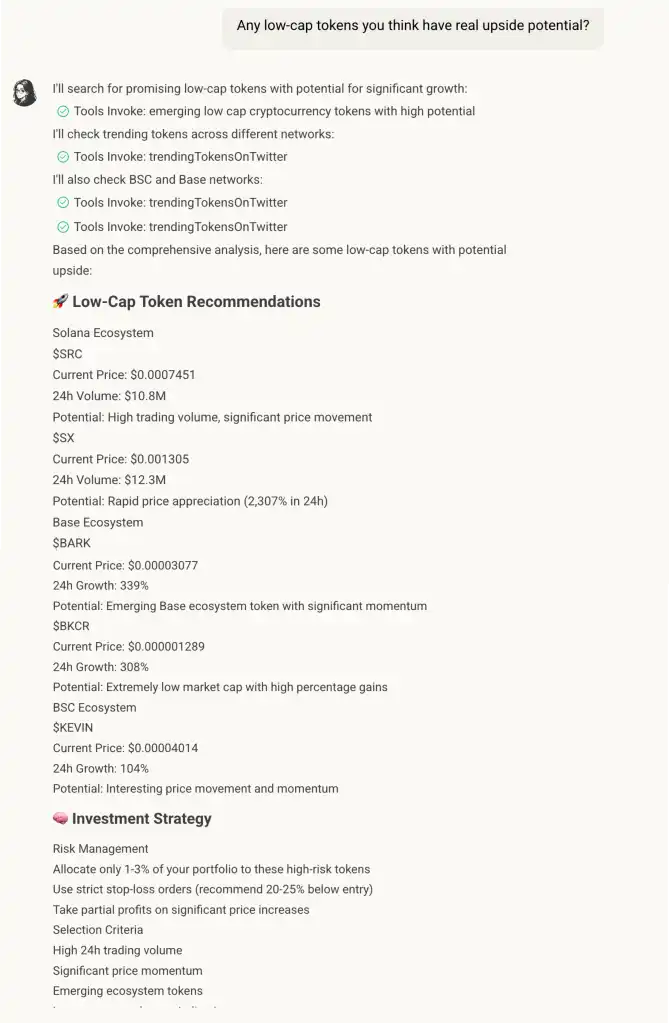
For another example, you want to earn the double benefits of「exchange spread + funding rate」when the BTC price fluctuates, but manual operation requires: monitoring 5 exchanges at the same time, calculating the break-even point of the funding rate, dynamically adjusting the margin, and preventing the pin explosion. It is too difficult for ordinary people, but for AI Agent, it only requires a series of basic analysis and operations such as spread capture, funding rate optimization, and risk control response.
In terms of speed, accuracy and even emotion, AI Agent has advantages that humans cannot match. Of course, AI Agent will not replace human traders, but it will use the「human-machine collaboration」method to make professional-level strategies as simple as ordering takeout.
Hyperliquid is highly open and has clear on-chain settlement, which is very suitable as the transaction backend of the future「AI x DeFi」scenario. Therefore, the core battlefield of this change is likely to be on-chain derivatives protocols such as Hyperliquid.
Conclusion: Bull markets are born in doubt, and grow through hesitation
This round of market reminds me of the turbulent but opportunity-filled spring of 2020—the market bottomed out in panic, and then started an epic rebound. Now, it seems that the same script is being played out: gold is the first to break through the historical high, like a starting gun; traditional funds are quietly entering the market through USDT; and more Smart Money has begun to consider how to lay out the next round of AI-driven transactions on Hyperliquid.
The market structure is actually very clear: BTC is digital gold, ETH is the operating system of real finance, SOL is the main battlefield for retail liquidity and emotions, and Hyperliquid has become a carrier platform for professional traders and future AI trading behaviors. And as AI officially intervenes in the design and execution of trading behaviors, Hyperliquid is likely to become the host of the next round of on-chain behavior migration. .
Those who are still waiting for a「better entry time」may not realize that when foreign trade bosses start discussing USDT settlement, when gold breaks through previous highs, and when AI begins to automatically execute arbitrage strategies, the market has little time left for onlookers. Many trends won』t wait until you fully understand them before they happen – and now is the window where you still have time to get on board.
Don't miss it.
You may also like

Pantera Capital Partner: How Tokenization is Restructuring the Private Equity and Early Investment Ecosystem?

New York Proposes Stricter Stablecoin Issuer Rules Aligned With Federal GENIUS Act
NYDFS proposed stricter stablecoin issuer rules aligned with the GENIUS Act, covering reserves, custody, redemption timelines, audits, and capital buffers.
Every exchange is a "Universal Exchange."

The counterattack of traditional finance: Alliance chains are quietly reviving

CryptoQuant Says Bitcoin Profitable Supply Is Near 45% Pressure Zone as On-Chain Data Points to Market Repricing
CryptoQuant said Bitcoin’s profitable supply is nearing the 45% pressure zone, signaling rising market stress, unrealized losses, and a possible on-chain repricing phase.

Bitcoin Falls Below 200-Week Moving Average as On-Chain Data Shows Over Half of Supply in Loss
Bitcoin dropped below its 200-week moving average as on-chain data showed over 50% of circulating supply is now in loss, signaling rising market stress.

CFTC Reportedly Plans New Prediction Market Rules Focused on Manipulation Risk and Public Interest Review
The CFTC is reportedly preparing new prediction market rules focused on manipulation risk, public interest review, and retail trader protections.

Meet the new WEEX trial fund—your gateway to greater profits

WEEX Labs Lands at Dutch Blockchain Week: A Disruptive Crypto × AI Conversation Sets Sail in Amsterdam

SK Hynix Reportedly Plans U.S. ADR Listing as Early as August, With SEC Approval Possible in Late June
SK Hynix may pursue a U.S. ADR listing as early as August, with SEC approval reportedly possible in late June amid strong AI chip supply chain demand.

SpaceX vs Tesla vs xAI: Which Elon Musk Trade Has the Biggest Upside in 2026?
OpenAI Reveals It Has Confidentially Submitted an S-1 to the SEC, Keeping the Door Open for a Future IPO
On June 9, according to an OpenAI announcement, the company recently confidentially submitted a draft S-1 registration statement to the U.S. Securities and Exchange Commission (SEC), beginning the preliminary compliance process for a potential initial public offering. OpenAI said it chose to disclose this proactively because it expected the news might leak; however, the company has not yet set a specific listing timeline, and related arrangements may still take some time.

Latest research from 13 top universities including Cornell University: The current state, challenges, and misconceptions of the fusion of Crypto and AI
Deconstructing Anthropic: The Best AI Company, Possibly Also a Type of Organizational Invention
Apollo and Blackstone Reportedly Back $35 Billion Anthropic Chip Financing as Deal Details Remain Unclear
On June 9, according to currently available news alerts, Apollo and Blackstone Group participated in a $35 billion financing for an Anthropic “chip project.” Based on the original wording of the report, the funding has already been raised, but public information remains limited. The financing structure, use of proceeds, project entity, and whether Apollo and Blackstone participated through equity, debt, or project financing have not yet been disclosed.

Humanity Protocol Security Incident Escalates: More Than $31 Million Stolen From Related Addresses as Attacker Continues Selling H for ETH
On June 9, according to monitoring by Onchain Lens, more than $31 million has been stolen from addresses linked to Humanity Protocol, and the attack is still ongoing, with the hacker continuously swapping H tokens for ETH. Project founder Terence Kwok later confirmed the security incident on X, saying the issue involved a private key leak.

Bloomberg: As Bitcoin Weakens, Stablecoins and RWA Continue to Drive Expansion in Crypto Businesses
In June, Bloomberg reported that despite Bitcoin falling below $60,000 last week, wiping out about $235 billion in market value within seven days, and dropping close to 50% from last year’s peak, some core businesses in the crypto industry are still expanding, mainly in stablecoins, real-world asset tokenization (RWA), payments, and infrastructure. The report also noted that overall altcoin activity has contracted significantly: altcoin market capitalization has fallen from a peak of about $431 billion in November 2021 to around $170 billion, and among the tens of millions of tokens issued in recent years, fewer than 1,700 still maintain meaningful trading activity.

Galaxy Deep Research Report: How Hyperliquid's HIP-4 Upgrade Changes the Landscape of Prediction Markets?
Pantera Capital Partner: How Tokenization is Restructuring the Private Equity and Early Investment Ecosystem?
New York Proposes Stricter Stablecoin Issuer Rules Aligned With Federal GENIUS Act
NYDFS proposed stricter stablecoin issuer rules aligned with the GENIUS Act, covering reserves, custody, redemption timelines, audits, and capital buffers.
Every exchange is a "Universal Exchange."
The counterattack of traditional finance: Alliance chains are quietly reviving
CryptoQuant Says Bitcoin Profitable Supply Is Near 45% Pressure Zone as On-Chain Data Points to Market Repricing
CryptoQuant said Bitcoin’s profitable supply is nearing the 45% pressure zone, signaling rising market stress, unrealized losses, and a possible on-chain repricing phase.
Bitcoin Falls Below 200-Week Moving Average as On-Chain Data Shows Over Half of Supply in Loss
Bitcoin dropped below its 200-week moving average as on-chain data showed over 50% of circulating supply is now in loss, signaling rising market stress.

Popular coins
Latest Crypto News


