
From Decentralized Utopia to Speculator's Den, Why Has Capital Become the Ruler of Web3?




Original Article Title: Capitalism is killing the soul of web3 everyday
Original Article Author: hmalviya9, Founder of @dyorcryptoapp
Original Article Translation: Translated by Deep
Editor's Note: The article explores the process of Web3's decentralized ideal being gradually eroded by capitalism: initially established by freedom-seeking pioneers, Web3 attracted capitalists due to scarce block space like Bitcoin, then the expansion of new territories like Ethereum and technologies like Layer-2 caused block space to become saturated and value to decline; despite new lands emerging continuously, Web2 users hesitate to migrate due to complexity and risks, while exchanges, market makers, and other major players profit by manipulating the market, ultimately leading Web3 astray from its original purpose and becoming a capital-driven speculative playground.
Below is the original article content (restructured for better readability):
We inhabit two digital planets: Web2 and Web3.
The Web3 planet is quite novel — initially established by pioneers who believed in decentralization, freedom, and self-governance. In its early days, this was a wild, uncharted land with no rulers, only builders.
However, a bridge between Web2 and Web3 was later established. Initially, only a few capitalists from Web2 arrived, drawn by the raw potential of this new world. They stood on the sidelines, observing, analyzing the terrain, understanding the rules, identifying the most valuable territories.
The first large-scale colonization wave began with Bitcoin — the most precious nation on the Web3 island. This was scarce land with clear ownership, where power belonged to those who understood its fundamental principles.
But once the initial settlers took control and accumulated wealth, they began to expand. They realized that Web3 was more than just Bitcoin. There was vast uncharted land waiting to be shaped. Soon, they moved beyond Bitcoin, establishing new territories — Ethereum, Solana, Polkadot, and countless others.
As more land was discovered, the race to claim new nations intensified. Initially, block space was scarce. The earliest blockchains operated under strict constraints — each transaction required space, and space was limited. This scarcity gave block space immense value. Owning a small piece of block space meant having a place in the new digital economy. However, with increased competition, innovation followed.

Ethereum Transaction Visualization
More efficient ways of creating block space emerged. Layer 2 solutions, Rollups, sidechains — each brought vast new lands to the Web3 planet. Goods that were once scarce became abundant.
Builders no longer fight for limited space; instead, they have created endless new land to meet the growing settlement demand. However, the proliferation of block space has brought unforeseen consequences.
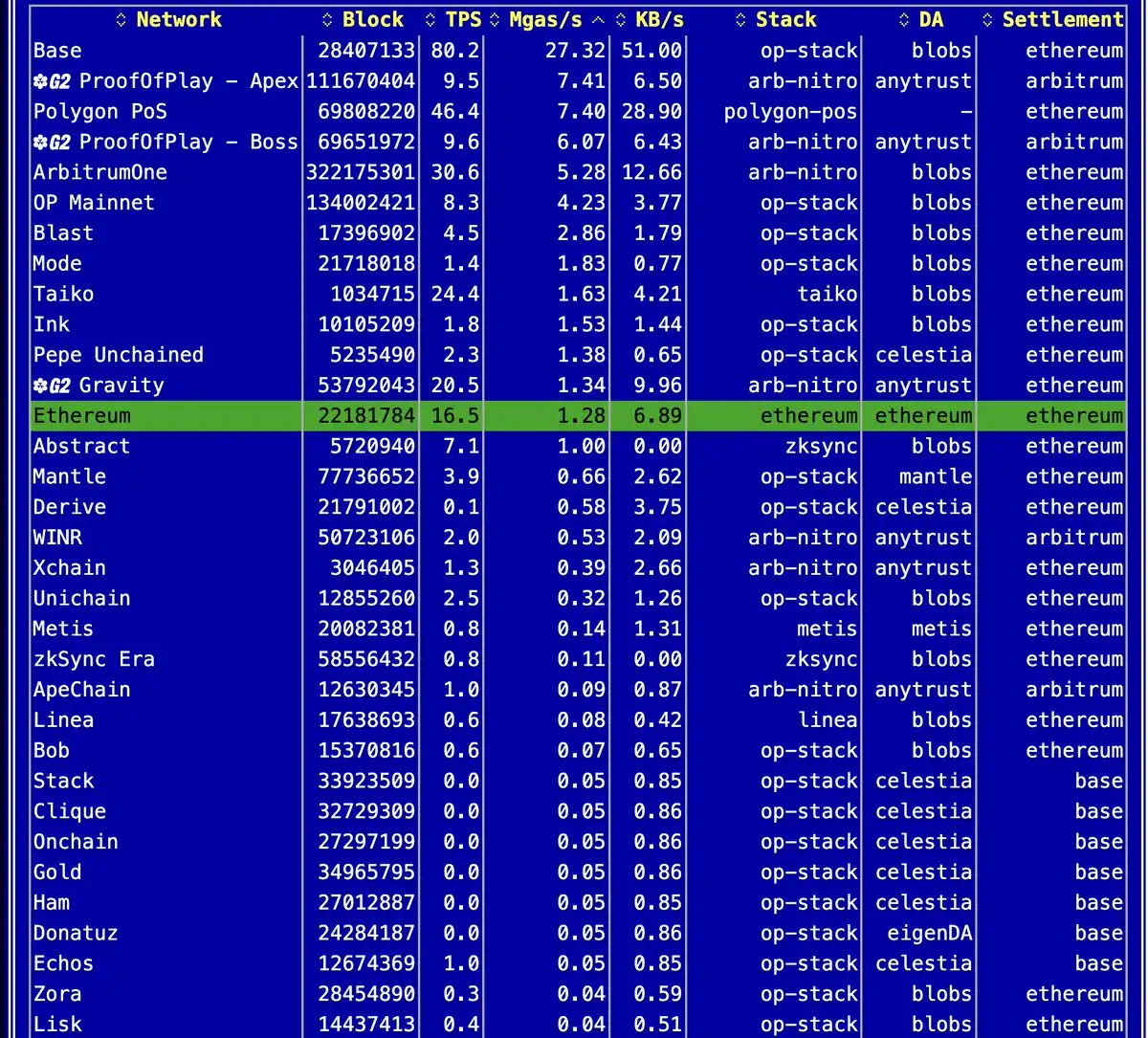
Image Source: rollup.wtf
Once valuable things have become cheap. The cost of storing transactions — once a key economic force — has plummeted. The promise of cheap block space has attracted millions of Web2 settlers, but reality has proven otherwise.
People from Web2 hesitated.
They heard stories of adventurers entering Web3, lured by the promise of wealth, only to be devoured by predators. Some Web2 residents did take the step, drawn to the legend of overnight riches.
They entered Web3, hoping to carve out a place in the new economy. Many started by purchasing small plots of land — various tokens, each promising future value. They traded, speculated, and started businesses, believing they were in the early days of the next great revolution.
But they did not realize that Web3 had long been structured by the earliest settlers and the most powerful capitalists. While the rules of the game were not explicitly stated, those who controlled this land knew it well. As more Web2 people moved in, they unwittingly found themselves in a predicament. The complexity of Web3 is daunting.

There are too many new nations, each with its own rules, and scams disguised as opportunities abound. The big players control the flow of information, manipulate the market, inflate values, and pull the rug out from under unsuspecting settlers' feet.
The Web3 world has become a playground for those who know how to extract wealth from the ignorant. Even though block space is cheaper than ever, adoption remains slow. The dream of a mass migration from Web2 to Web3 is crumbling.
The new land promised a seamless user experience but never reached the level of familiarity and convenience that Web2 offered. The additional promise of quick rewards is not enough to impress people — Web2 individuals have seen too many compatriots get burned.
They watched as entire nations in Web3 rose and fell overnight, wealth changing hands in the blink of an eye. Ordinary people hesitated, unable to see through the chaos. However, in the turmoil, a thriving marketplace emerged.
Web3's real estate — tokens — became the lifeblood of its economy. Everything is up for sale. Every nation has its own assets, unique value, and promises for the future. The trading floor never closes, driven by speculation, manipulation, and greed.
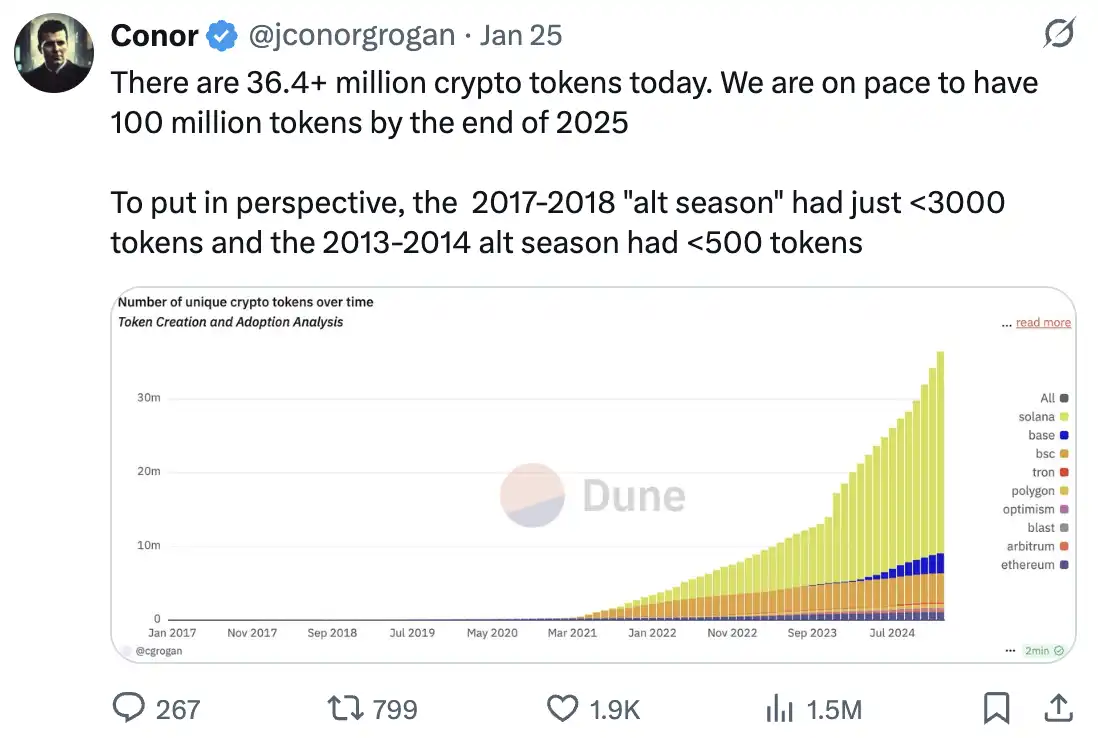
Some countries experience temporary prosperity, only to decline as attention shifts. New land is minted daily, sold to the highest bidder for a quick flip profit. The cycle continues endlessly. And as settlers struggle, the true beneficiaries of Web3 thrive.
Bridge operators — exchanges — act as gatekeepers, controlling the flow of assets between Web2 and Web3.
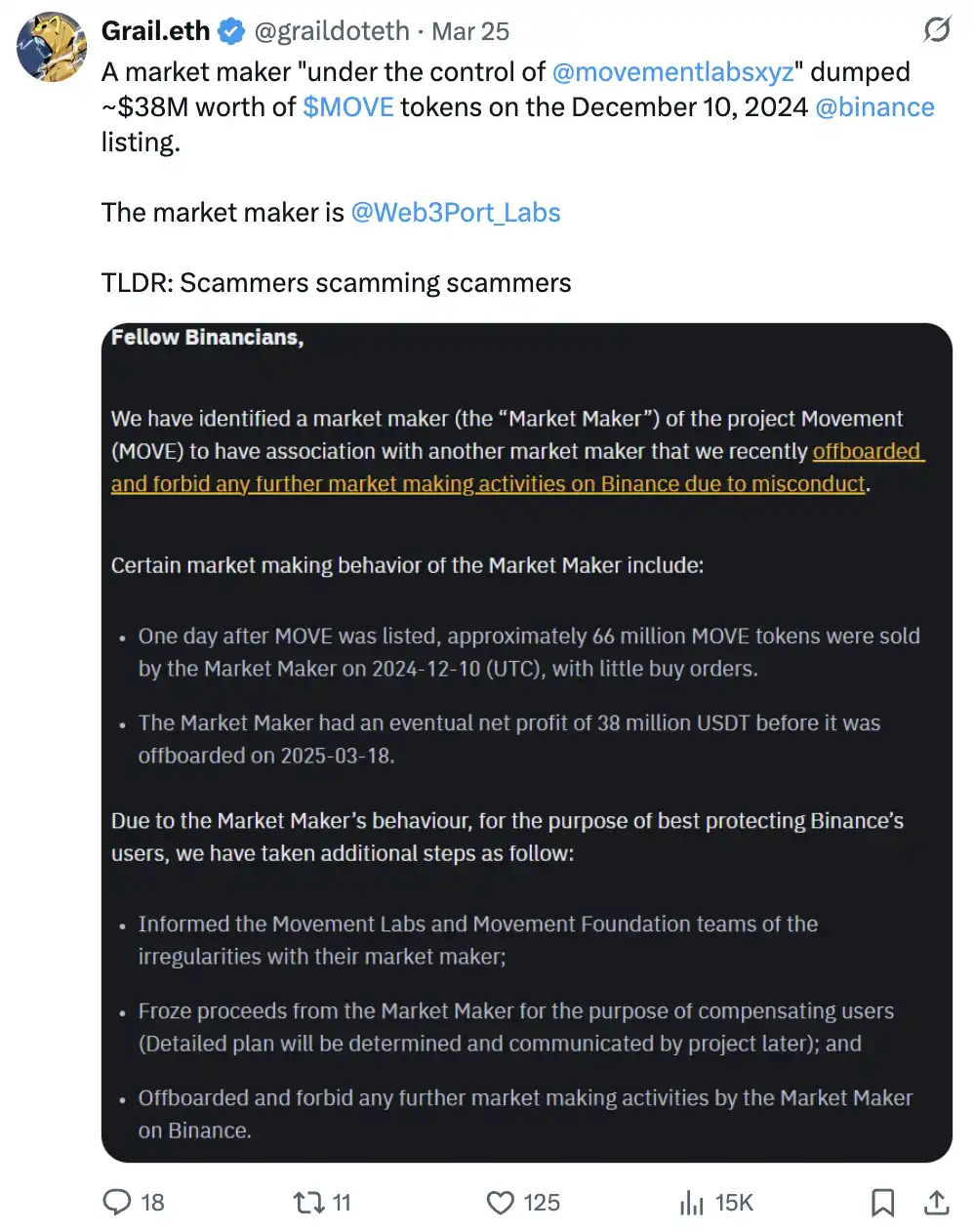
In short: scammers scamming scammers.
They profit with each entry and exit. Market makers — the hidden force managing liquidity — ensure every transaction is watched and taxed. Developers build continuously, not always for innovation, but to create more sellable land. And what of the marketers? They weave stories, craft narratives, selling dreams to the next hopeful settlers.
The dark side of Web3 is that it is no longer truly decentralized. The early vision of a freely open digital frontier has been replaced by the harsh reality of capital.
The same forces that dominated Web2 have infiltrated Web3. They settle not just inhabit but reshape this planet to suit their needs. Thus, the Web3 world expands, becoming an endless frontier of digital land, speculation, and fleeting opportunities.
The dream of true decentralization still exists. Settlers continue to arrive, hoping to strike it rich, but in the end, most leave poorer than they arrived.
Meanwhile, those who hold the system continue to extract, build, and control, ensuring this planet remains shaped by them.
You may also like

Bitcoin Trading Guide 2026: Strategies for Experienced Traders

What Is XAUT and PAXG? Why Tokenized Gold Is Booming in 2026

Cryptocurrency CEXs are flocking to sell US stocks, and traditional brokerages are facing an "uninvited guest."

Will the SpaceX IPO Hurt Bitcoin? Here's What Traders Are Watching
Foreign selling in the South Korean stock market accelerates, with cumulative net sales reportedly reaching $75 billion this year
On June 9, The Kobeissi Letter, citing Goldman Sachs data, reported that global investors are selling South Korean stocks at an unusually rapid pace. In the latest trading session, foreign investors sold about $801 million worth of Kospi constituent stocks again; total foreign outflows last week reached about $10 billion, and the market has been in net foreign selling on nearly every trading day over the past month. According to the data cited in the report, foreign investors have sold about $75 billion worth of South Korean stocks so far this year. Meanwhile, South Korean retail and institutional investors together recorded roughly $69 billion in net buying over the same period, suggesting that the market’s main buying support has come from domestic capital rather than returning overseas funds. The information currently disclosed still mainly comes from The Kobeissi Letter’s retelling and Goldman Sachs data summaries, while public details on the statistical period and the specific definition of “selling” remain relatively limited.

Fortune Warns of Strategy’s Financing Structure Risks as Bitcoin Premium Narrows
Fortune warned that Strategy’s Bitcoin treasury model faces growing financing risks as MSTR’s net asset premium narrows and preferred stock dividend pressure increases.

Ferrari Challenge Le Mans: Carl Moon to Dominate in WEEX Livery

Sahara AI Responds to SAHARA’s Sharp Drop: No Contract or Product Security Issues Found, Internal Investigation Underway
Sahara AI responded to SAHARA’s 60% price drop, saying no token contract or product security issues have been found and an internal investigation is underway.

WEEX Deposit/Withdrawal Dynamic Island: Your Asset Status, Always in Sight

Scaling Crypto Derivatives: The Digital Asset Infrastructure Behind High-Volume Trading
In the fast-moving digital asset ecosystem, derivatives platforms face an extreme architectural test. High-leverage futures markets demand more than just standard security—they require absolute operational precision, zero-latency matching engines, and ironclad structural scalability, all while navigating intense market volatility.
As global platforms scale to meet these demands, the industry is shifting away from rigid, monolithic setups toward a more agile, "decoupled" infrastructure philosophy.
The Blueprint for High-Volume Copy TradingFor elite global exchanges like WEEX (founded in 2018), this architectural choice becomes critical when scaling high-volume retail features like social copy trading. When thousands of users automatically mirror the real-time strategies of elite traders simultaneously, it triggers sudden, monumental spikes in concurrent transactional volume.
To prevent execution latency or settlement bottlenecks during these peak volatility events, a platform's primary engine must remain entirely dedicated to risk management, copy-trade synchronization, and order matching.
The Architectural Rule: New-generation platforms must separate front-end user execution engines from heavy backend infrastructural overhead to eliminate operational friction.
By separating these layers, platforms can maintain complete sovereignty over their trading environments and user experiences while strategically aligning with institutional-grade infrastructure ecosystems. This strategic framework allows modern exchanges to leverage advanced Digital Asset Custody infrastructure such as Cobo’s behind the scenes, ensuring that backend wallet management scales elastically alongside trading spikes.
Capitalizing on Market Momentum and 400× LeverageIn a derivatives arena where platforms offer up to 400× leverage on perpetual contracts, capital efficiency and market agility are core business metrics. To capture market momentum, an exchange needs the ability to rapidly expand its asset offerings, supporting everything from legacy crypto assets to sudden, trending altcoins across a massive library of trading pairs.
Adopting a flexible, scalable Wallet-as-a-Service (WaaS) solution such as Cobo’s could completely rewrite the development timeline for high-growth exchanges. Instead of spending months of engineering capital building out custom backend wallet architectures for every new blockchain network, platforms can deploy localized infrastructure in days.
This agility allows platforms to instantly scale their listings to over a thousand trading pairs without compromising security or delaying time-to-market. It mirrors the exact operational advantages seen during high-velocity market events, similar to how advanced wallet infrastructure empowers platforms during sudden asset surges; allowing exchanges to pass that speed and liquidity directly to their global user base.
A Mature Foundation for GrowthThe synergy between trusted infrastructure ecosystems and global trading platforms represents the natural evolution of a maturing crypto market. As WEEX continues to scale its global spot and derivatives offerings for over 6 million users, adopting robust backend paradigms proves that platforms no longer have to compromise between cutting-edge trading velocity and uncompromised structural security.

Morning Report | BitMine increased its holdings by 126,971 ETH last week; trader Eugene announced his exit from the crypto market

Wang Chuan: How can one not feel anxious after the neighbor Old Wang made thirty times profit by investing in storage stocks? (Seven) - A quarter-century cycle

Get Paid to Onboard? Try WEEX’s New Homepage with Rewards for Registration, Deposit & Trade

WEEX Custom Layout: Build Your Perfect Trading Workspace in Seconds

See “Buy Walls” & “Sell Walls” Instantly: WEEX Launches the Depth Chart for Smarter Trades

What Is Quick Trade on WEEX? 2 Ways WEEX Ends Chart-Panel Jumping
Morning News | Five major virtual asset platforms in South Korea have experienced 57 incidents of hacking and system failures in six years; Grayscale submits registration application for Canton ETF
Should we escape the peak? The principle of the tail-end market in the stock market
Bitcoin Trading Guide 2026: Strategies for Experienced Traders
What Is XAUT and PAXG? Why Tokenized Gold Is Booming in 2026
Cryptocurrency CEXs are flocking to sell US stocks, and traditional brokerages are facing an "uninvited guest."
Will the SpaceX IPO Hurt Bitcoin? Here's What Traders Are Watching
Foreign selling in the South Korean stock market accelerates, with cumulative net sales reportedly reaching $75 billion this year
On June 9, The Kobeissi Letter, citing Goldman Sachs data, reported that global investors are selling South Korean stocks at an unusually rapid pace. In the latest trading session, foreign investors sold about $801 million worth of Kospi constituent stocks again; total foreign outflows last week reached about $10 billion, and the market has been in net foreign selling on nearly every trading day over the past month. According to the data cited in the report, foreign investors have sold about $75 billion worth of South Korean stocks so far this year. Meanwhile, South Korean retail and institutional investors together recorded roughly $69 billion in net buying over the same period, suggesting that the market’s main buying support has come from domestic capital rather than returning overseas funds. The information currently disclosed still mainly comes from The Kobeissi Letter’s retelling and Goldman Sachs data summaries, while public details on the statistical period and the specific definition of “selling” remain relatively limited.
Fortune Warns of Strategy’s Financing Structure Risks as Bitcoin Premium Narrows
Fortune warned that Strategy’s Bitcoin treasury model faces growing financing risks as MSTR’s net asset premium narrows and preferred stock dividend pressure increases.


