
From Candy Vendor to Crypto Billionaire: Coinbase Founder's $8 Billion Startup Rule


Original Author: TRACER
Brian Armstrong is one of the wealthiest figures in the cryptocurrency field. He founded the Coinbase exchange and earned $8 billion in just five years, making him one of the world's top investors according to Forbes. Here are his Memecoin secret, strategy, and five major predictions.
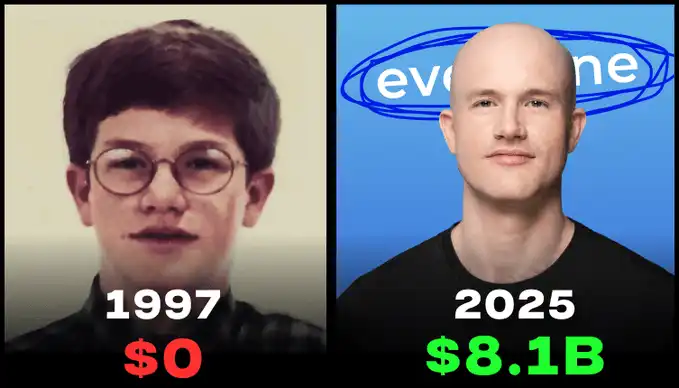
The significant development of the cryptocurrency industry needs to be grateful to a few individuals, and Brian Armstrong is one of them. He entered this field due to a belief in technology and completely changed his life trajectory with his belief in Bitcoin. Brian Armstrong's growth experience and industry insights are worth revisiting repeatedly, drawing insightful revelations:
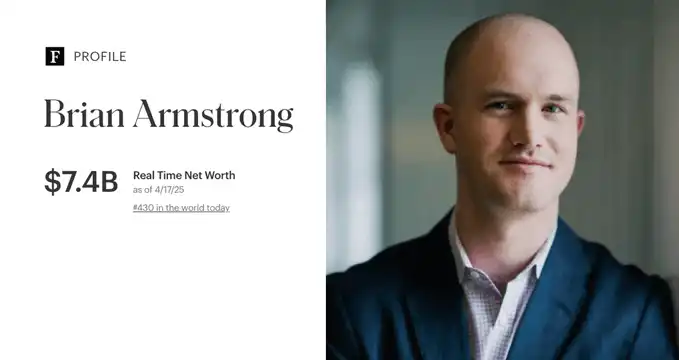
Brian was born in San Jose, California, with an entrepreneurial potential from a young age. In an interview, he once admitted that he was called into the principal's office for selling candy on the school playground. During high school, he developed a passion for internet technology and started learning to code.

He later pursued his studies at Rice University and obtained a master's degree. After graduation, he chose to live in Buenos Aires, Argentina, for a year, where he witnessed severe hyperinflation. The method to combat this economic turmoil—cryptocurrency—became the direction he would delve into in the future.

After graduating from college and going through a series of jobs, he co-founded a platform with his friends that matched private teachers with students. The platform allowed teachers to post personal information and offer teaching services to potential student clients. Brian Armstrong served as the CEO of the project for eight years, eventually selling it for a price equivalent to 21 times his annual income.
During Christmas 2010, Brian Armstrong first learned about Bitcoin while staying at his parents' home in San Jose. He stumbled upon the seminal document written by Satoshi Nakamoto—"Bitcoin: A Peer-to-Peer Electronic Cash System." From that moment on, he began contemplating a venture.

He held a guiding principle for entrepreneurship: "The one who gets rich isn't the gold miner, but the one selling shovels." At that time, there was a direct competitor in the industry, namely the famous Mt. Gox, but that platform suffered from serious transaction latency issues. In 2021, Brian Armstrong and Fred Ehrsam officially registered Coinbase.
Coinbase has begun to receive a large amount of investment, with a valuation that is more than eight times Brian's original target. He had initially planned to create a $1 billion company. Today, Brian Armstrong is living the dream, holding a fortune of millions. He is also actively sharing his insights and advice, which you should definitely consider:
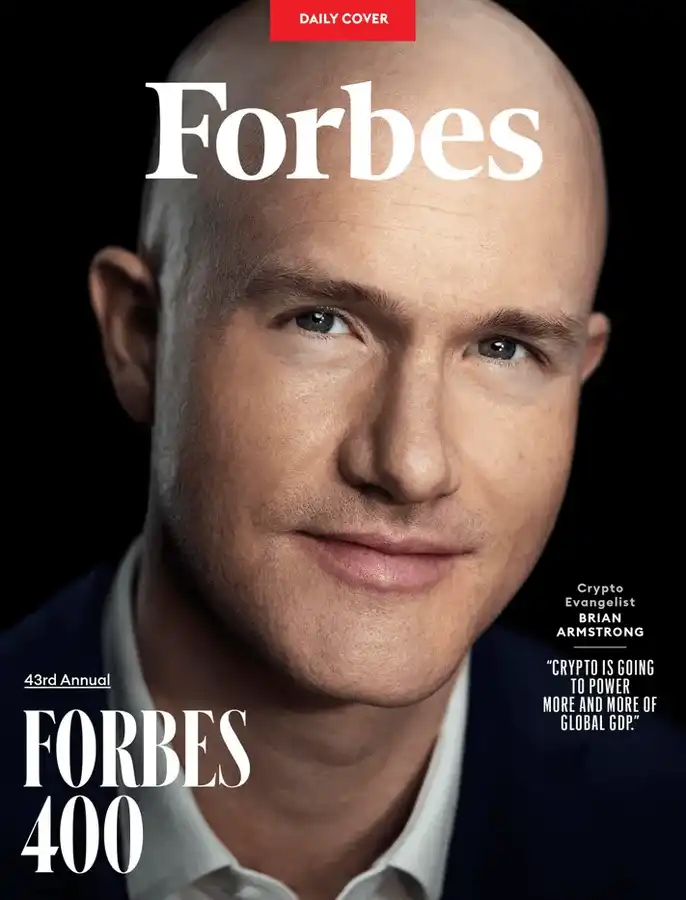
Currently, Brian Armstrong firmly believes that it is necessary to reform cryptocurrency regulatory policies. The previous government severely hindered the industry's development, and now is the best time to correct this issue. There is discussion across the board regarding the appointment of an SEC chairman who supports cryptocurrency and the establishment of a clear and stable legal framework, which is a significant positive for the cryptocurrency market.
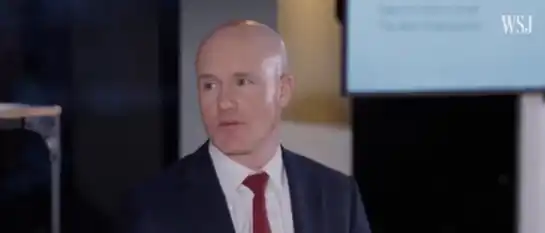
Brian Armstrong holds a very positive view of Memecoins and believes they have some development prospects. In his view, just as GIFs and internet memes have become a part of the internet economy, Memecoins could also become an important cultural and even economic phenomenon. This is a significant perspective that is worth thinking deeply about.
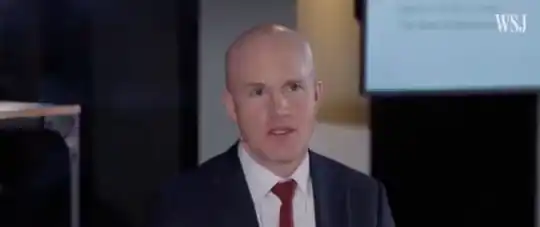
Brian also shared a media browsing tip: you should never listen to the promoters on YouTube. When analyzing a project, pay particular attention to 3 key elements:
GitHub code contribution quantity Team's activity on Twitter and Discord Responsiveness to critical opinions, if the project team remains silent, this is a danger signal. The new Trump administration's policies could significantly increase institutional fund flows into the market, all driven by government actions that will effectively enhance the confidence of financial institutions, with the core driving force being the government's advancement of relevant legislation regarding stablecoins and the digital dollar.
Brian Armstrong believes that cryptocurrency will never replace the traditional financial system but will complement it powerfully. Exchange-Traded Fund (ETF) trading, asset custody services, and deeply integrated products with banks and fintech platforms will be the development trend. This is essentially a practical suggestion: be sure to develop products that can interface with the traditional financial architecture.
You may also like

CFTC Reportedly Plans New Prediction Market Rules Focused on Manipulation Risk and Public Interest Review
The CFTC is reportedly preparing new prediction market rules focused on manipulation risk, public interest review, and retail trader protections.

Meet the new WEEX trial fund—your gateway to greater profits

WEEX Labs Lands at Dutch Blockchain Week: A Disruptive Crypto × AI Conversation Sets Sail in Amsterdam

SK Hynix Reportedly Plans U.S. ADR Listing as Early as August, With SEC Approval Possible in Late June
SK Hynix may pursue a U.S. ADR listing as early as August, with SEC approval reportedly possible in late June amid strong AI chip supply chain demand.

SpaceX vs Tesla vs xAI: Which Elon Musk Trade Has the Biggest Upside in 2026?
OpenAI Reveals It Has Confidentially Submitted an S-1 to the SEC, Keeping the Door Open for a Future IPO
On June 9, according to an OpenAI announcement, the company recently confidentially submitted a draft S-1 registration statement to the U.S. Securities and Exchange Commission (SEC), beginning the preliminary compliance process for a potential initial public offering. OpenAI said it chose to disclose this proactively because it expected the news might leak; however, the company has not yet set a specific listing timeline, and related arrangements may still take some time.

Latest research from 13 top universities including Cornell University: The current state, challenges, and misconceptions of the fusion of Crypto and AI
Deconstructing Anthropic: The Best AI Company, Possibly Also a Type of Organizational Invention
Apollo and Blackstone Reportedly Back $35 Billion Anthropic Chip Financing as Deal Details Remain Unclear
On June 9, according to currently available news alerts, Apollo and Blackstone Group participated in a $35 billion financing for an Anthropic “chip project.” Based on the original wording of the report, the funding has already been raised, but public information remains limited. The financing structure, use of proceeds, project entity, and whether Apollo and Blackstone participated through equity, debt, or project financing have not yet been disclosed.

Humanity Protocol Security Incident Escalates: More Than $31 Million Stolen From Related Addresses as Attacker Continues Selling H for ETH
On June 9, according to monitoring by Onchain Lens, more than $31 million has been stolen from addresses linked to Humanity Protocol, and the attack is still ongoing, with the hacker continuously swapping H tokens for ETH. Project founder Terence Kwok later confirmed the security incident on X, saying the issue involved a private key leak.

Bloomberg: As Bitcoin Weakens, Stablecoins and RWA Continue to Drive Expansion in Crypto Businesses
In June, Bloomberg reported that despite Bitcoin falling below $60,000 last week, wiping out about $235 billion in market value within seven days, and dropping close to 50% from last year’s peak, some core businesses in the crypto industry are still expanding, mainly in stablecoins, real-world asset tokenization (RWA), payments, and infrastructure. The report also noted that overall altcoin activity has contracted significantly: altcoin market capitalization has fallen from a peak of about $431 billion in November 2021 to around $170 billion, and among the tens of millions of tokens issued in recent years, fewer than 1,700 still maintain meaningful trading activity.

Galaxy Deep Research Report: How Hyperliquid's HIP-4 Upgrade Changes the Landscape of Prediction Markets?
Binance Research: RWA Market Expected to Expand Nearly 6x from Early 2025, with Public Equities and Onchain Payments Heating Up Together
In June, Binance Research said in its monthly market report that the real-world asset (RWA) market is expected to grow by about 589% from the beginning of 2025. Bond- and money market fund-related RWA expanded by about $6.5 billion, up 83% year over year, while publicly traded equity RWAs grew by about 422%. The report also noted that monthly crypto debit card transaction volume exceeded $747 million in May, up 48.6% year to date.

Japan to Assess a Framework for Yen Stablecoins and Crypto ETFs as Asia’s Compliant Payments Narrative Heats Up
Recently, according to the original report, Japan is considering the launch of yen stablecoins and cryptocurrency ETFs. Public information remains limited at this stage, and there is still no complete policy text, regulatory draft, or clear implementation timeline, so this is better characterized as a “policy discussion” rather than formal implementation. The original wording also noted that advancing stablecoin regulation in Asia is driving XRP usage and supporting growth in the XRPL ecosystem. However, based on currently available public information, there is not enough evidence to directly establish a clear causal relationship between this round of discussion in Japan and XRP or XRPL.

ZachXBT: Humanity private key leak and abnormal surge in H token should be viewed separately
On June 9, according to related disclosures, on-chain investigator ZachXBT posted an update on Humanity’s roughly $31 million security incident, saying that after further analyzing fund flows, he currently tends to believe the project team was not involved in an “inside job” or a self-staged attack. According to him, the official explanation about the private key leak was broadly accurate, but before the token unlock, the price of H had been artificially pushed higher, and the hacker later took advantage of that market environment; therefore, the private key leak and the earlier abnormal price pumping should be regarded as two separate and independent events. This reframing has shifted the market’s understanding of the nature of the incident. Earlier discussion around Humanity had focused on whether the team directly participated in the attack or used the security incident to cover up internal operations. ZachXBT’s latest remarks shift the focus from “whether it was self-theft” to “whether there were pre-unlock market structure issues.” He also questioned whether the team may have.

Morning Report | OpenAI has submitted an S-1 registration statement draft to the U.S. SEC; Morpho completes $175 million financing

Morning Report | BitMine increased its holdings by 126,971 ETH last week; trader Eugene announced his exit from the crypto market

Wang Chuan: How can one not feel anxious after the neighbor Old Wang made thirty times profit by investing in storage stocks? (Seven) - A quarter-century cycle
CFTC Reportedly Plans New Prediction Market Rules Focused on Manipulation Risk and Public Interest Review
The CFTC is reportedly preparing new prediction market rules focused on manipulation risk, public interest review, and retail trader protections.
Meet the new WEEX trial fund—your gateway to greater profits
WEEX Labs Lands at Dutch Blockchain Week: A Disruptive Crypto × AI Conversation Sets Sail in Amsterdam
SK Hynix Reportedly Plans U.S. ADR Listing as Early as August, With SEC Approval Possible in Late June
SK Hynix may pursue a U.S. ADR listing as early as August, with SEC approval reportedly possible in late June amid strong AI chip supply chain demand.
SpaceX vs Tesla vs xAI: Which Elon Musk Trade Has the Biggest Upside in 2026?
OpenAI Reveals It Has Confidentially Submitted an S-1 to the SEC, Keeping the Door Open for a Future IPO
On June 9, according to an OpenAI announcement, the company recently confidentially submitted a draft S-1 registration statement to the U.S. Securities and Exchange Commission (SEC), beginning the preliminary compliance process for a potential initial public offering. OpenAI said it chose to disclose this proactively because it expected the news might leak; however, the company has not yet set a specific listing timeline, and related arrangements may still take some time.


