
Binance Sparks "Delist Concept": Can CEX Still Produce the Next ALPACA?

On April 24, Binance announced that it would delist four tokens, including Alpaca Finance ($ALPACA), on May 2, and cease trading of these pairs' perpetual futures contracts at 00:00 on May 1, 2025, Beijing time. Fast forward to the last day of perpetual futures trading delisting, ALPACA surged on the liquidation heat map. Over the past 24 hours, a total of $52.21 million evaporated in ALPACA's contract trading, exceeding the sum of the token's liquidation volume over the past two years.
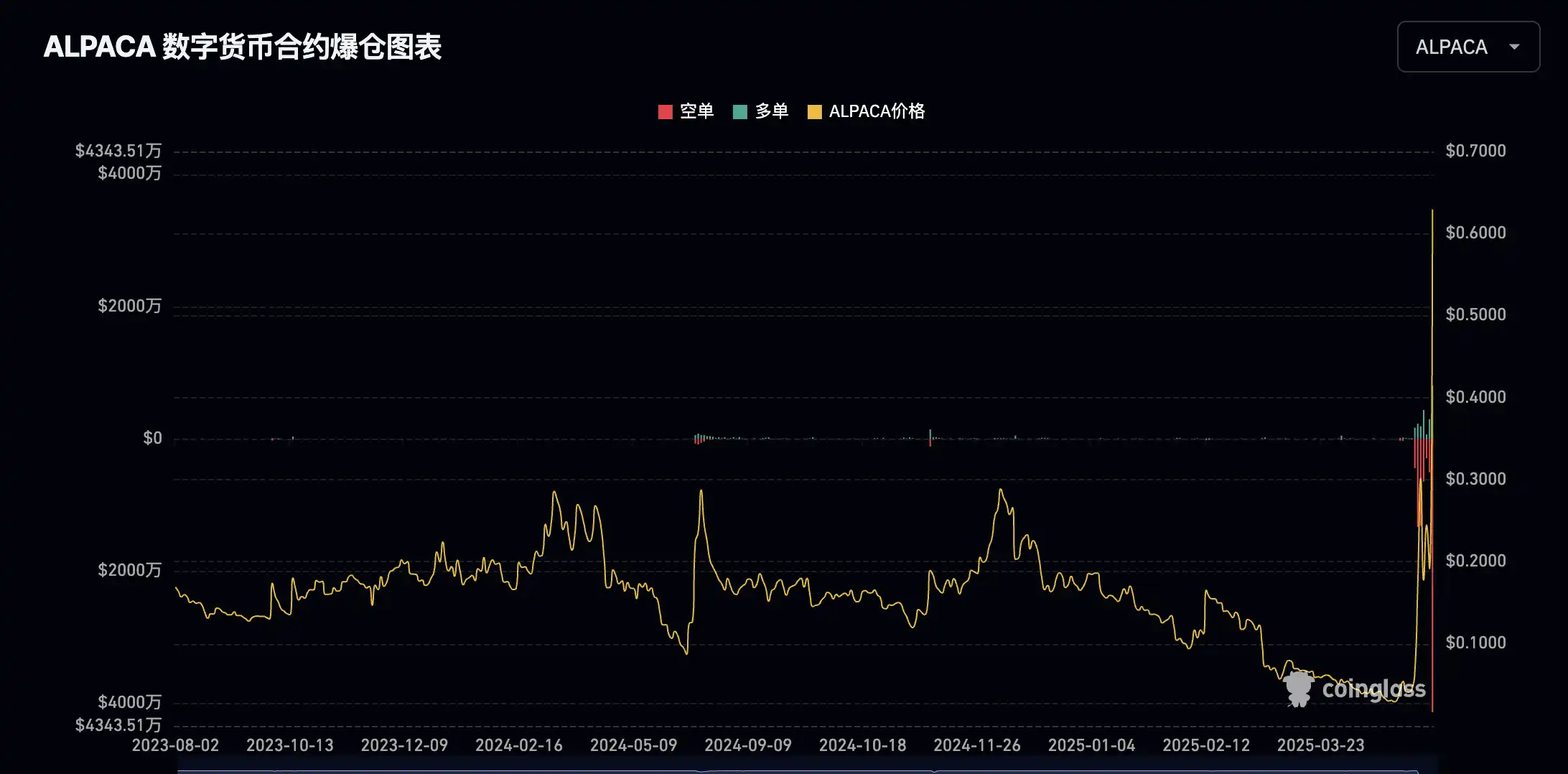
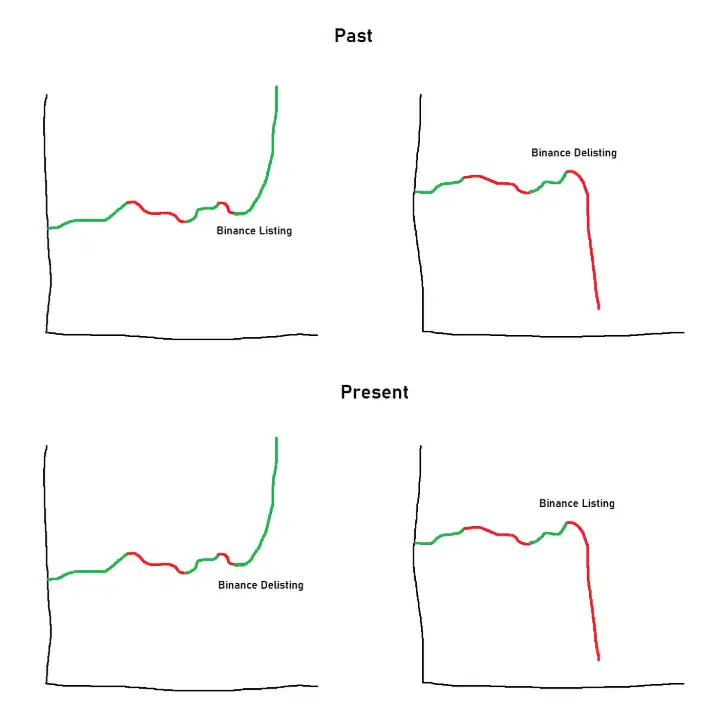
Historically, when a token is listed on Binance, many traders would buy the news instantly ("Buy the News"). As the Binance listing effect gradually waned, traders found another path, which is to short sell the tokens set to be delisted from Binance ("Sell the News"). This strategy often has a very high success rate. However, as traders followed this path, they encountered the Alpaca on their short-selling journey.
The Long and Short of ALPACA's Journey
Every thrilling market manipulation game requires careful preparation. Before Binance's official announcement, on April 10, $ALPACA was ranked 7th in the preliminary list of the second batch of "Vote for Delisting" on Binance, causing its price to plummet almost by half. However, in the five days leading up to Binance's official announcement, from April 19 to April 23, trading volume suddenly surged.
The story traces back to the start of Binance's second round of "Vote for Delisting," where ALPACA was included in the delisting candidates list, ranked 7th among 17 projects. After the completion of Binance's delisting vote count, $ALPACA was included in the projects to be delisted. The market did not react significantly, price fluctuations were not substantial, but trading volumes expanded abnormally, suggesting the entry of "manipulative funds" into the community.
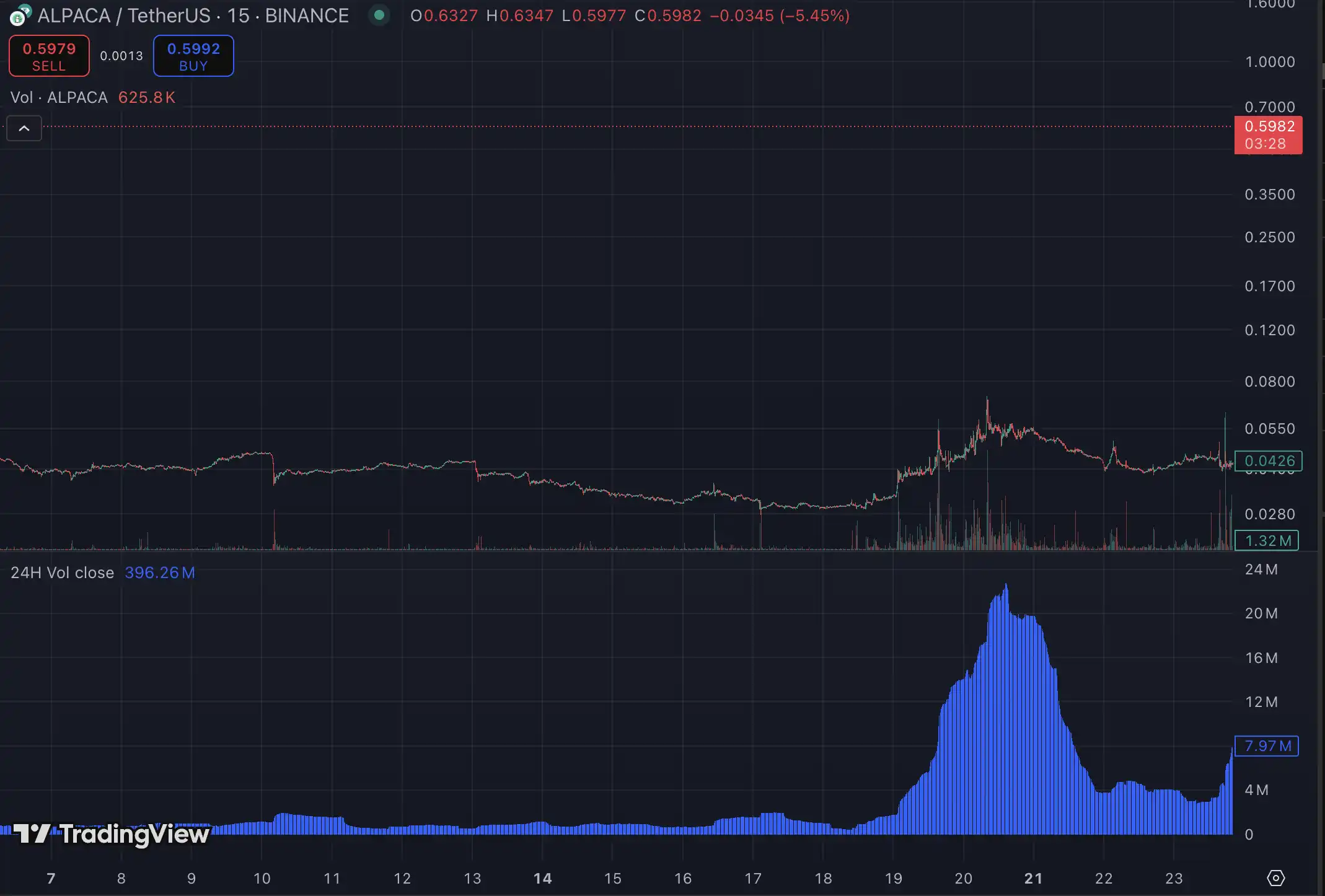
On April 24, Binance officially announced the delisting of the $ALPACA spot trading pair on May 2 and the settlement of the futures contracts on April 30. Following the announcement, the spot price of $ALPACA dropped from $0.0329 to $0.029, with a market cap of only about $5 million. However, what followed were two price "rollercoaster" moments; within an hour, the price surged from $0.029 to $0.0857, an increase of about 195%, only to rapidly drop back to $0.04 within 3 hours. Shorts were caught off guard, and the open interest of contracts surged rapidly, initiating the "long and short grinder" mode.
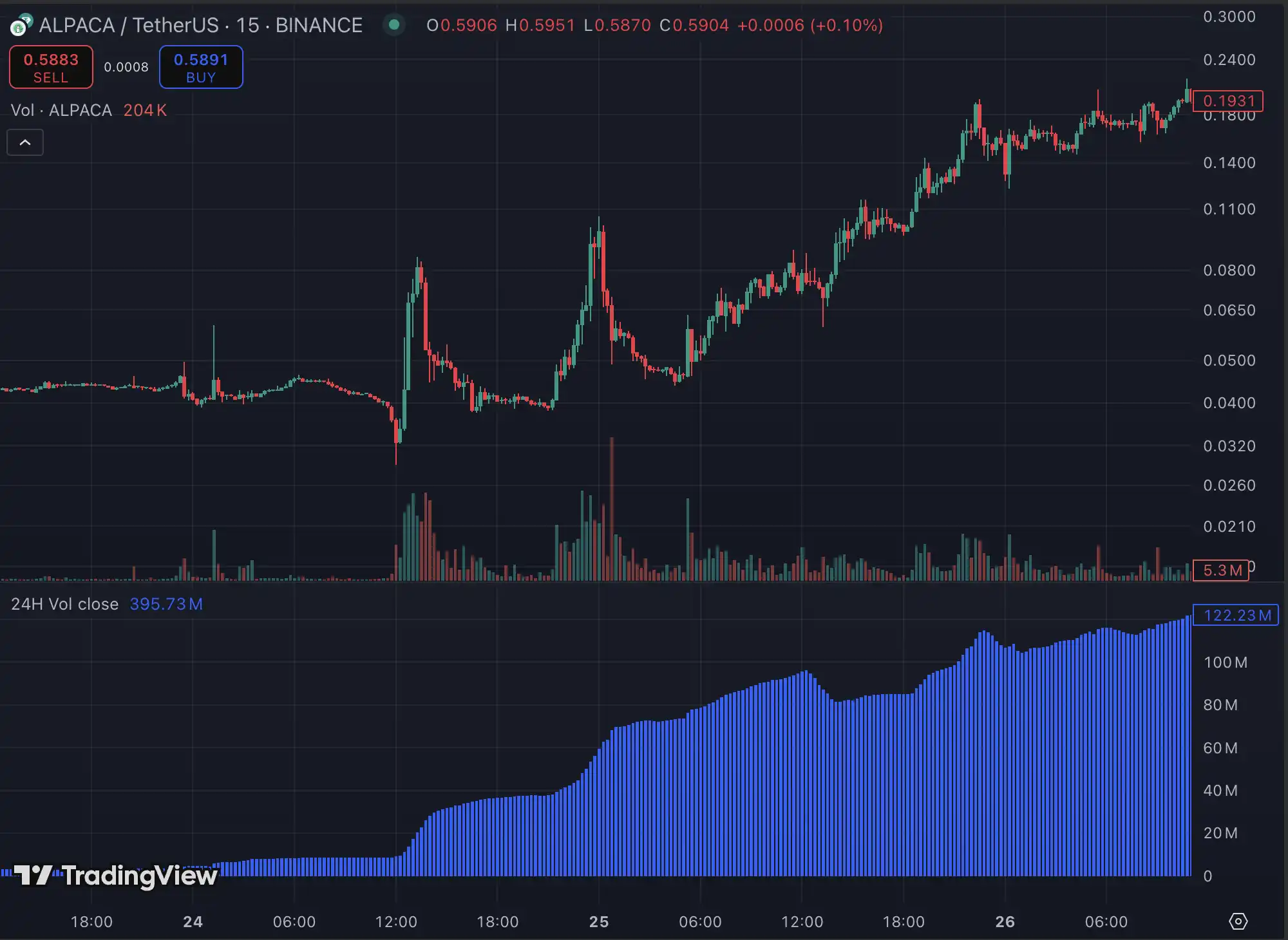
On April 25, Alpaca Finance officially announced that the trading volume in the past 24 hours had exceeded 1 billion tokens. The liquidity provider had suggested a "minting for stability" to be returned to the treasury after a decrease in trading volume. However, as public opinion began to ferment, opposition filled the community. Alpaca Finance deleted the previous tweet and posted a new one at 9 p.m. on the same night, announcing the cancellation of the minting due to community opposition.
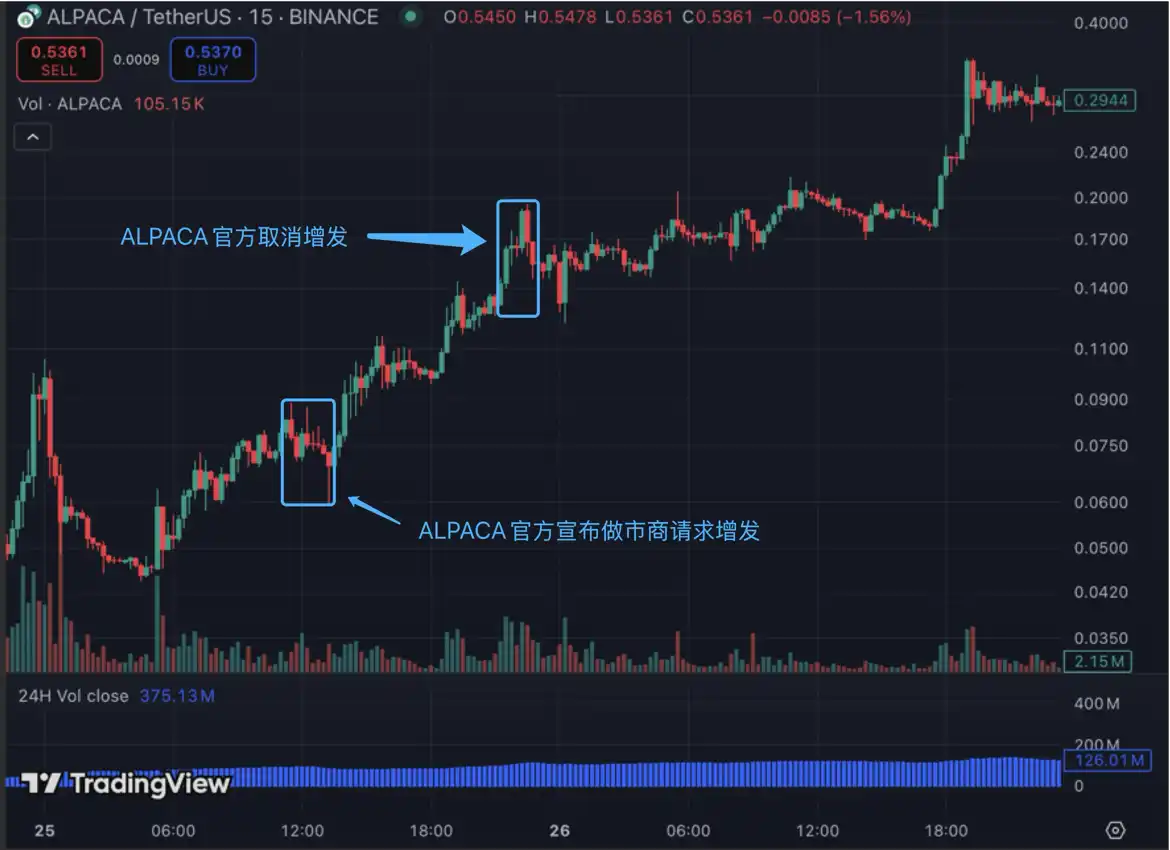
On April 26, Binance amended the contract funding rate rules, shortening the maximum rate cap settlement period to hourly and setting it at up to ±2%. Some high-leverage accounts continued to hold short positions against the high rate and were liquidated. Millions of dollars disappeared within a few hours, with $13 million in short positions vanishing on a token with a market cap of less than $30 million.
With the establishment of this short-selling trend, the price skyrocketed nearly 12 times from a low of $0.029 to $0.3477 within 3 days. The contract's open interest surged significantly, especially with a notable increase in short positions, resembling a microcosm of the Wall Street battle of GME's retail investors. However, this time, the retail investors' opponents could continue to mint additional chips.
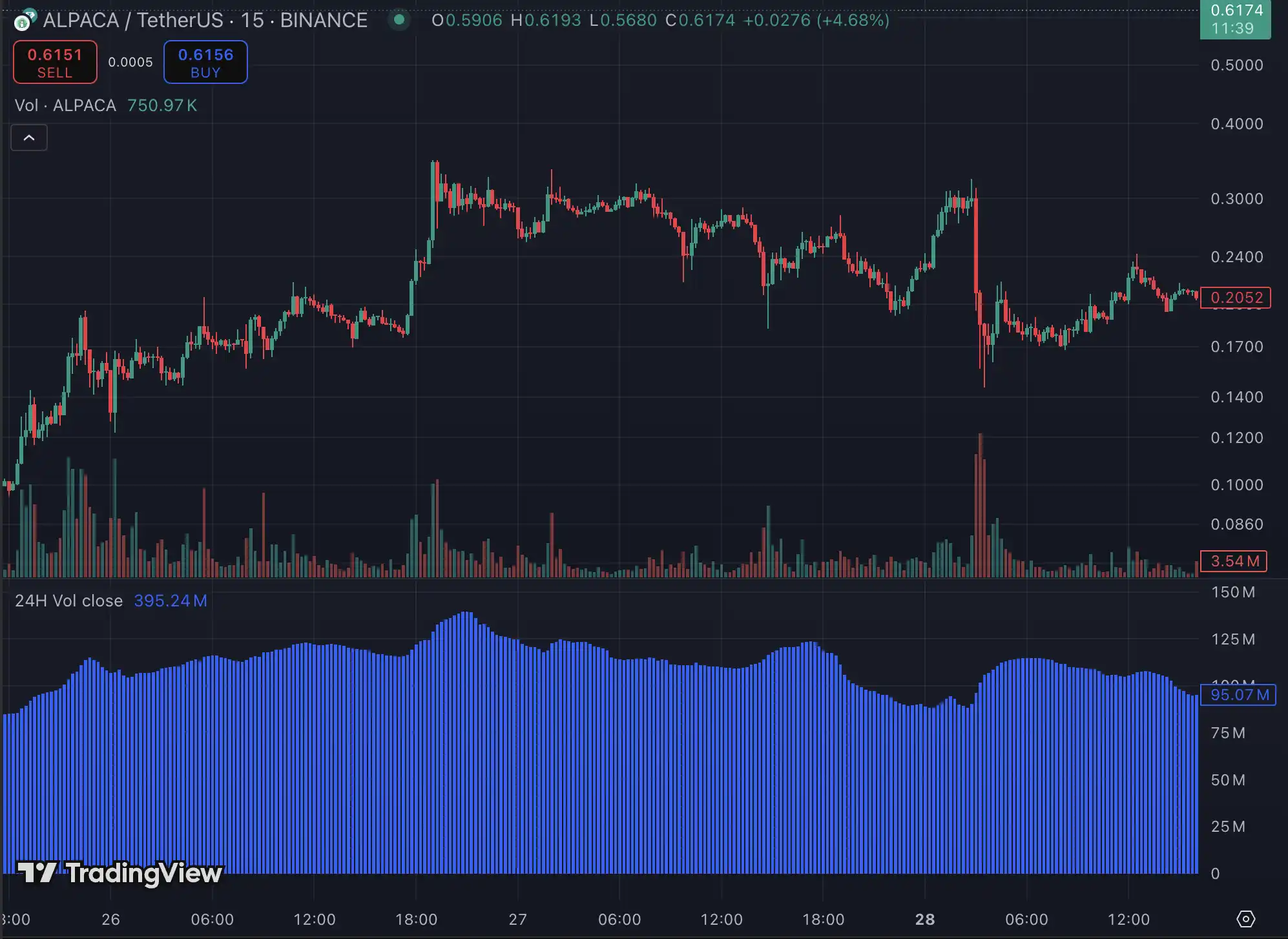
From April 26 to April 29, these days were relatively calm, with the price fluctuating around $0.2 to $0.34. On April 29, Binance announced another increase in the rate cap to ±4%. Theoretically, such a high rate would severely impact short positions. If the rate remains at -4%, the bears will face a 96% "cost of ruin" after holding a short position for 24 hours. However, miraculously, the price plummeted from $0.27 to $0.067.
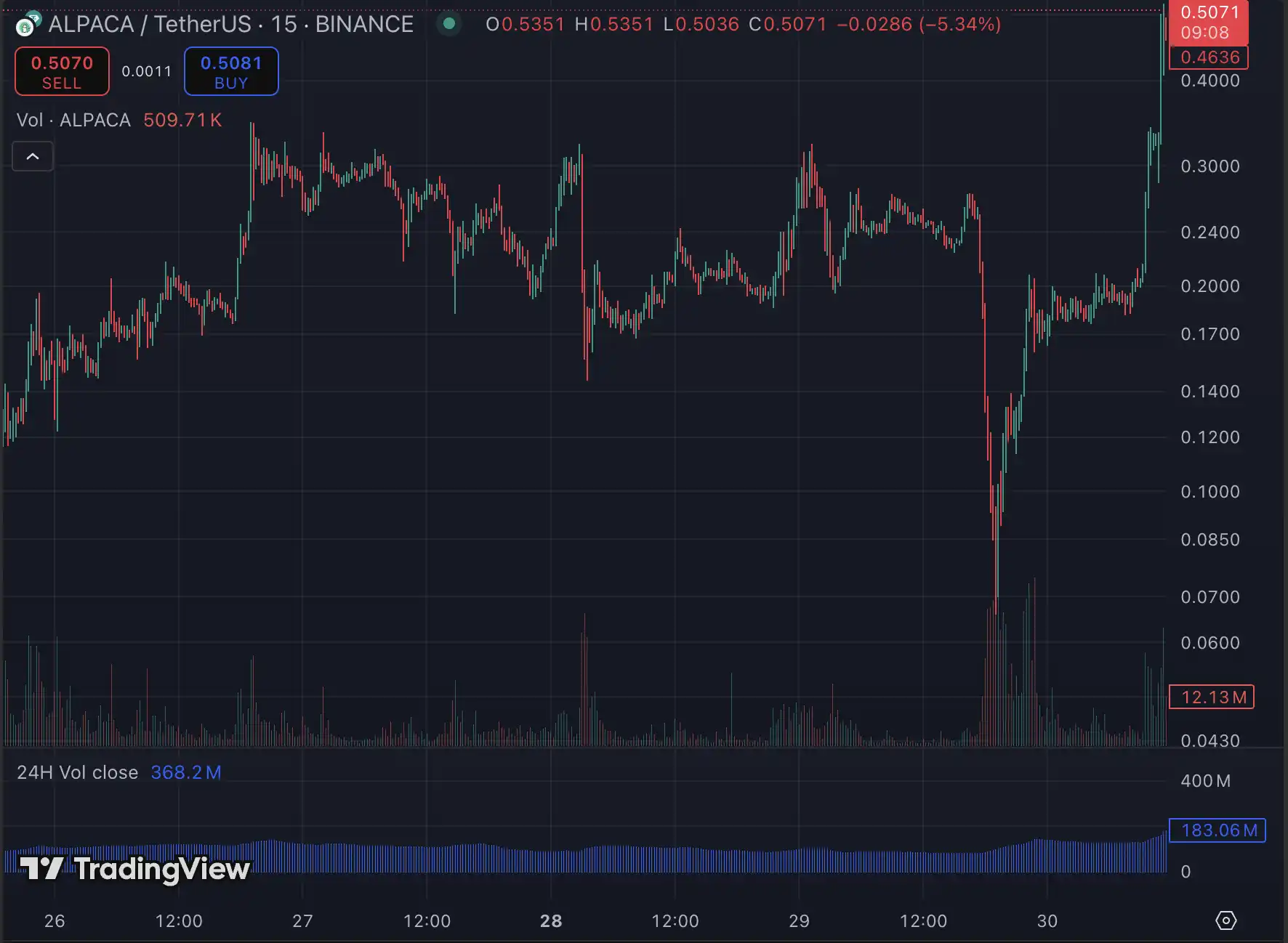
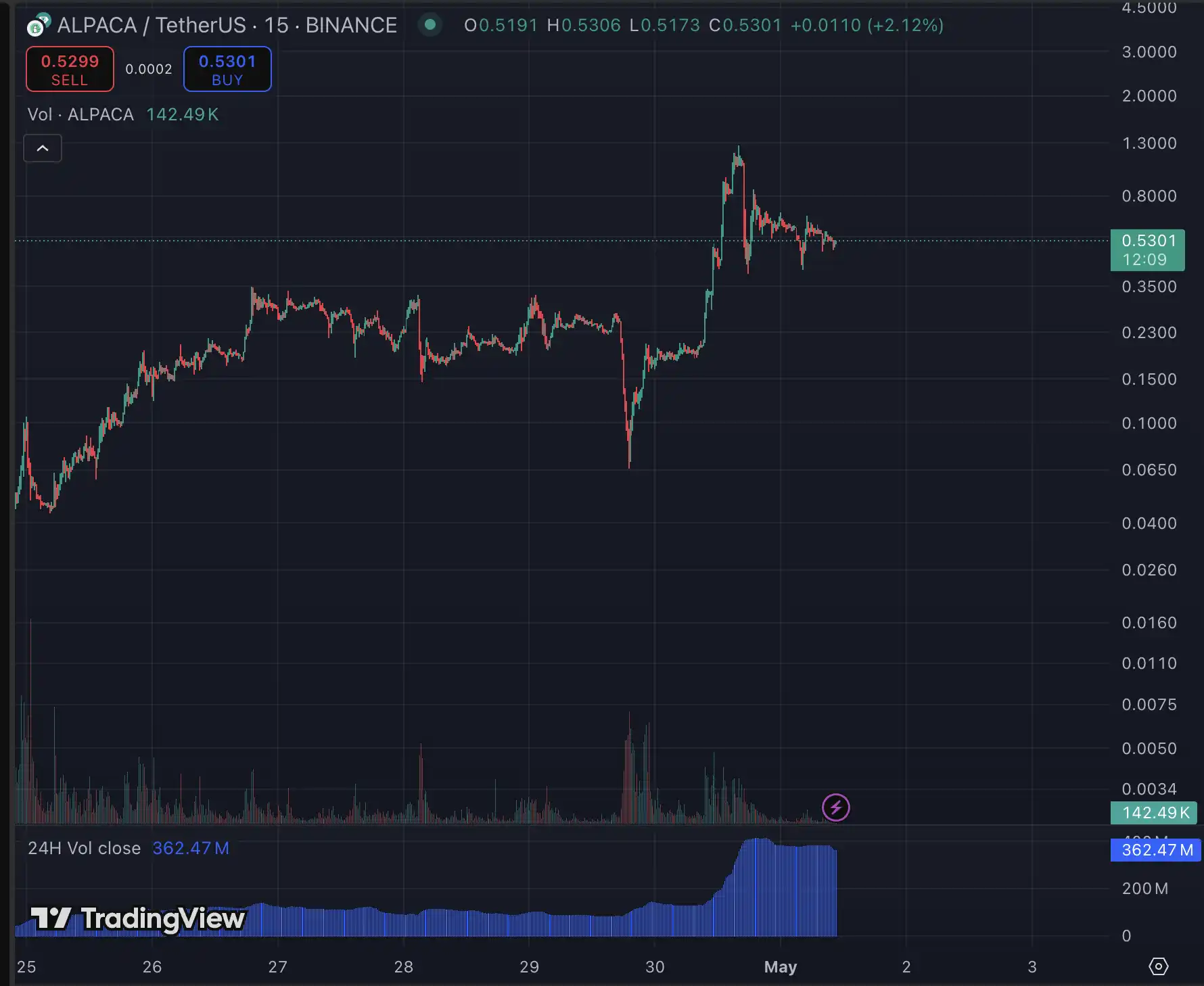
On April 30, with the contract delisting and liquidation scheduled in the final 24 hours, the price continued to experience intense fluctuations. ALPACA's attention peaked, with its highest price reaching $1.2 at one point. From a week before the delisting announcement to the eve of the contract delisting, ALPACA's price surged 40 times, creating an independent market for the token delisted by Binance. The total liquidation volume across the network also reached $50 million, with $42 million in "bearish fuel" beneath the price surge.
Community Discussion
Can the "Buying Shell" Strategy Guarantee Breakeven?
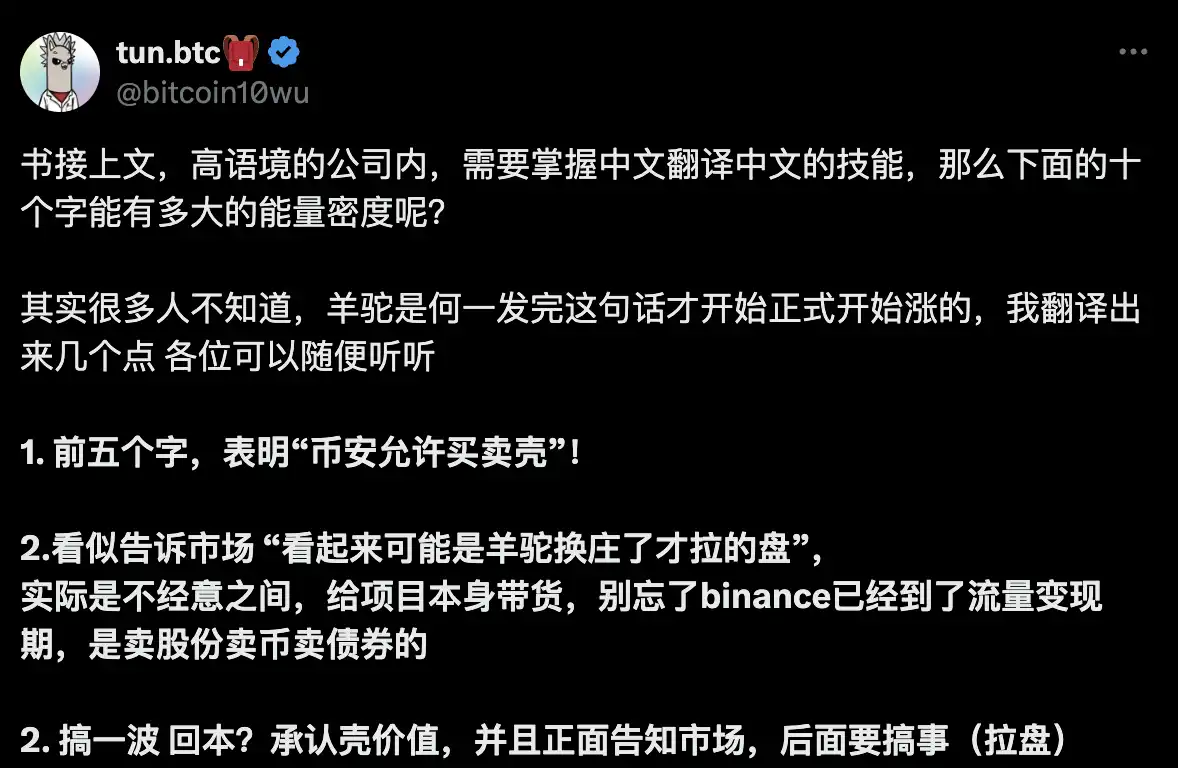
After the first surge of ALPACA, Heyi, the co-founder of Binance, replied to a netizen asking, "Can the teacher who buys the shell guarantee breakeven?" This has also triggered endless speculation among community members.

KOL Tunbtc believes that Heyi's reply to this matter was the starting point of ALPACA's surge. "The large holders of Alpaca's native token, by transferring spot chips, operating rights, and distribution rights, have pledged allegiance to Binance's deep-water core interest circle, allowing it to fully harvest market liquidity before delisting, slaughtering opposing positions." Through a triple path of fees, contract liquidations, and spot volatility, they converted user attention into profits.
He also called on Binance to thoroughly investigate this matter, clarify which market maker is manipulating the candlestick patterns, as ALPACA saw an 18x surge within 24 hours with users liquidated of tens of millions of dollars, while previously GPS's 500% surge was promptly halted, and expressed his sentiment: "All of this is thought-provoking."
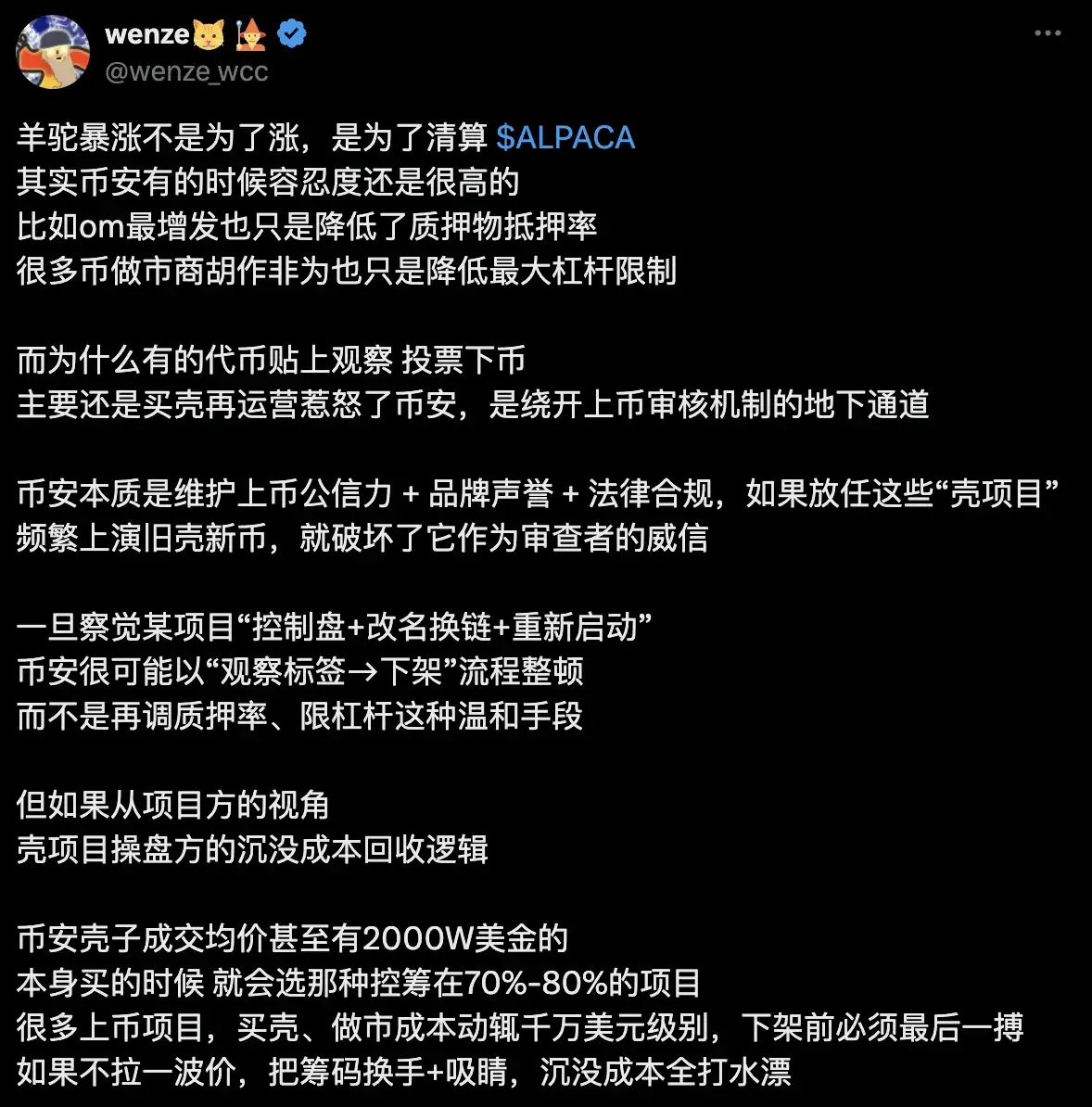
Wenze, the founder of Beta Capital, believes that bypassing the regular listing process, buying shells, renaming, and restarting has crossed Binance's bottom line of maintaining listing credibility and brand compliance. Binance sometimes has a high tolerance for market fluctuations, and the OM issuance only adjusts the collateralization ratio, with many projects only allowed for leveraged trading. However, once the project, such as these "shell projects," is identified, it is easily labeled for observation, triggering a vote for delisting, ultimately leading to delisting rather than using mild measures.
The Mastermind Behind the Scenes
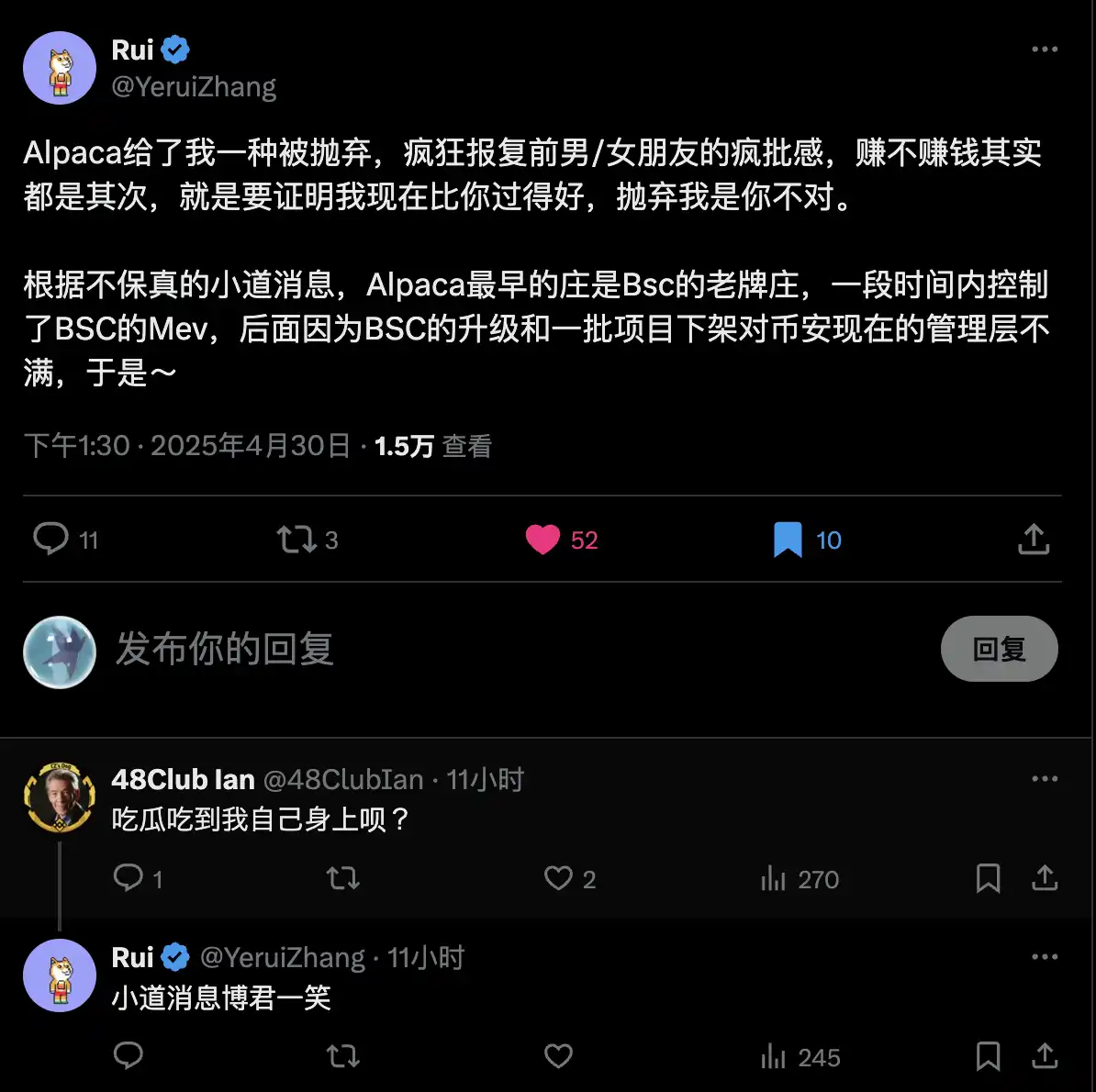
Renowned KOL Rui, "YeruiZhang," likened the ALPACA incident to "crazy revenge on an ex" and shared a piece of insider information, claiming that the original whale behind ALPACA was a team that controlled BSC's MEV for a period of time and expressed dissatisfaction with Binance's current management for some reason. The comments section is rampant with speculation that it is BSC's whale 48CLUB, and 48CLUB's Ian even personally appeared to eat "his own melon."
The "Delisting Concept"
With the recent buzz around VOXEL's surge and the wealth effect and discussion surrounding ALPACA, more and more "delisting concepts" have emerged. This concept does not necessarily refer to tokens that have already been delisted but rather shares some common characteristics of delisted tokens.
Famous KOL Chuanmo recently shared on Twitter his logic for choosing concept tokens and listed several tokens, all of which experienced varying degrees of price increase after his recommendation.
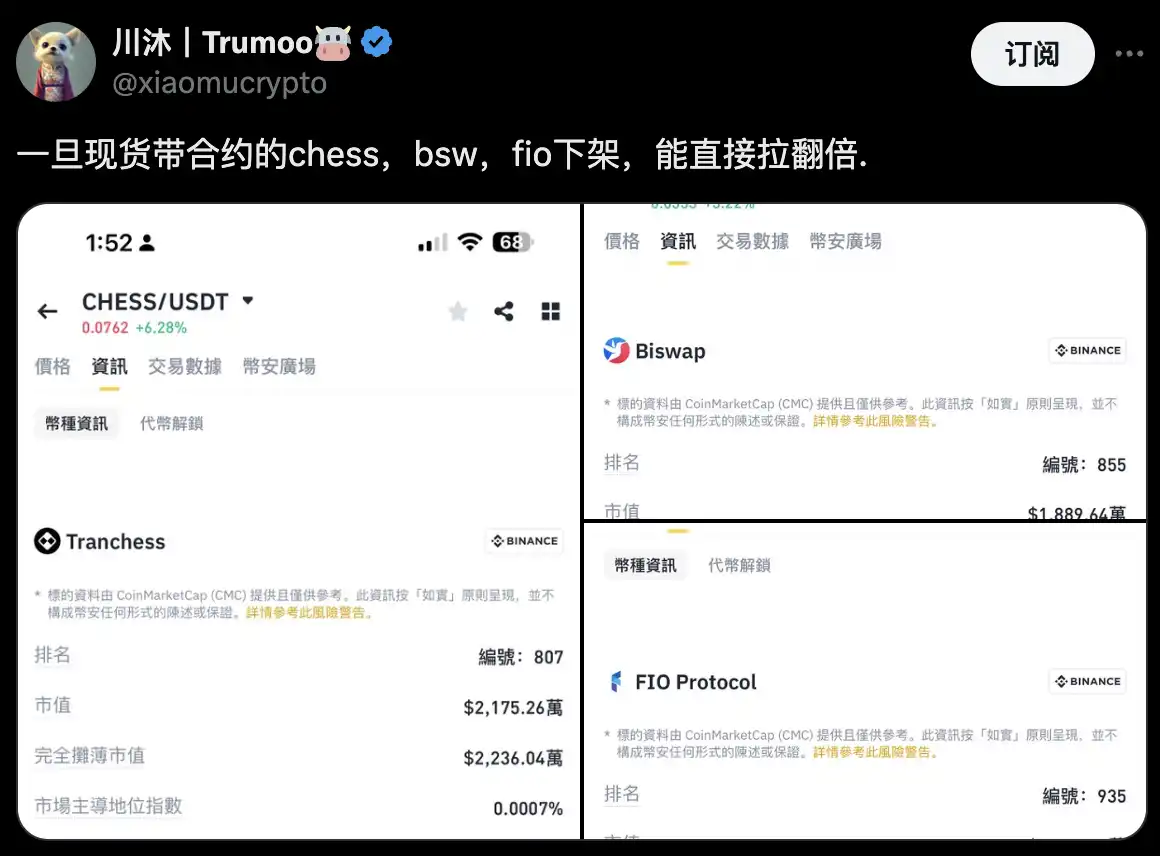
His "Concept Delisting" strategy involves selecting low-cap tokens from Bybit and Binance, arranging them by market cap from lowest to highest, with almost 100% price increase for the tokens with the highest holdings/circulating market cap. He buys three tokens daily following this order with a fixed amount, and based on the holdings/circulating supply ratio, he removes tokens that no longer meet the criteria daily and continues to buy the new top three tokens.
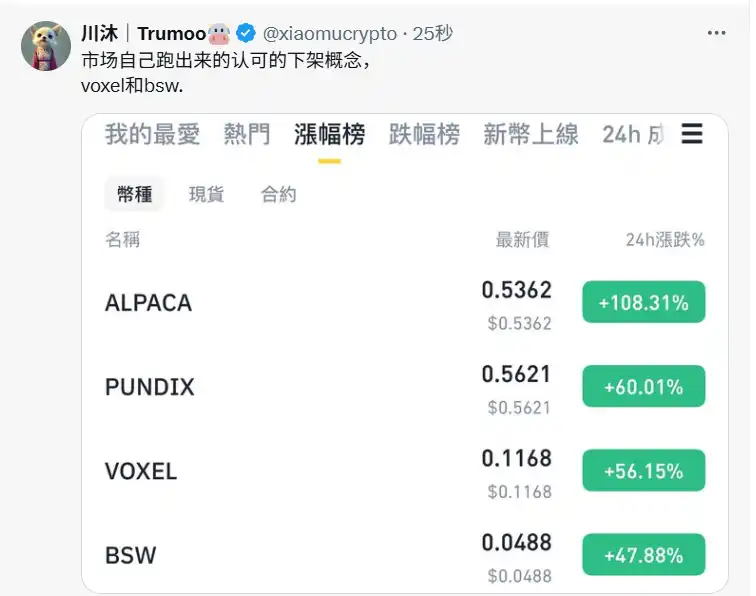
Many community members have tested this strategy, with some creating helpful tools. The dreamer Disney "discountifu" has created a dashboard, and Vivek10 early bird "vivekw_eth" has developed a monitoring and alert system that can be directly pushed to WeChat with a copyable link, although it is currently deployed locally and not yet entirely stable.
However, when using tools created for free by community members, please be cautious. While there are many enthusiastic contributors in the community, there are also many uncertain factors in this dark forest.
In an increasingly insular market, retail investors not only have to contend with whales and other retail investors but also must bear many unstable elements. The recent ALPACA incident serves as a warning to us. Whether it's a primary or secondary listing on a top-tier exchange or the "Concept Delisting" approach, we need to make rational asset allocations amidst FOMO to protect our principal and reach the other shore.
The mention of all tokens above does not constitute financial investment advice "NFA".
You may also like

Morning Report | OpenAI has submitted an S-1 registration statement draft to the U.S. SEC; Morpho completes $175 million financing

Galaxy Deep Research Report: How Hyperliquid's HIP-4 Upgrade Changes the Landscape of Prediction Markets?

Latest research from 13 top universities including Cornell University: The current state, challenges, and misconceptions of the fusion of Crypto and AI

Deconstructing Anthropic: The Best AI Company, Possibly Also a Type of Organizational Invention

Every exchange is a "Universal Exchange."

The counterattack of traditional finance: Alliance chains are quietly reviving
Pantera Capital Partner: How Tokenization is Restructuring the Private Equity and Early Investment Ecosystem?

Mastercard Launches Agent Pay for AI, Plans to Record AI Agent Payment Authorizations on Polygon
Mastercard launched Agent Pay for AI, a new payment protocol designed to help AI agents make small payments such as pay-per-use access to data and APIs. The system plans to record human-granted AI agent permissions on Polygon, focusing on verifiable authorization, identity, and payment controls.

Curve Deploys Llamalend v2 on Optimism With 250,000 OP Incentives
Curve launched Llamalend v2 on Optimism with 250,000 OP incentives from the Optimism Foundation. The upgrade expands Llamalend beyond its earlier crvUSD-focused model, adding broader collateral support, LlamaRisk market reviews, and the ability to use Curve LP tokens as collateral.

Raydium Old Liquidity Pool Reportedly Exploited, With $1.34 Million Moved to Ethereum and Tornado Cash
An old Raydium liquidity pool was reportedly exploited for around $1.34 million in USDC, RAY, and wSOL, with the stolen funds bridged to Ethereum and deposited into Tornado Cash. The incident highlights the tail risks of legacy DeFi pools, old contracts, and cross-chain fund laundering paths.
Kalshi Executive Challenges “SBF Backed AI Unicorns” Narrative, Says Leopold Aschenbrenner Was Key Figure
Kalshi executive John Wang questioned the “SBF backed AI unicorns” narrative, saying Leopold Aschenbrenner was the key figure behind major AI investment decisions.

New York Proposes Stricter Stablecoin Issuer Rules Aligned With Federal GENIUS Act
NYDFS proposed stricter stablecoin issuer rules aligned with the GENIUS Act, covering reserves, custody, redemption timelines, audits, and capital buffers.

CryptoQuant Says Bitcoin Profitable Supply Is Near 45% Pressure Zone as On-Chain Data Points to Market Repricing
CryptoQuant said Bitcoin’s profitable supply is nearing the 45% pressure zone, signaling rising market stress, unrealized losses, and a possible on-chain repricing phase.

Bitcoin Falls Below 200-Week Moving Average as On-Chain Data Shows Over Half of Supply in Loss
Bitcoin dropped below its 200-week moving average as on-chain data showed over 50% of circulating supply is now in loss, signaling rising market stress.

CFTC Reportedly Plans New Prediction Market Rules Focused on Manipulation Risk and Public Interest Review
The CFTC is reportedly preparing new prediction market rules focused on manipulation risk, public interest review, and retail trader protections.

Meet the new WEEX trial fund—your gateway to greater profits

WEEX Labs Lands at Dutch Blockchain Week: A Disruptive Crypto × AI Conversation Sets Sail in Amsterdam
SK Hynix Reportedly Plans U.S. ADR Listing as Early as August, With SEC Approval Possible in Late June
SK Hynix may pursue a U.S. ADR listing as early as August, with SEC approval reportedly possible in late June amid strong AI chip supply chain demand.
Morning Report | OpenAI has submitted an S-1 registration statement draft to the U.S. SEC; Morpho completes $175 million financing
Galaxy Deep Research Report: How Hyperliquid's HIP-4 Upgrade Changes the Landscape of Prediction Markets?
Latest research from 13 top universities including Cornell University: The current state, challenges, and misconceptions of the fusion of Crypto and AI
Deconstructing Anthropic: The Best AI Company, Possibly Also a Type of Organizational Invention
Every exchange is a "Universal Exchange."
The counterattack of traditional finance: Alliance chains are quietly reviving


